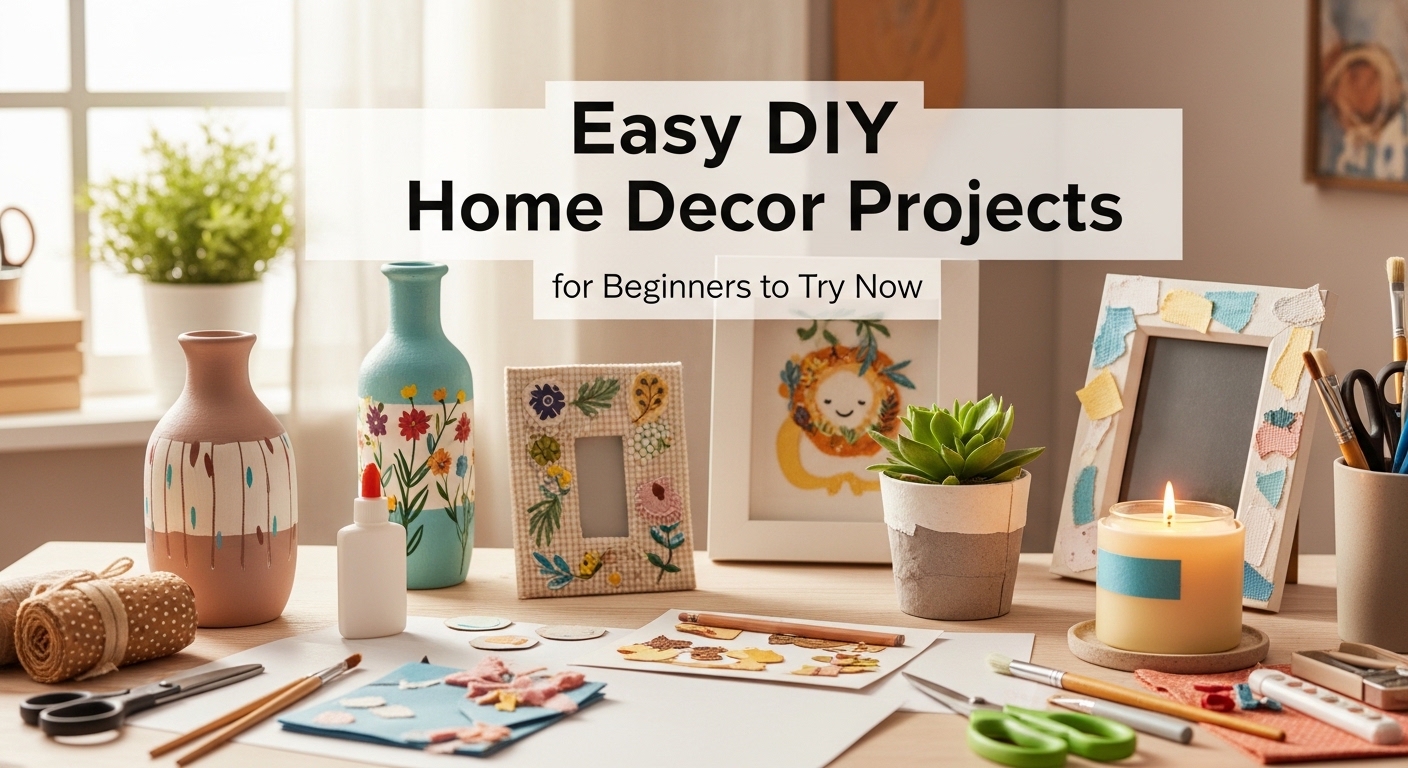
There is a particular kind of satisfaction that comes from looking around your home and knowing that something beautiful on the wall, on the shelf, or on the table was made by your own hands. It is not about being a craftsperson or having a workshop full of tools. It is about slowing down, getting creative, and making your space feel genuinely personal in a way that no store-bought item quite manages.
I have recommended easy DIY home decor projects for beginners to homeowners at almost every level of renovation and redesign work. Some of my favorite conversations happen not during major builds but during those smaller moments when someone discovers that they can actually make something beautiful themselves, often for under twenty dollars and in a single afternoon.
If you have been curious about beginner DIY decor but intimidated by where to start, this guide is for you. Every project here requires minimal tools, widely available materials, and no prior crafting experience. What they do require is a little time and a willingness to try.
Can Beginners Really DIY Their Own Home Decor?
Absolutely. The best easy DIY home decor projects for beginners are designed around everyday materials, basic tools, and straightforward techniques. Most require nothing more than a few supplies from a craft store, hardware store, or items you may already have at home. The learning curve is gentle, the cost is low, and the results are consistently rewarding.
1. Painted Terracotta Pots
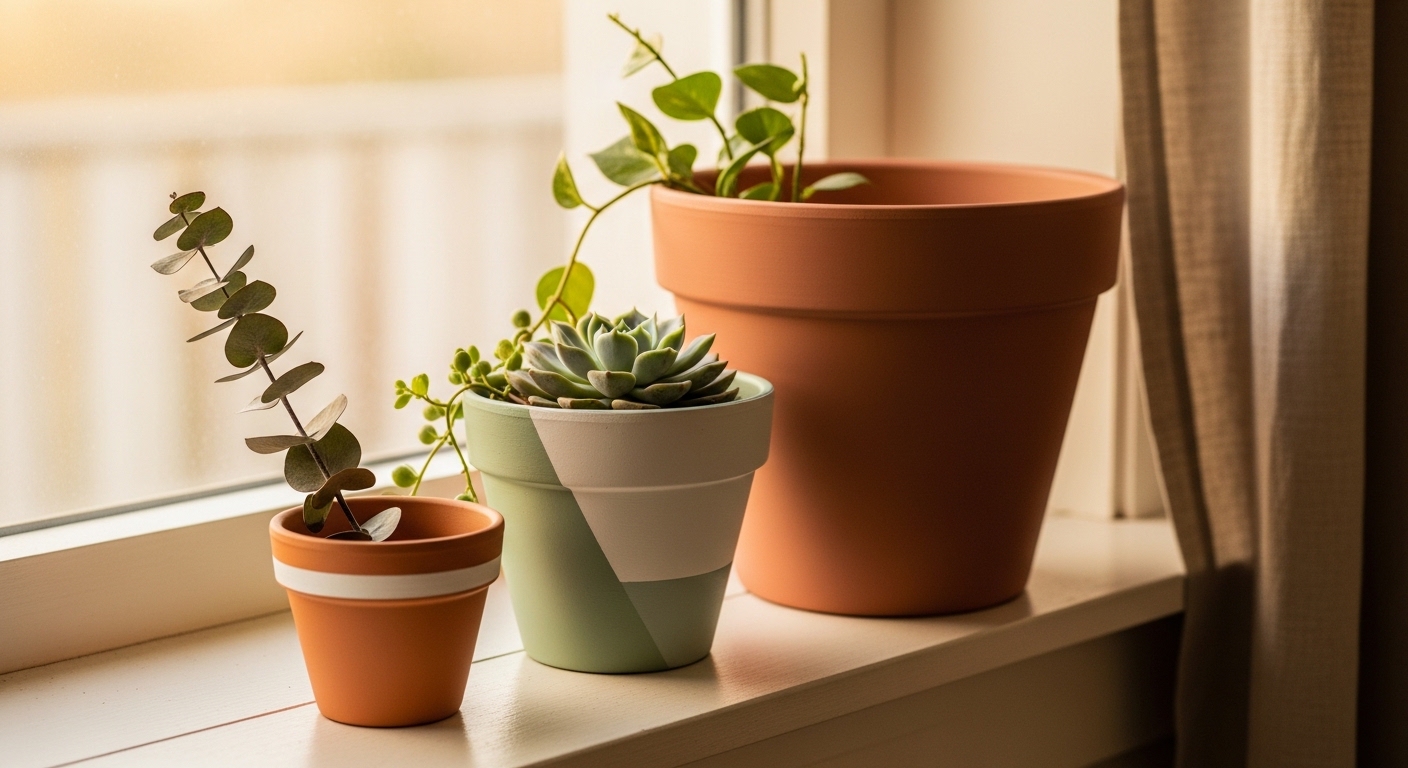
Painted terracotta pots are one of the most beginner-friendly handmade decor ideas available, and the results look far more expensive than they are. Plain terracotta pots from any garden center or dollar store become custom decorative objects with a coat or two of acrylic craft paint.
Try a solid matte color in a tone that complements your existing palette, a simple geometric pattern using painter’s tape as a guide, or a color block design with the bottom half painted and the top left natural. Seal with a matte varnish spray once dry to protect against moisture from watering.
Group three pots in graduated sizes on a windowsill, a shelf, or a console table for an instant styled vignette that looks intentional and design-forward.
What you need: Terracotta pots, acrylic craft paint, a flat brush, painter’s tape, matte varnish spray.
Time: One to two hours including drying time.
Cost: Under ten dollars.
2. DIY Gallery Wall With Thrifted Frames
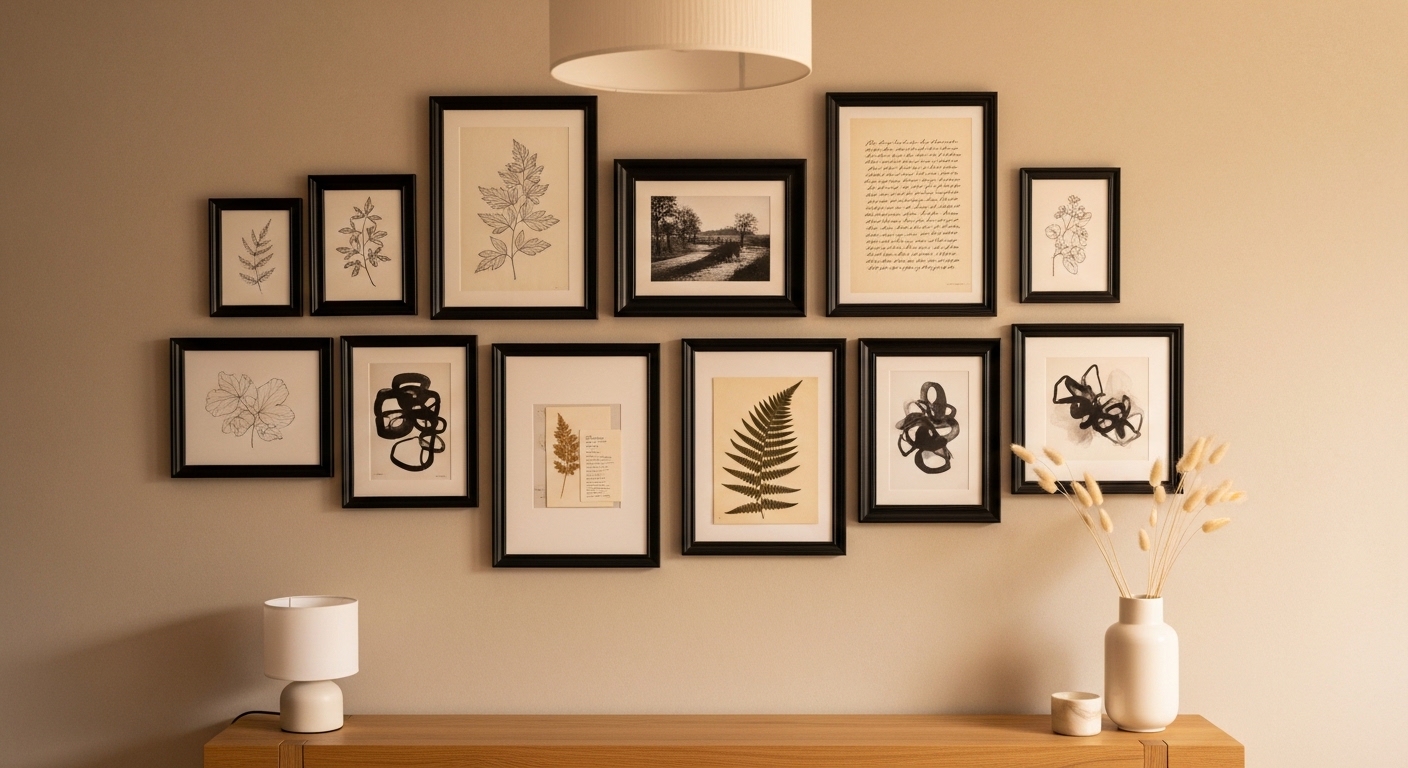
A gallery wall is one of the highest-impact decorating moves in any room, and creating one from thrifted frames is one of the most satisfying simple DIY crafts you can take on as a beginner.
Collect mismatched frames from thrift stores, estate sales, or your own storage. Paint them all in the same color, either all white, all black, or all in a single accent tone, to unify the collection visually. Fill them with a mix of printed art, photographs, fabric swatches, pressed botanicals, or pages from old books.
Lay the arrangement out on the floor first before committing to wall placement. Photograph the layout, then use it as your reference while hanging. A unified frame color and a consistent mat style throughout are the two details that elevate a gallery wall from random to refined.
What you need: Thrifted frames, spray paint, art prints or photos, picture hanging hardware.
Time: One afternoon.
Cost: Ten to thirty dollars depending on frame sourcing.
3. Rope-Wrapped Vases and Bottles
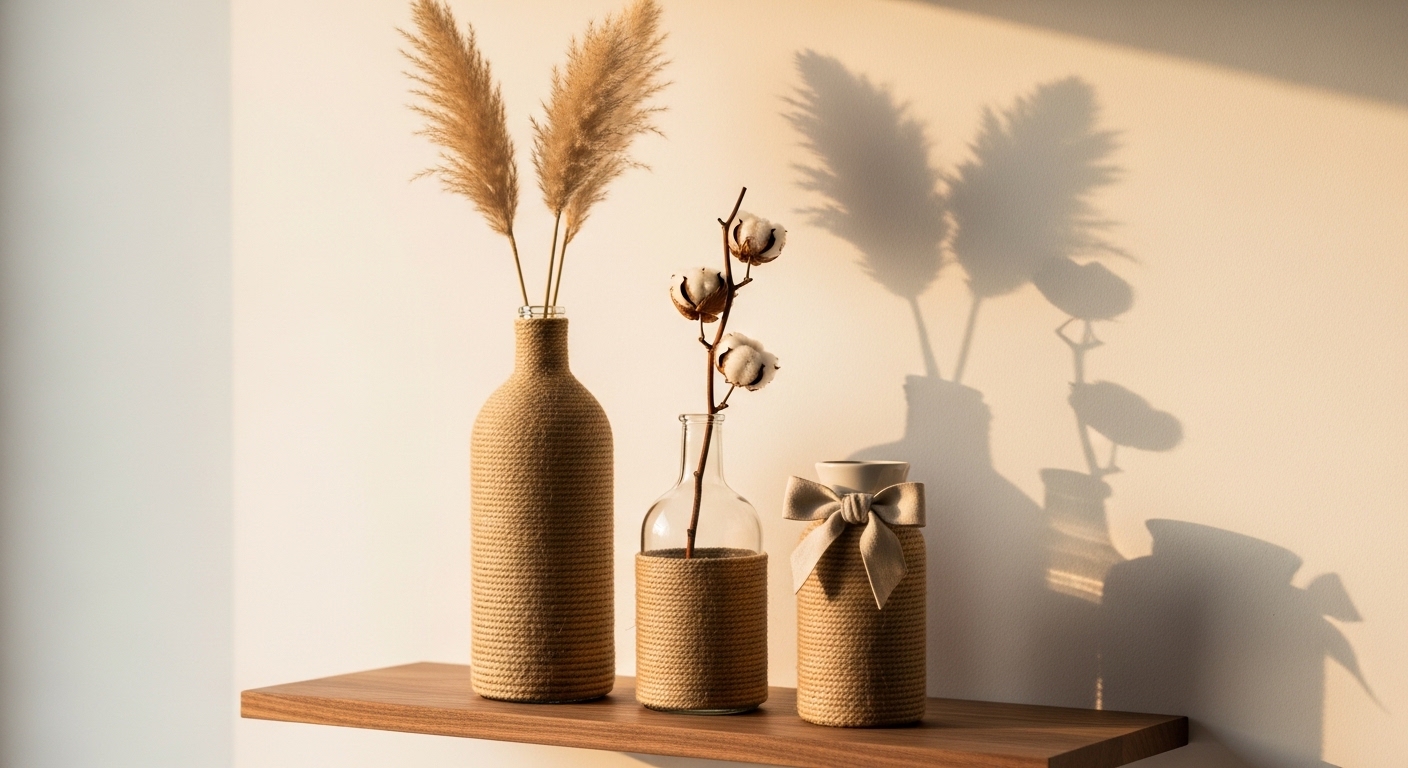
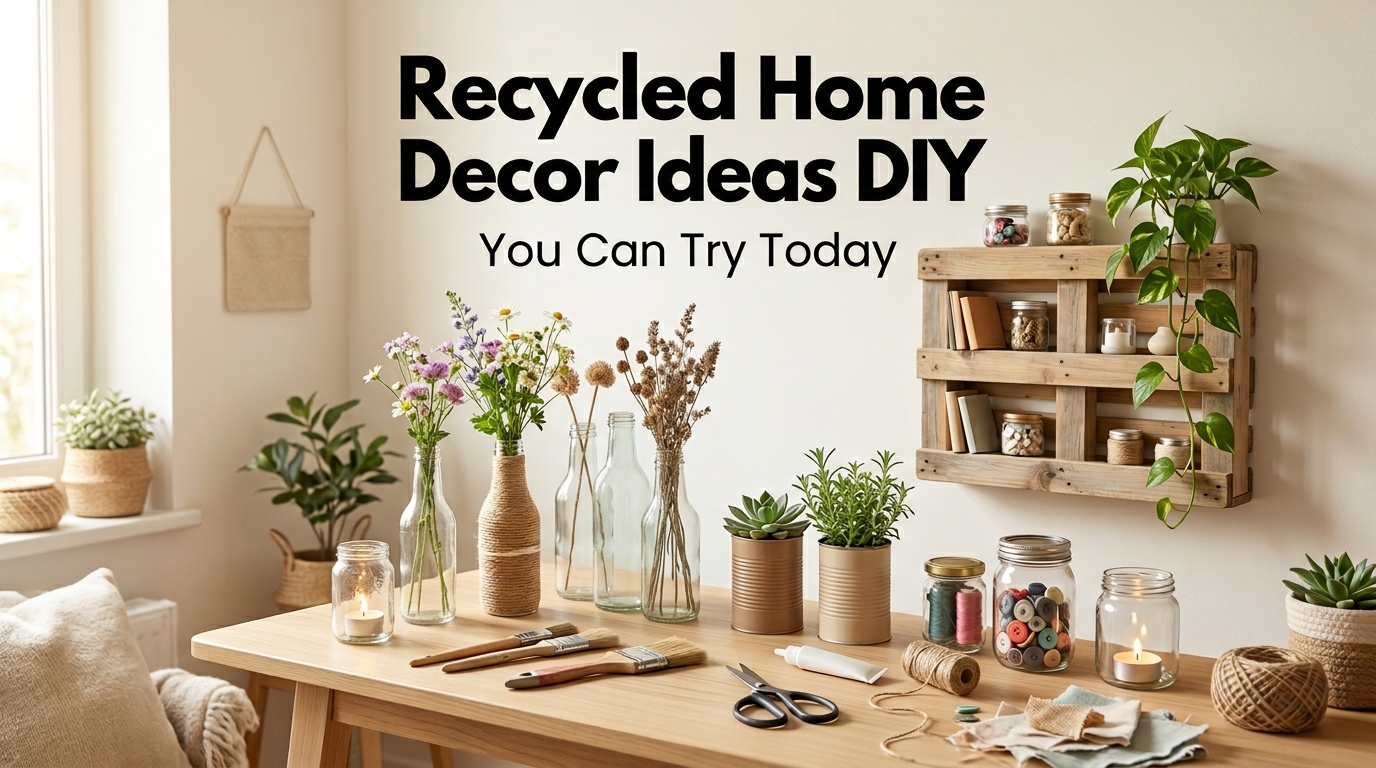
Transforming plain glass bottles, jars, or ceramic vases into textured decorative objects with natural rope or jute twine is one of the simplest beginner DIY decor projects with an immediately satisfying result.
Apply a thin line of strong craft glue around the base of your vessel and begin wrapping rope tightly, adding glue as you go row by row. Work upward until the entire surface is covered or stop partway for a layered look with the glass visible above. Trim the rope end cleanly and press firmly until the glue sets.
The finished pieces look organic, handcrafted, and thoroughly intentional. Group them in sets of three with dried stems or fresh flowers inside for a complete shelf or table styling moment.
What you need: Glass bottles or vases, natural jute rope, strong craft glue, scissors.
Time: Thirty to sixty minutes per piece.
Cost: Under eight dollars per piece.
4. Washi Tape Wall Art
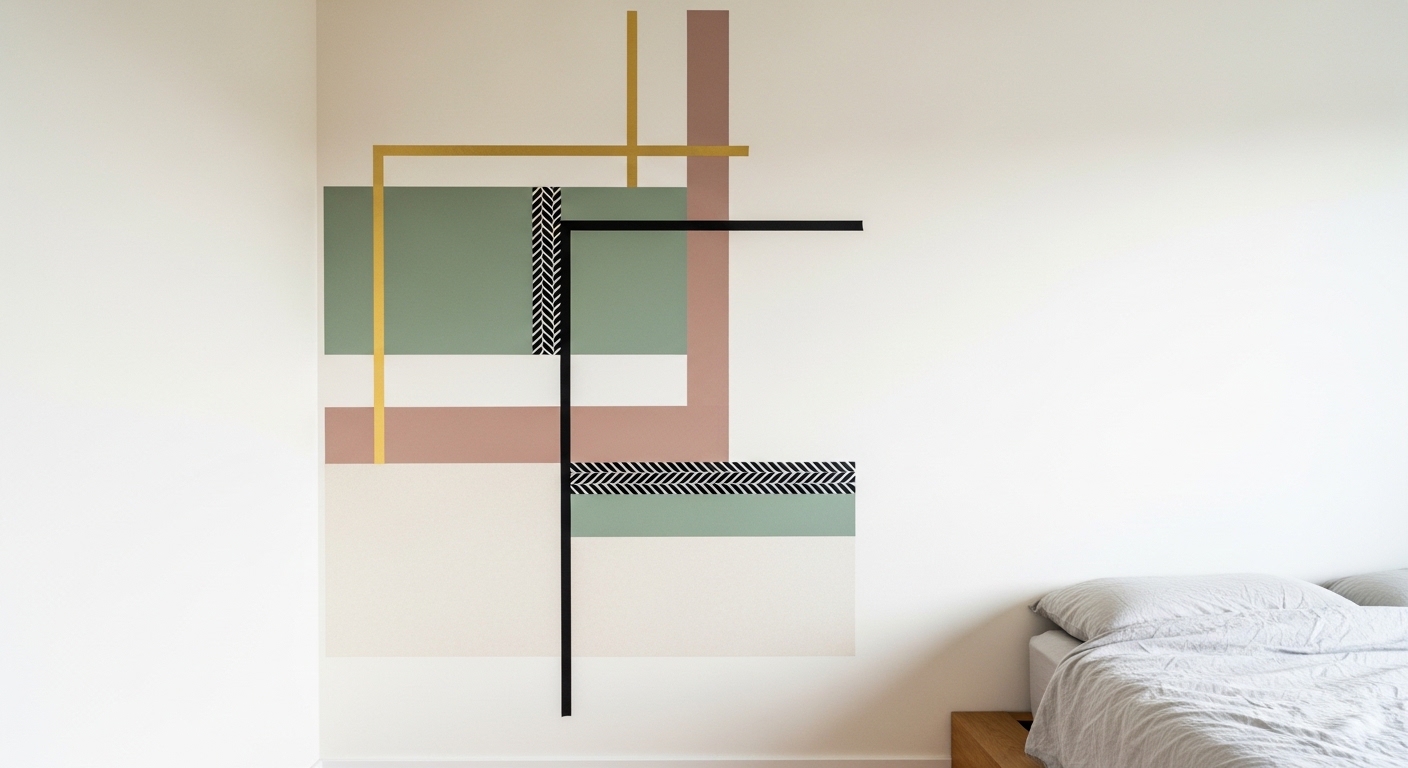
For renters or anyone who wants a completely commitment-free approach to wall decor, washi tape wall art is one of the most creative simple DIY crafts available. Washi tape comes in hundreds of patterns, colors, and widths, and removes cleanly from most wall surfaces without damaging paint.
Create geometric patterns using straight lines of tape at varying angles, build a large-scale abstract design, frame a section of wall to mimic the look of a panel, or create a simple botanical or architectural line drawing directly on the wall. The scale possibilities range from a small corner accent to a full feature wall installation.
The result looks intentional and contemporary, and can be updated or removed entirely whenever you want a change, making it one of the most flexible easy DIY home decor projects for beginners in this list.
What you need: Washi tape in your chosen colors and patterns, a ruler or level for straight lines.
Time: One to three hours depending on complexity.
Cost: Ten to twenty dollars.
5. Fabric-Covered Pin Board
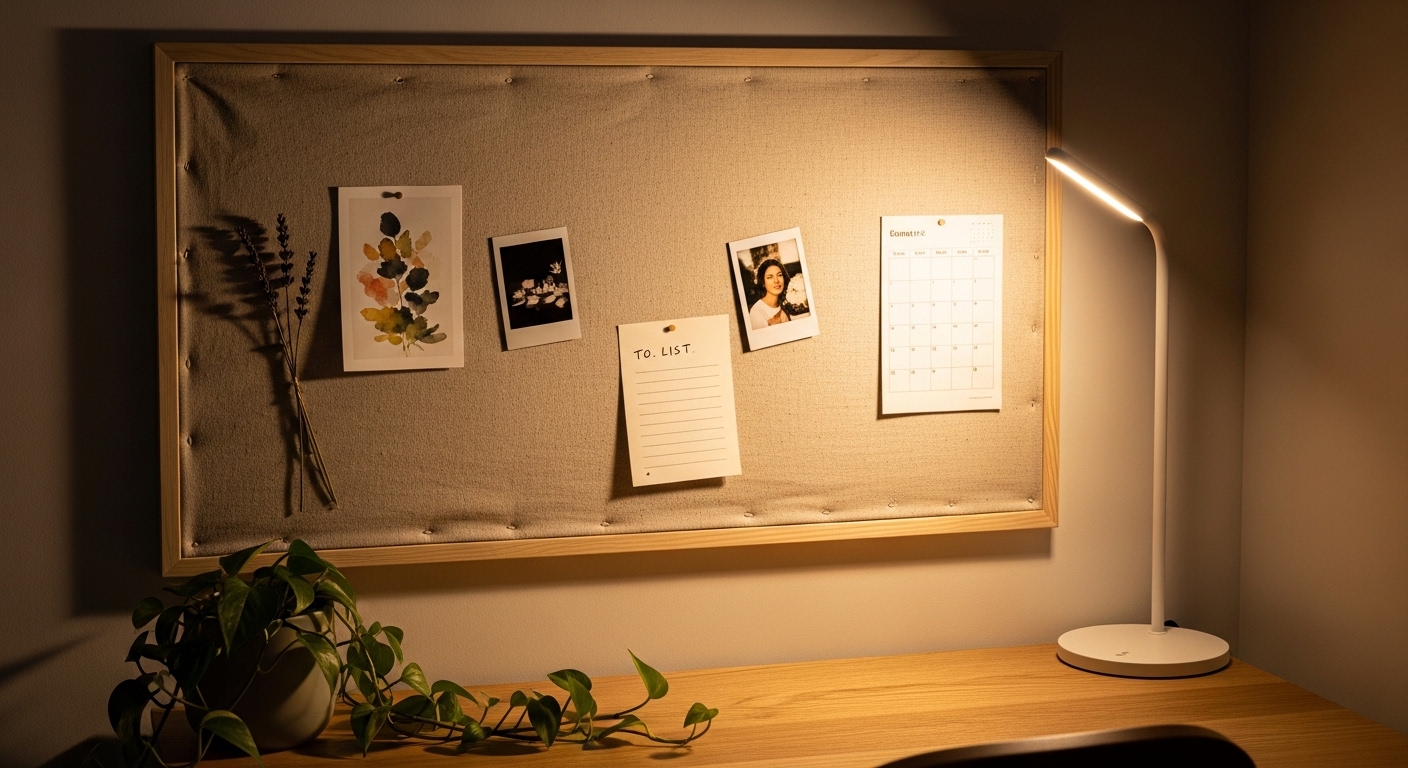
A fabric-covered pin board does double duty as both functional organization and wall decor. Purchase a plain corkboard from any office supply or craft store, cut a piece of fabric to size with several inches of overhang on each side, pull it taut over the front surface, and staple or hot glue it to the back.
Choose fabric in a print or texture that complements your room. Linen, cotton canvas, and low-pile velvet all work beautifully and add warmth and texture to a wall that might otherwise feel flat and plain.
Mount it above a desk, in a bedroom, or in an entryway as both a memo board and a decorative accent. Add a simple frame border around the edge for an even more finished look.
What you need: Plain corkboard, fabric of your choice, staple gun or hot glue, fabric scissors.
Time: Under one hour.
Cost: Fifteen to twenty-five dollars.
6. DIY Floating Wooden Shelf
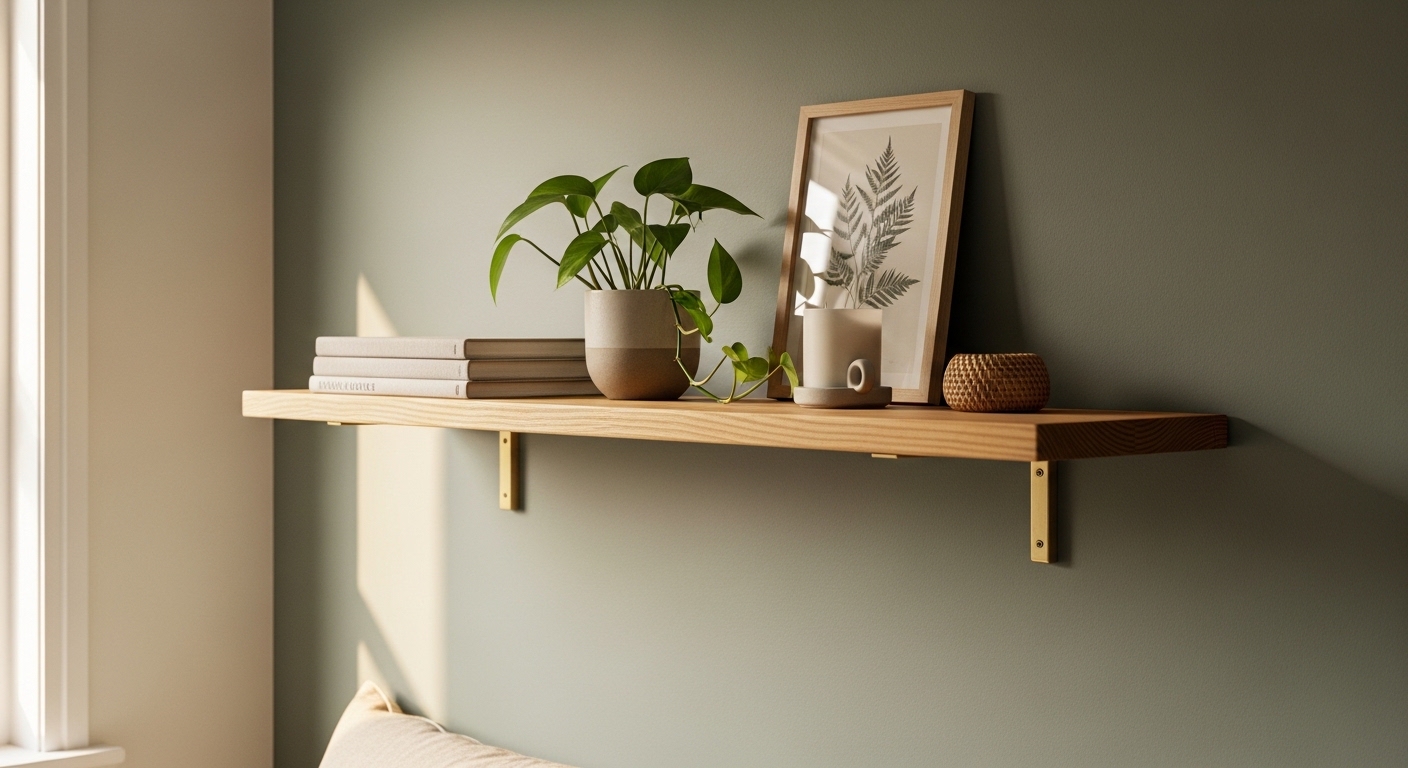
A single floating shelf built from one plank of wood and two basic wall brackets is one of the most useful handmade decor ideas a beginner can tackle. It adds storage, display space, and architectural interest to a blank wall, and the building process itself is genuinely straightforward.
Purchase a pre-cut plank of pine or poplar from a hardware store, sand all edges smooth, and apply a stain, paint, or clear oil finish of your choice. Once dry, mount two shelf brackets to the wall using a level to ensure they are perfectly aligned, then rest or secure the plank on top.
Style the shelf with a curated mix of a plant, a few books stacked horizontally, a small framed print leaned against the wall, and one or two decorative objects. The combination of the handmade shelf and a thoughtfully styled surface creates a design moment that feels genuinely custom.
What you need: Pre-cut wood plank, two shelf brackets, sandpaper, stain or paint, wall anchors and screws, a level.
Time: One afternoon.
Cost: Twenty to forty dollars.
7. Pressed Botanical Frames
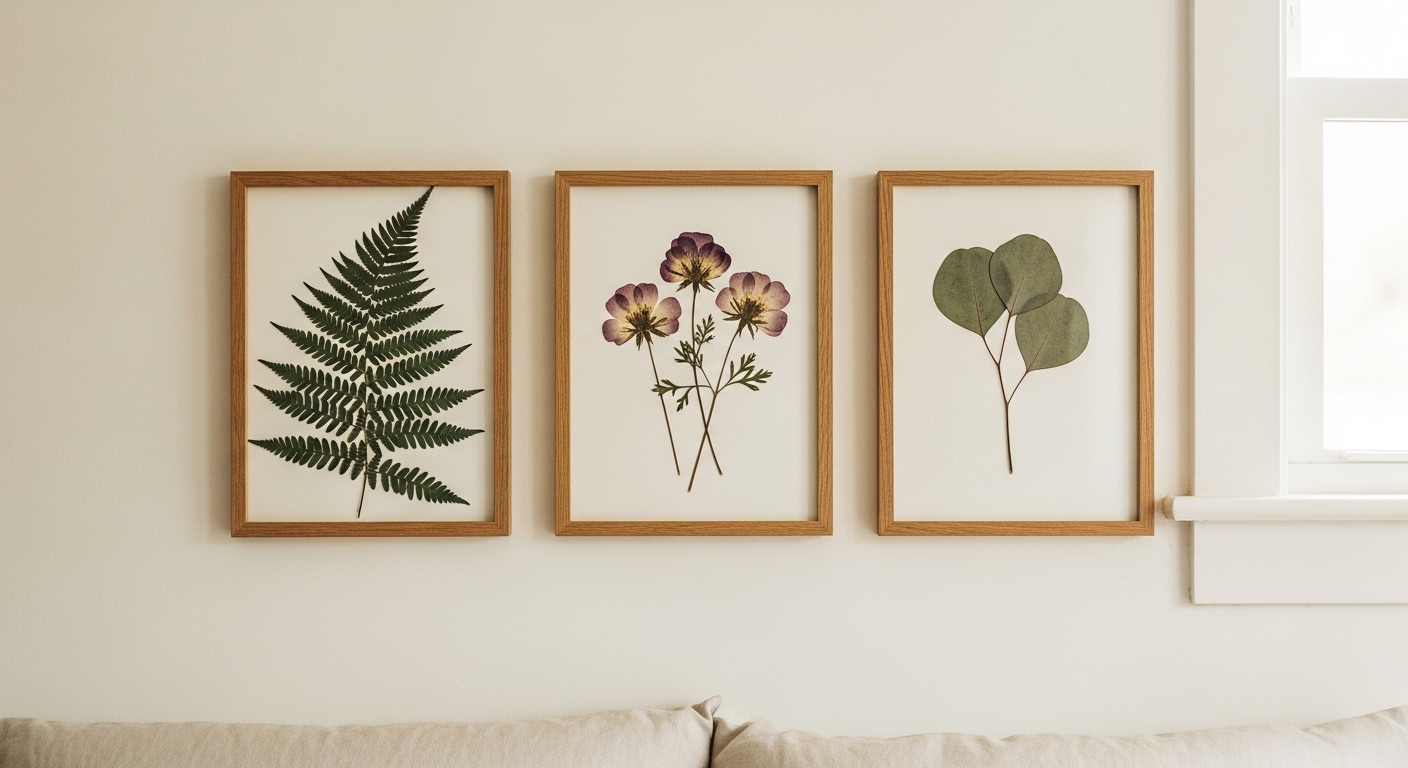
Pressing flowers and leaves and displaying them in simple frames is one of the most quietly beautiful beginner DIY decor projects, and it connects beautifully to biophilic design principles that bring natural elements into the home environment.
Collect flowers, leaves, or herbs from your garden, a local market, or even a grocery store. Press them between the pages of a heavy book for one to two weeks until fully flat and dry. Arrange the pressed specimens on card stock or watercolor paper, secure lightly with a tiny drop of craft glue, and frame behind glass.
A set of three matching frames with different botanical specimens creates a cohesive wall series that looks like something from a high-end botanical print shop. The entire project costs almost nothing beyond the frames themselves.
What you need: Fresh flowers or foliage, heavy books for pressing, card stock or watercolor paper, simple frames, craft glue.
Time: Two weeks for pressing, thirty minutes to arrange and frame.
Cost: Under fifteen dollars for the frames.
8. Hand-Painted Linen Pillow Covers
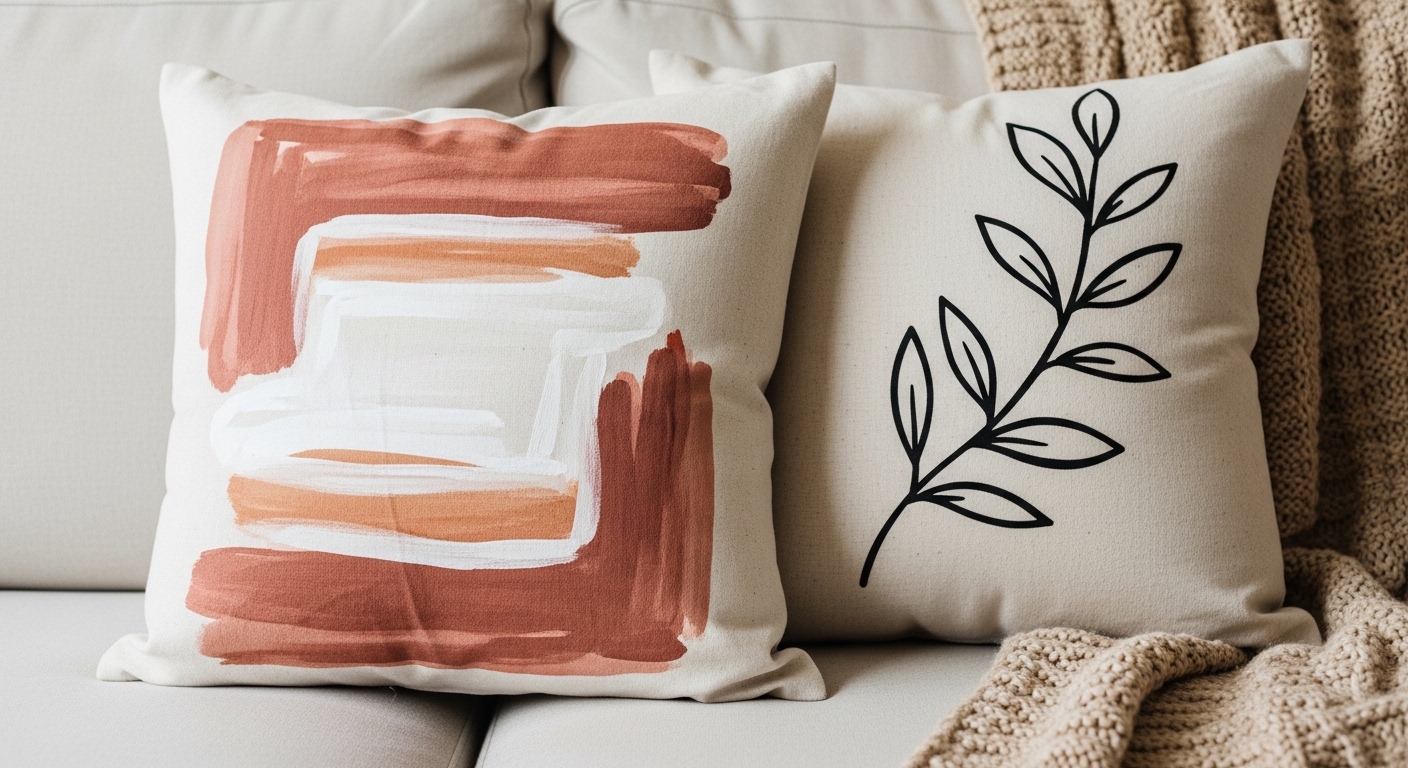
Custom pillow covers in handpainted linen are one of the most impactful simple DIY crafts for refreshing a living room or bedroom without replacing any furniture. Plain linen pillow covers are inexpensive and widely available, and fabric paint in a variety of colors allows for almost unlimited design possibilities.
Stretch the cover taut over a piece of cardboard to prevent bleed-through, then apply your design using a flat brush. Simple approaches that look beautiful even with no prior painting experience include abstract brushstrokes in one or two colors, simple line drawings of leaves or stems, and geometric blocks or stripes applied with painter’s tape as a guide.
Set the paint according to manufacturer instructions, usually by heat-setting with a household iron, and the covers become fully washable and durable for everyday use.
What you need: Plain linen pillow covers, fabric paint, flat brushes, painter’s tape, cardboard insert, iron.
Time: One to two hours plus drying time.
Cost: Fifteen to twenty-five dollars.
9. Mason Jar Candle Holders
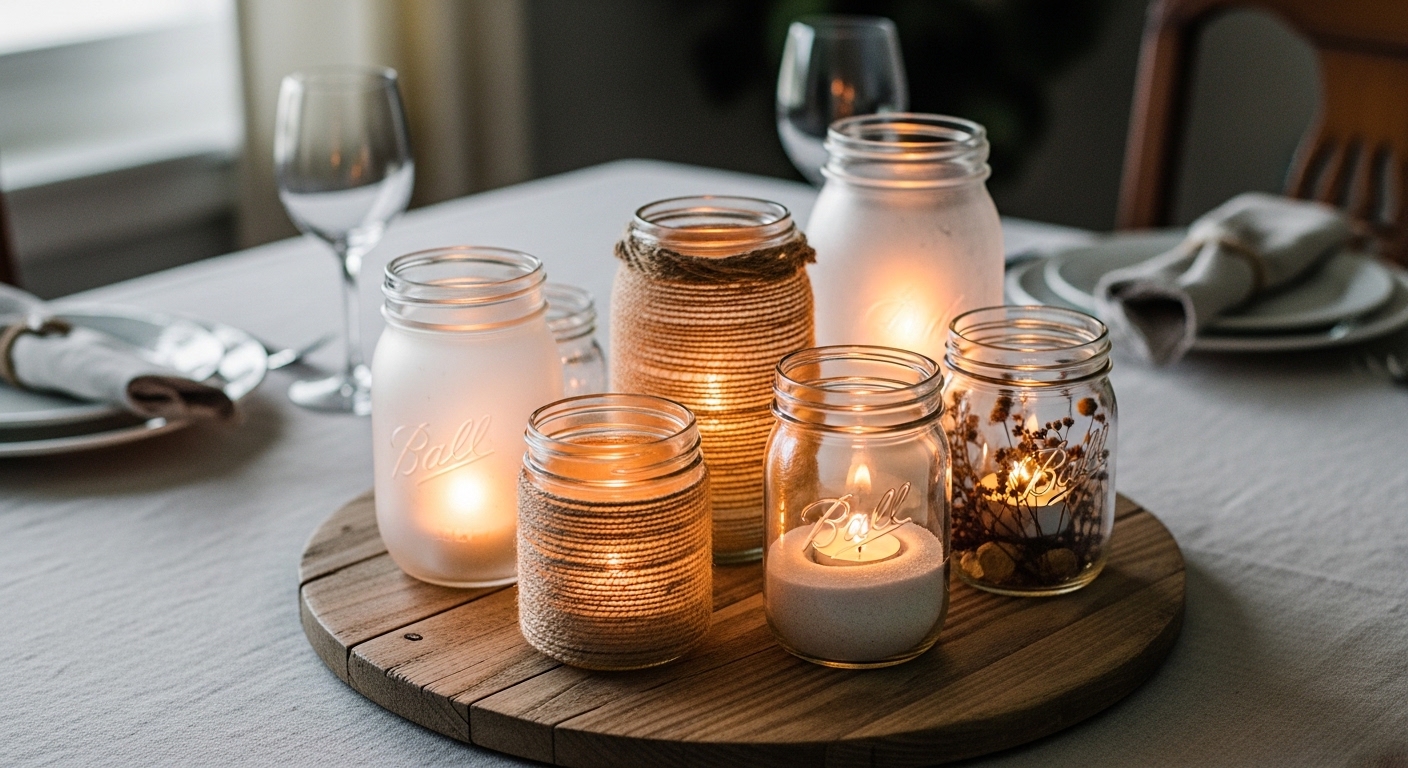
Repurposing mason jars as candle holders is one of the most versatile and beginner-friendly handmade decor ideas because the finished result works equally well in a living room, a bedroom, a dining table, or a bathroom.
Clean and dry the jars completely, then customize them using one or a combination of techniques: frosted glass spray for a soft diffused glow, twine or rope wrapping around the lower portion, a simple painted design using glass paint, or filled with sand, pebbles, or dried botanicals before inserting a tealight or pillar candle.
Group three or five jars in varying heights on a tray for a styled centerpiece that looks far more intentional than the sum of its parts. This is also one of the most sustainable projects in this list because it gives new life to containers that would otherwise be discarded.
What you need: Mason jars in varying sizes, tealight or pillar candles, frosted glass spray or glass paint, twine, sand or pebbles as optional fillers.
Time: Thirty to sixty minutes.
Cost: Under twelve dollars.
10. DIY Bookshelf Styling Refresh
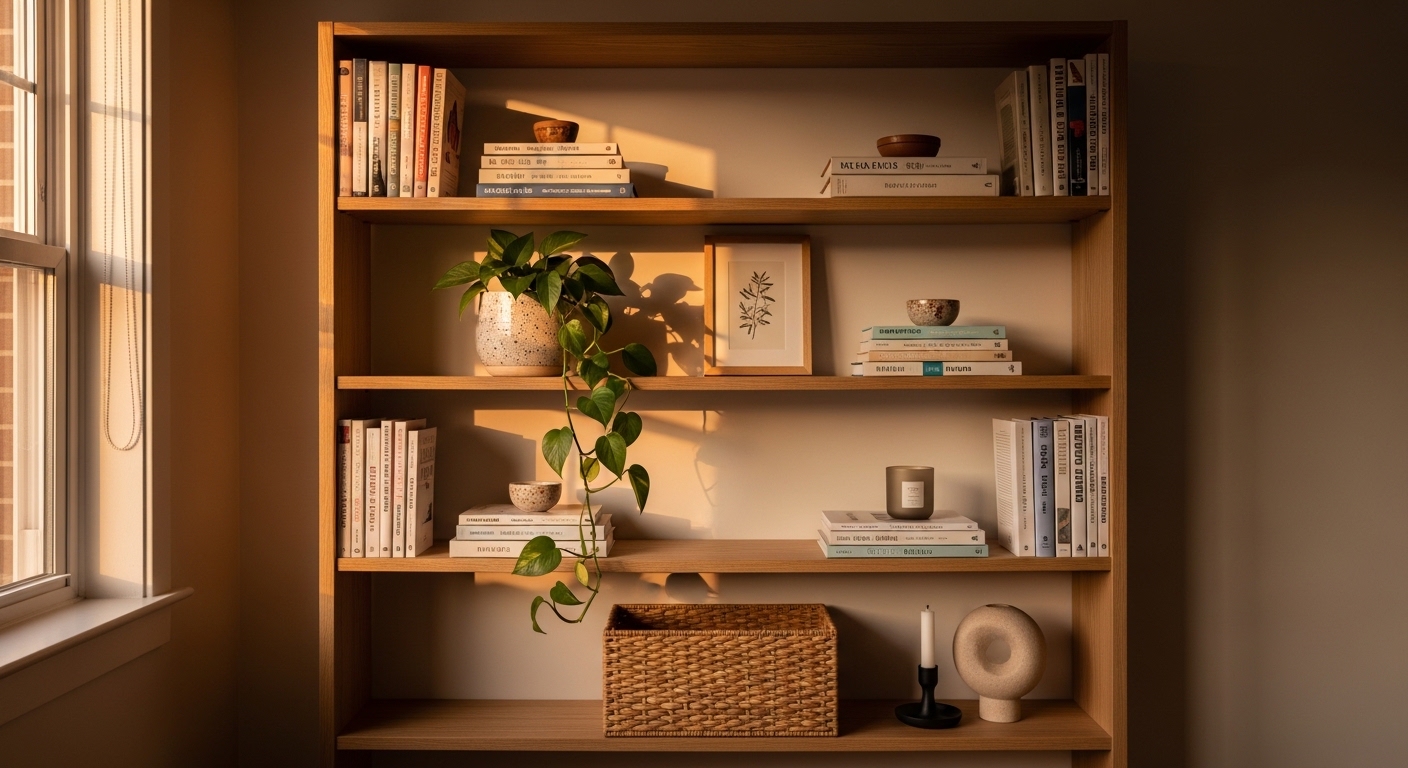
This final project involves no building, no painting, and no tools at all, yet it consistently delivers one of the most dramatic visual improvements of any easy DIY home decor project for beginners: a fully restyled bookshelf.
Remove everything from the shelf completely. Clean the surface. Then replace items thoughtfully using the following principles: books stacked both vertically and horizontally in small stacks of three to four, objects grouped in odd numbers, a plant or small vase of stems at one end, decorative objects varying in height and texture, and deliberate empty space left between groupings.
The difference between a shelf that looks cluttered and one that looks curated is almost always a matter of editing and intentional spacing rather than the objects themselves. This project costs nothing and can be completed in under an hour with materials you already own.
What you need: Your existing shelf contents, a willingness to edit, and a critical eye.
Time: Thirty to sixty minutes.
Cost: Nothing.
Common Beginner DIY Mistakes to Avoid
Even the simplest projects go more smoothly when you know what to watch for. A few consistent issues come up for beginners across all of these projects:
Rushing the drying time is the most common. Paint, glue, and varnish all need their full curing time before being handled or put into use. Cutting that time short leads to smears, peeling, and disappointing results. Follow manufacturer guidelines without exception.
Skipping the prep work is the second most common mistake. Sanding before painting, wiping surfaces clean before applying adhesive, and using proper primer when switching from dark to light paint colors all make a significant difference in the finished result.
Underestimating material quantities is a frustration many beginners encounter. Always buy slightly more paint, rope, fabric, or hardware than you think you need. Running out mid-project and having to wait for a second supply run is avoidable with a small amount of planning.
A Note on Sustainable DIY Decor
Many of the best easy DIY home decor projects for beginners naturally align with sustainable design principles. Repurposing thrifted frames, reclaiming glass bottles, upcycling terracotta pots, and pressing botanicals from the garden all reduce consumption while producing something genuinely beautiful. As both an architectural consultant and a LEED Green Associate, this is one of the things I love most about handmade decor: it tends to be kinder to the planet by default.
Choosing water-based, low-VOC paints and natural materials like jute, linen, and untreated wood wherever possible keeps your creative projects healthier for both the home environment and the people in it.
Wrapping Notes on Easy DIY Home Decor Projects for Beginners
The most important thing to know about easy DIY home decor projects for beginners is that perfection is not the goal. Character is. A hand-painted pot with a slightly uneven line, a gallery wall where one frame sits at a barely perceptible angle, a rope-wrapped vase where the texture is a little rustic: these are not flaws. They are the details that make a home feel lived in and loved rather than showroom-perfect and untouched.
Start with one project this weekend. Finish it. Put it somewhere you will see it every day. Then decide what you want to make next.
FAQ: Easy DIY Home Decor Projects for Beginners
What is the easiest DIY home decor project for absolute beginners?
Painted terracotta pots and rope-wrapped vases are both excellent starting points because they require no precision cutting, no wall mounting, and minimal materials. Both can be completed in under an hour and produce results that look genuinely polished with very little practice.
How much does beginner DIY decor typically cost?
Most of the projects in this guide cost between five and thirty dollars in materials. Projects like bookshelf styling and pressed botanical frames can cost almost nothing. A painted gallery wall with thrifted frames typically represents the higher end of the budget range in this list, usually between fifteen and thirty dollars depending on how many frames you source.
Do I need special tools for beginner DIY home decor projects?
Most beginner decor projects require nothing more than basic craft supplies: a paintbrush, craft glue, scissors, and painter’s tape. Projects involving wall-mounted shelves require a drill, wall anchors, and a level, which are standard household tools available at any hardware store for a modest investment that pays off across many future projects.
What are the best materials for simple DIY crafts at home?
Natural materials like jute rope, linen fabric, untreated pine wood, terracotta, and glass are consistently the most versatile and visually rewarding materials for beginner decor projects. They are affordable, widely available, work well with a wide range of finishes and paints, and tend to look beautiful together in the same space.
How do I make handmade decor look professional and polished?
The two factors that most consistently separate polished handmade decor from amateur-looking results are proper surface preparation before applying paint or finish, and full curing time after. Beyond that, choosing a cohesive color palette across your projects, using quality brushes for cleaner paint application, and editing your displays down to only what genuinely looks good all contribute to a refined final result.