A beautiful room usually feels calm before anyone notices why. The sofa may be the right size, the rug may fit the layout, and the wall color may be soft, yet the space can still look unfinished if the lighting is flat. Lighting is one of the easiest home decor tools to overlook because it is practical first. We need it to see, cook, read, and move around safely. But once the basic need is covered, lighting also shapes mood, texture, color, and the way each corner of a room is experienced.
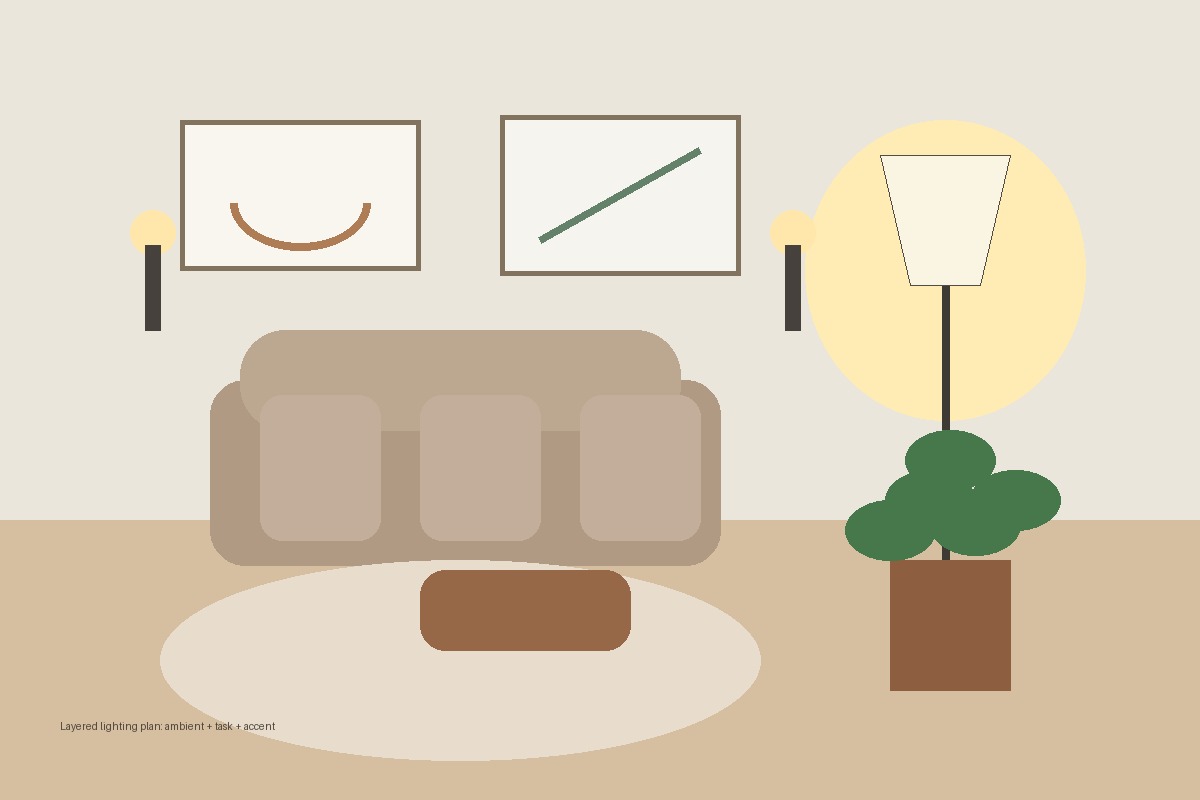
For homeowners who want a warmer and more pulled-together home, the goal is not to add as many fixtures as possible. The goal is to create layers. Layered lighting means using more than one type of light in the same room so each fixture has a clear job. When the layers work together, a room looks more comfortable during the day, more relaxed at night, and more intentional in photographs and real life.
Start with ambient light, but do not stop there
Ambient lighting is the general light that fills a room. It might come from a ceiling fixture, recessed lights, a flush mount, or a chandelier. This layer helps people move around and understand the space. In many homes, however, ambient light is the only layer, which is why living rooms and bedrooms can feel harsh in the evening.
A good ambient layer should feel even, not glaring. If a room has one bright ceiling fixture, use a dimmer whenever possible. A warm white bulb can also make a big difference. For most living areas, a warmer color temperature feels more relaxed than a cool office-like light. The fixture style matters too. A simple shade, a softly diffused globe, or a chandelier with warm bulbs can turn basic overhead lighting into part of the decor instead of just a utility.
Add task lighting where real life happens
Task lighting supports specific activities. A reading chair needs a floor lamp or wall sconce nearby. A kitchen island needs pendants or focused overhead lighting. A desk needs a lamp that keeps the work surface bright without lighting the whole room. This layer makes a home easier to use, which is why it often has the biggest practical impact.
When choosing task lighting, placement is more important than brightness alone. A lamp that sits too far from a chair may look attractive but fail at its job. A pendant placed too high can lose focus. A light placed directly behind a person can create shadows. Think about where people sit, stand, read, cook, and gather. Then place the fixture close enough to support that activity comfortably.
Use accent lighting to highlight the best parts of the room
Accent lighting is the decorative layer that gives a room depth. It can highlight artwork, shelves, architectural details, plants, a textured wall, or a beautiful cabinet. This is the layer that often makes a room feel styled rather than simply furnished.
Accent lighting does not need to be complicated. A small picture light above art, a pair of sconces beside a mirror, a lamp on a console table, or a soft light inside open shelving can all create a gentle glow. The key is contrast. If every surface is lit the same way, nothing stands out. If a few areas are softly highlighted, the eye has places to rest.
Match fixture scale to furniture and room size
Even a good lighting plan can feel wrong if the fixtures are the wrong scale. A tiny pendant above a large dining table may disappear. A very large chandelier in a low-ceiling room may feel heavy. A table lamp with a small shade beside a deep sofa may look unbalanced.
Use the furniture as a guide. A dining fixture should relate to the size of the table. A bedside lamp should feel balanced with the nightstand and headboard. A floor lamp should sit comfortably beside the seating group rather than floating alone. When lighting feels connected to the furniture, the room looks more designed.
Pay attention to finishes and materials
Lighting also adds texture. Brass can warm up a neutral room. Matte black can create contrast. Glass shades can feel light and airy. Fabric shades soften the light and make a space feel more relaxed. Wood, ceramic, and stone details can connect lighting to other decor elements in the room.
The finish does not have to match every handle, faucet, or frame exactly. In fact, a room often looks more natural when finishes are coordinated rather than identical. Choose one dominant finish and repeat it a few times, then allow a second finish to appear in smaller details. This keeps the room collected instead of overly matched.
Create evening scenes, not just daytime brightness
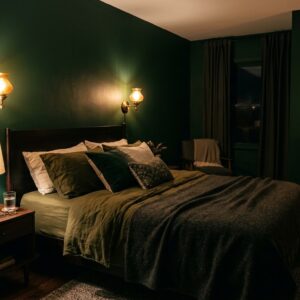
Many homes are designed around daytime needs, but lighting is most important after sunset. A living room that looks fine in daylight may feel cold at night if only one overhead light is used. Try creating an evening scene with two or three softer sources: a floor lamp near the sofa, a table lamp on a sideboard, and a small accent light near art or shelving.
This approach gives flexibility. Bright light can be used for cleaning or tasks, while softer layers can be used for conversation, reading, or relaxing. Dimmers, smart bulbs, and separate switches make this easier, but even simple plug-in lamps can change the mood of a room quickly.
Common lighting mistakes to avoid
The most common mistake is relying on a single overhead fixture. Another is choosing bulbs that are too cool for living spaces. Homeowners also sometimes place lamps only for symmetry, not for actual use. A pair of lamps can look neat, but if neither one supports reading, conversation, or a dark corner, the room may still feel incomplete.
It is also easy to forget shadows. A room needs some shadow to feel comfortable, but deep dark corners can make a space feel smaller. Walk through the room in the evening and notice where the light falls. Small changes, such as moving a lamp, lowering bulb brightness, or adding one wall sconce, can make the entire space feel more balanced.
Layered lighting is one of the most useful home decor strategies because it improves both function and atmosphere. It helps a room support daily routines while also making furniture, color, texture, and architectural details look better. Start with a comfortable ambient layer, add practical task lights, and finish with accent lighting that highlights the parts of the room you love most. The result is a home that feels warmer, more useful, and more carefully designed without needing a full renovation.