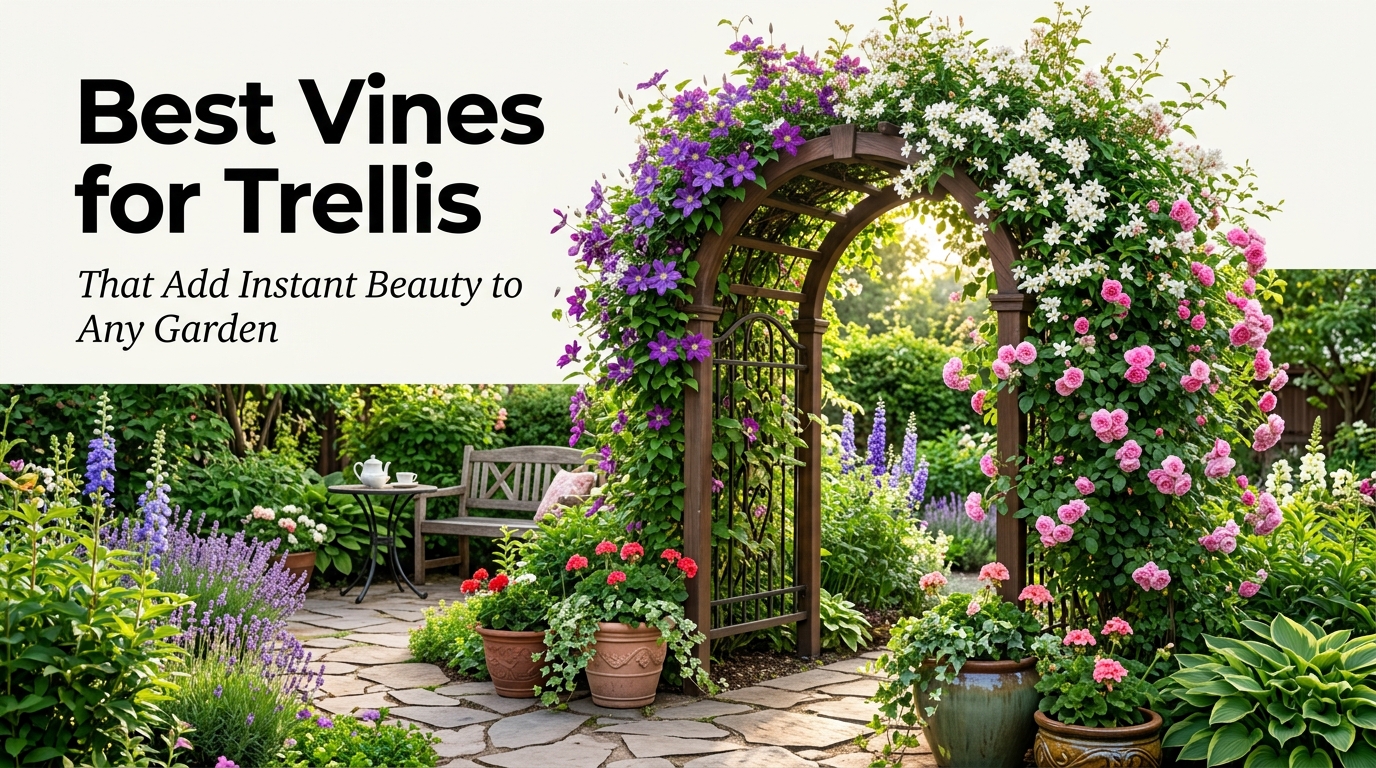
A trellis can completely change how a garden feels.
It adds height, softness, privacy, and structure without taking up much ground space. But the real transformation comes from the plants you grow on it.
The problem is that many homeowners choose vines based only on appearance. A plant may look beautiful at the garden center, then become impossible to control a year later. Others barely flower, struggle in certain climates, or simply outgrow the trellis entirely.
That is why choosing the best vines for trellis structures requires more than picking the prettiest flowers.
The right climbing plant should match:
- Your climate
- Sun exposure
- Trellis strength
- Maintenance preference
- Available space
Over the years, I have seen homeowners completely transform plain fences, patios, and garden walls using the right plants that climb trellises. I have also seen fast-growing vines destroy weak structures because nobody planned ahead.
This guide focuses on climbing plants that are not just attractive, but practical for real home gardens.
What Most Homeowners Get Wrong About Trellis Vines
Before choosing from any trellis flowers list, understand this first:
Fast growth is not always a good thing.
Some climbing vines with flowers can become extremely aggressive once established. Others require strong support systems or specific pruning schedules to stay healthy.
The most common mistakes include:
- Using weak wooden trellises for heavy vines
- Planting full-sun vines in shaded areas
- Ignoring mature growth size
- Choosing invasive species without realizing it
I once worked with a homeowner who planted trumpet vine along a lightweight decorative trellis beside a patio. Within two seasons, the vine completely overwhelmed the structure and started spreading into nearby garden beds.
The lesson is simple. Growth habit matters just as much as appearance.
Quick Comparison: Best Trellis Vines by Use Case
| Vine | Best Feature | Sun Needs | Maintenance | Best For |
| Clematis | Large flowers | Full to partial sun | Medium | Cottage gardens |
| Jasmine | Fragrance | Full sun | Low | Patios and privacy |
| Climbing Rose | Classic blooms | Full sun | Medium | Decorative trellises |
| Bougainvillea | Heat tolerance | Full sun | Medium | Hot climates |
| Honeysuckle | Pollinator-friendly | Full sun | Low | Wildlife gardens |
| Wisteria | Dramatic flowering | Full sun | High | Large structures |
If you are a beginner, start with jasmine or honeysuckle before trying aggressive growers like wisteria.
1. Clematis (Best Overall Flowering Vine)
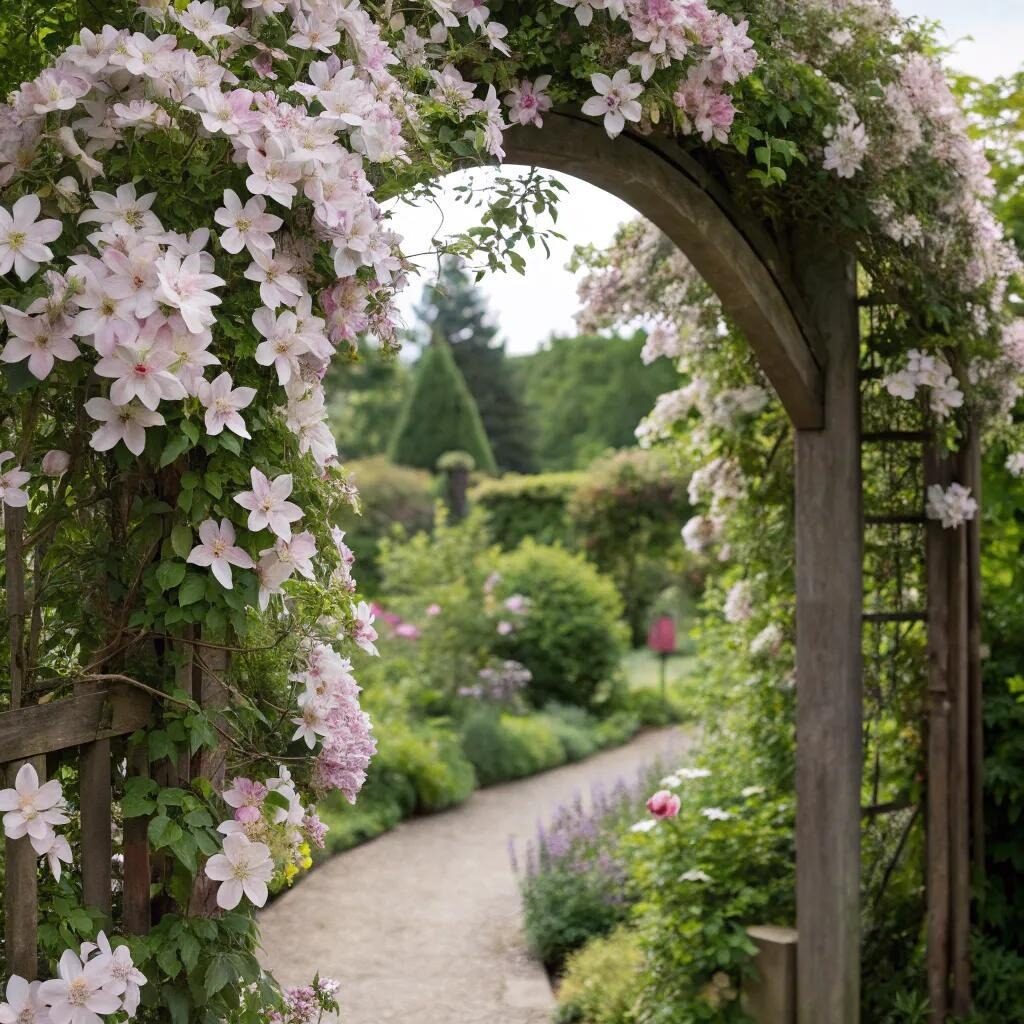
Clematis is one of the most popular flowers that grow on a trellis for a reason. It combines elegant blooms with manageable growth, making it ideal for homeowners who want color without extreme maintenance.
Why Clematis Works So Well
- Produces large, colorful blooms
- Works well on small and medium trellises
- Available in many flower colors
- Less invasive than aggressive vines
Sun Requirements
- Full sun to partial shade
- Roots prefer cooler soil
Growth Habit
Most varieties grow between 6 and 12 feet tall, depending on type.
Best Placement Ideas
- Cottage gardens
- Entryway trellises
- Fence accents
- Small backyard vertical gardens
Important Maintenance Note
Clematis pruning varies by variety. Some bloom on old growth while others bloom on new growth.
This is where many homeowners accidentally reduce flowering.
Best For
Homeowners looking for elegant climbing vines with flowers that do not completely take over the yard.
2. Jasmine (Best Fragrant Trellis Vine)
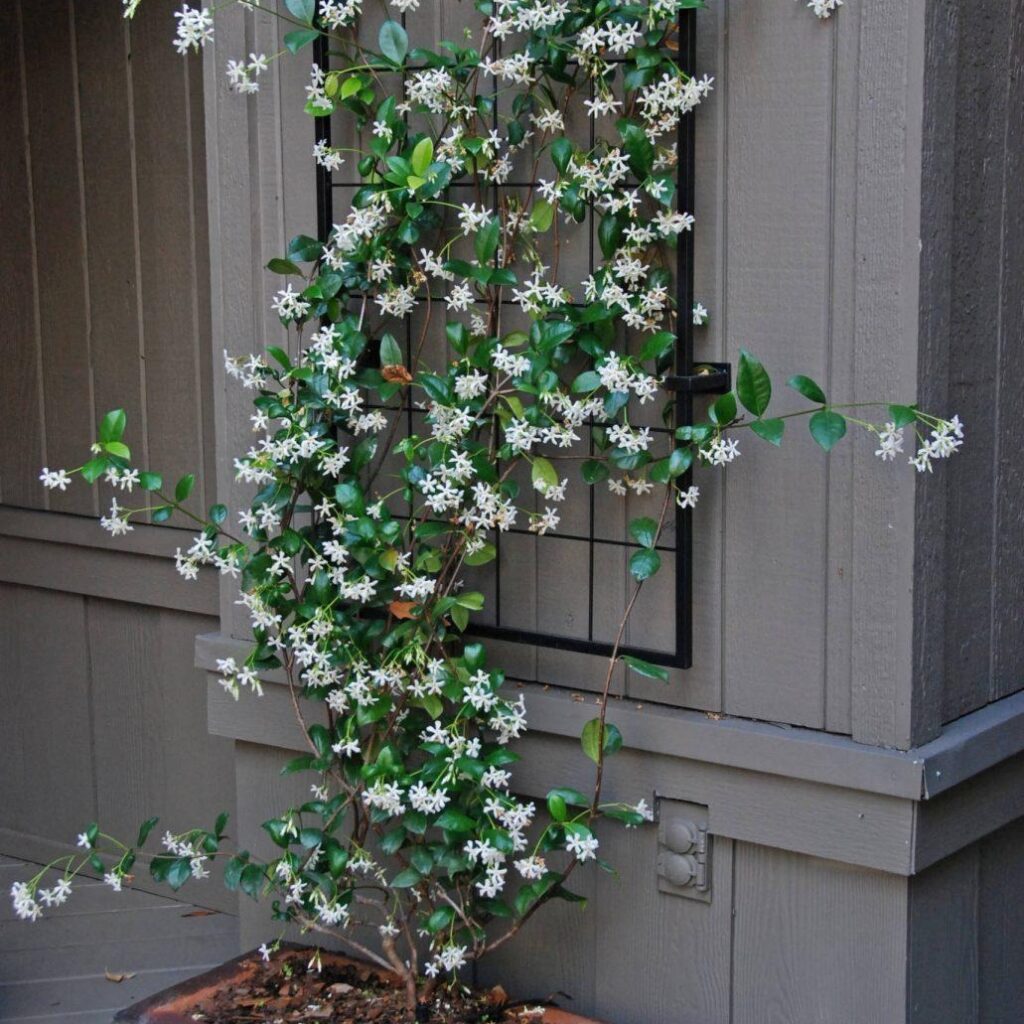
If fragrance matters as much as appearance, jasmine is hard to beat.
Jasmine vines produce small but highly fragrant flowers that can completely change the atmosphere of a patio or outdoor seating area during blooming season.
Why Homeowners Love Jasmine
- Strong pleasant fragrance
- Evergreen in warmer climates
- Moderate and manageable growth
- Excellent for privacy trellises
Sun Requirements
- Full sun for best flowering
- Tolerates light shade
Best Climates
Jasmine performs especially well in:
- Florida
- Southern California
- Texas
- Coastal southern regions
Best Uses
- Patio privacy walls
- Pergolas
- Fence trellises
- Outdoor seating areas
Low-Maintenance Advantage
Compared to many other plants that climb trellises, jasmine requires relatively little pruning once established.
My Advice
One homeowner I worked with wanted more privacy around a small patio but did not want a heavy fence blocking airflow.
We installed a narrow trellis with star jasmine instead. Within two growing seasons, the area felt significantly more private while still allowing light and air movement.
The fragrance during summer evenings completely changed how the space felt.
3. Climbing Roses (Best Traditional Trellis Flower)
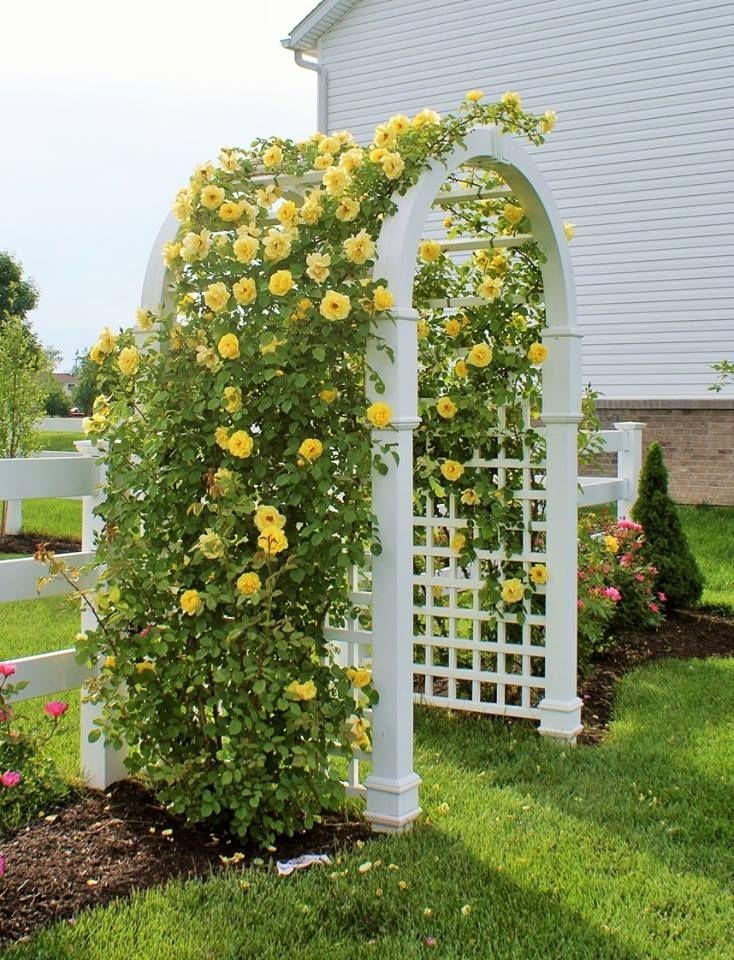
Few flowers that grow on a trellis create the same timeless look as climbing roses.
They add height, romance, and structure to gardens while producing some of the most visually impressive blooms among all trellis vines.
Why Climbing Roses Stand Out
- Large dramatic blooms
- Long flowering season in many climates
- Excellent for traditional gardens
- Creates strong vertical focal points
Important Difference: Climbing vs Rambling Roses
Many homeowners confuse climbing roses with rambling roses.
- Climbing roses grow more controlled and structured
- Rambling roses spread aggressively and require much more space
For most residential trellises, climbing roses are the better choice.
Sun Requirements
- At least 6 hours of direct sunlight daily
Maintenance Level
Moderate.
Climbing roses require:
- Seasonal pruning
- Disease monitoring
- Structural support training
Common Problem
Poor airflow often leads to fungal diseases in humid climates.
Spacing matters more than many homeowners realize.
Best For
- Decorative entryways
- Arbors
- Cottage-style gardens
- Traditional landscape designs
4. Bougainvillea (Best Vine for Hot Climates)
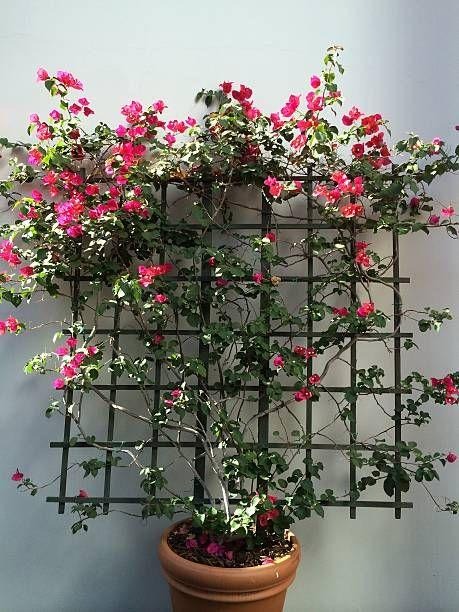
For homeowners in warm southern states, bougainvillea is one of the most visually striking options on any trellis flowers list.
Its vibrant color and drought tolerance make it especially popular in hot climates.
Why Bougainvillea Performs Well
- Thrives in extreme heat
- Drought-tolerant once established
- Produces intense color for months
- Works beautifully on walls and pergolas
Best Climates
- Arizona
- Southern California
- Texas
- Florida
Sun Requirements
Full sun is essential for strong blooming.
Important Warning
Bougainvillea can become large and thorny over time.
It is not ideal for:
- Narrow walkways
- Small children’s play areas
- Tight compact trellises
Best Use Cases
- Mediterranean-style landscapes
- Large pergolas
- Privacy walls
- Courtyard gardens
Maintenance Reality
Although drought-tolerant, bougainvillea still requires regular shaping to prevent excessive growth.
5. Honeysuckle (Best Pollinator-Friendly Vine)
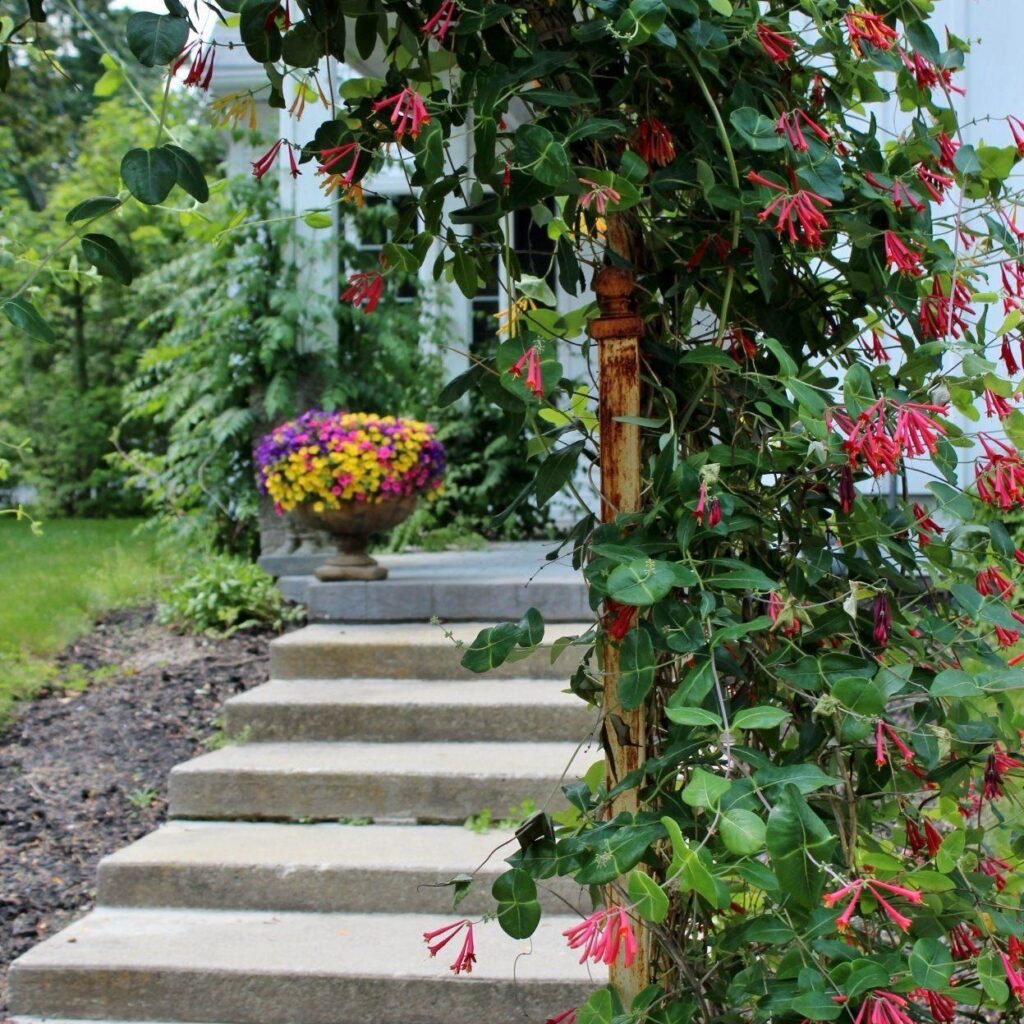
Honeysuckle remains one of the most versatile plants that climb trellises, especially for homeowners wanting wildlife-friendly gardens.
Its tubular flowers attract:
- Hummingbirds
- Butterflies
- Bees
Why Honeysuckle Is Popular
- Fast-growing but manageable
- Attractive blooms
- Pleasant fragrance
- Pollinator-friendly
Sun Requirements
- Full sun to partial shade
Native vs Invasive Varieties
This matters more than most gardening blogs mention.
Some non-native honeysuckle varieties spread aggressively and can become invasive in certain regions.
Whenever possible, choose native varieties suited to your local climate.
Best Uses
- Wildlife gardens
- Fence coverage
- Cottage landscapes
- Backyard privacy screens
Best For Beginners
Honeysuckle is one of the easier climbing vines with flowers for newer gardeners because it adapts well to different conditions.
6. Wisteria (Best Dramatic Flowering Vine)
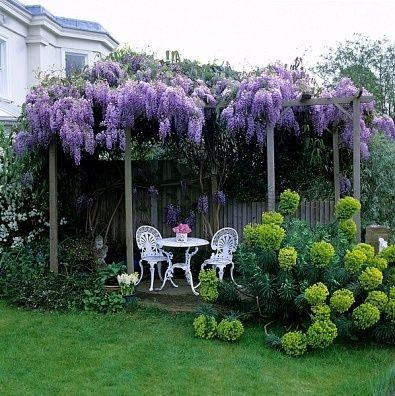
If your goal is dramatic visual impact, wisteria easily earns a spot among the best vines for trellis structures.
When mature, wisteria creates cascading flower clusters that can completely transform pergolas, garden arches, and large outdoor spaces.
Why Homeowners Love Wisteria
- Spectacular hanging blooms
- Fast and vigorous growth
- Strong shade coverage
- Long lifespan
Sun Requirements
- Full sun is essential for reliable flowering
Important Reality Check
Wisteria is beautiful, but it is not low maintenance.
This is one of the most aggressive plants that climb trellises, and weak structures often fail under its weight after a few years.
Best Placement
- Heavy pergolas
- Large metal trellises
- Garden entry structures
Avoid Using Wisteria On
- Lightweight decorative trellises
- Small patios
- Fragile fencing
Maintenance Requirements
- Regular pruning
- Structural monitoring
- Seasonal shaping
My Insight
I once worked with a homeowner who planted wisteria beside a small wooden lattice attached to their fence. Within three years, the vine had warped the structure and started pulling sections loose.
We eventually replaced it with a reinforced metal support system.
Wisteria rewards good planning, but punishes weak structures.
7. Morning Glory (Best Fast-Growing Annual Vine)
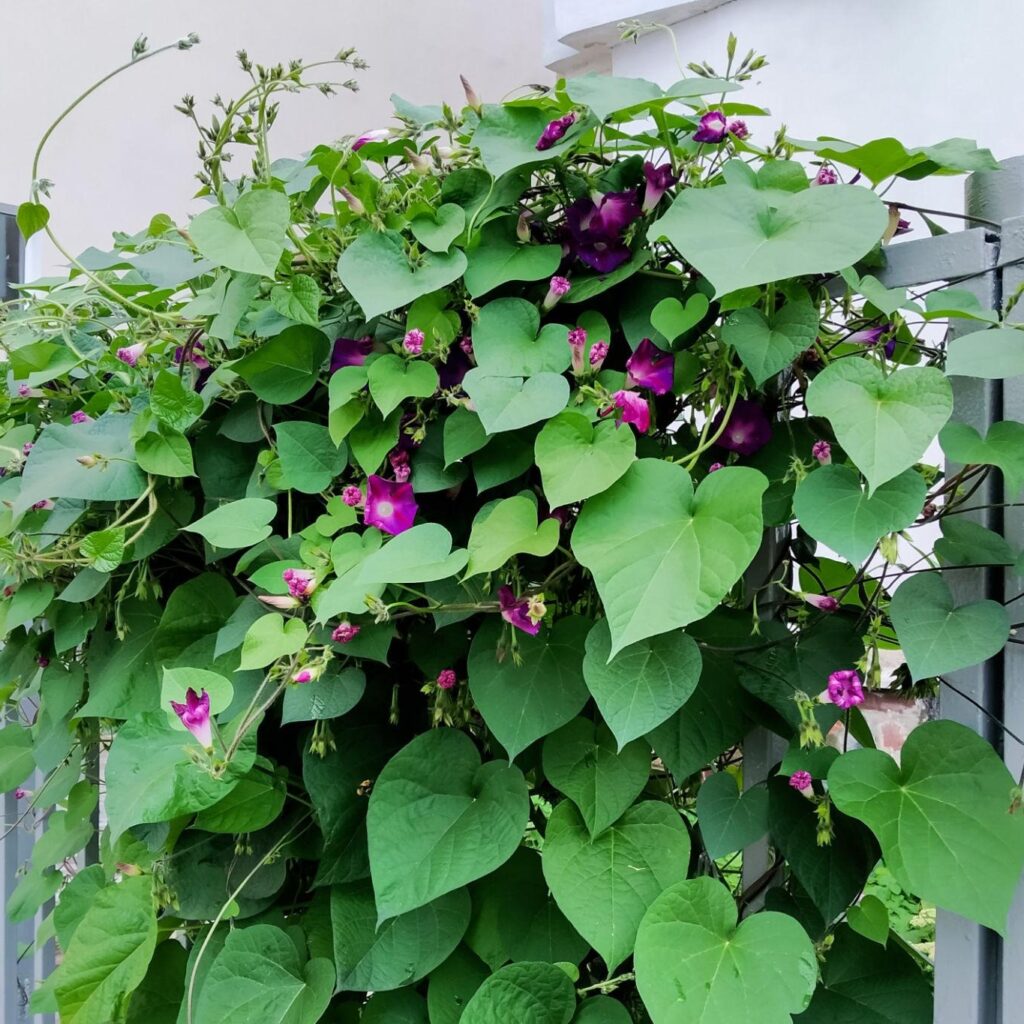
Morning glory is one of the easiest flowers that grow on a trellis for beginners who want quick results.
These fast-growing annual vines can cover small trellises surprisingly fast during warm weather.
Why Morning Glory Is Popular
- Rapid seasonal growth
- Bright colorful blooms
- Beginner-friendly
- Affordable and easy to grow from seed
Sun Requirements
- Full sun
Growth Speed
Very fast during summer months.
Best Uses
- Small decorative trellises
- Balcony gardens
- Seasonal vertical color
- Temporary garden screening
Important Warning
Morning glory self-seeds aggressively in some climates.
Without management, it can spread beyond intended planting areas.
Best For
Homeowners wanting quick-growing climbing vines with flowers without long-term commitment.
8. Passionflower Vine (Best Tropical-Looking Trellis Plant)
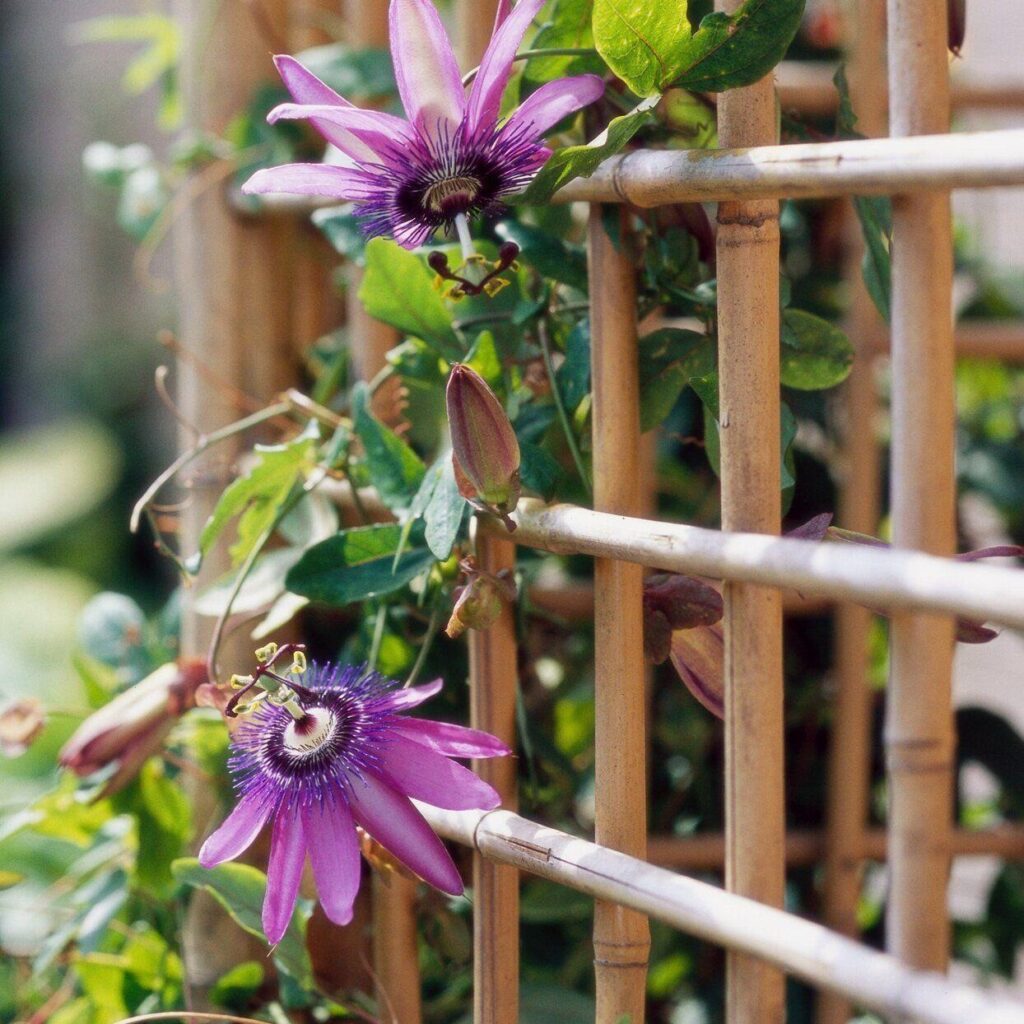
Passionflower vines create some of the most unusual blooms on any trellis flowers list.
Their exotic appearance makes them popular in tropical-style and pollinator-friendly gardens.
Why Passionflower Stands Out
- Unique intricate flowers
- Attracts butterflies and pollinators
- Fast seasonal growth
- Tropical visual appeal
Sun Requirements
- Full sun to partial shade
Best Climates
- Southern states
- Mild coastal regions
- Warm humid climates
Best Placement
- Pergolas
- Fence trellises
- Decorative vertical gardens
Maintenance Level
Moderate.
Some varieties spread aggressively in warm climates, so regular monitoring helps keep growth controlled.
9. Trumpet Vine (Best Hummingbird Vine)
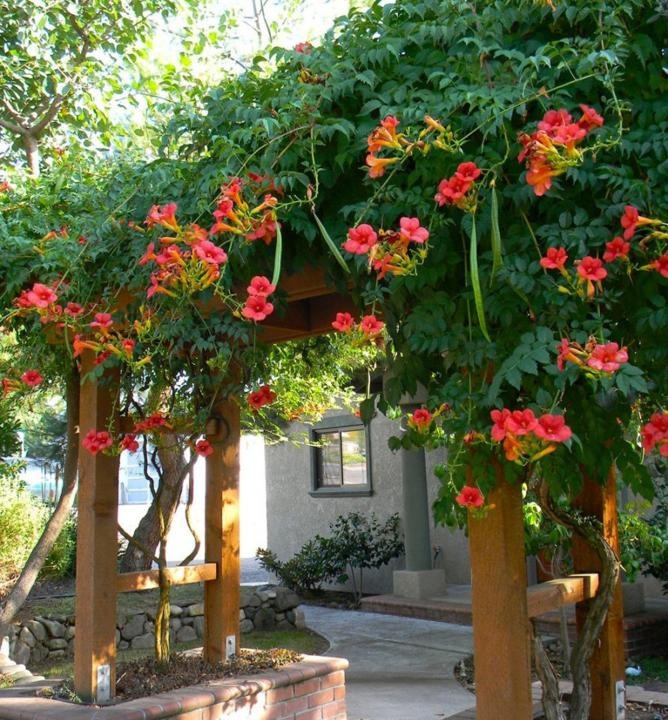
Trumpet vine produces bold trumpet-shaped flowers that hummingbirds love.
It is one of the fastest-growing plants that climb trellises, which makes it both impressive and potentially problematic.
Why Homeowners Choose Trumpet Vine
- Extremely fast coverage
- Bright summer blooms
- Strong pollinator attraction
- Excellent privacy screening
Sun Requirements
- Full sun
The Major Warning
This vine spreads aggressively through:
- Underground runners
- Self-seeding
- Rapid vine expansion
When NOT to Use Trumpet Vine
Avoid planting near:
- Small gardens
- Foundations
- Tight property lines
- Lightweight structures
Best Placement
Large open landscapes where aggressive growth can be controlled more easily.
Best For
Homeowners needing quick vertical privacy coverage.
10. Ivy (Best Evergreen Coverage Vine)
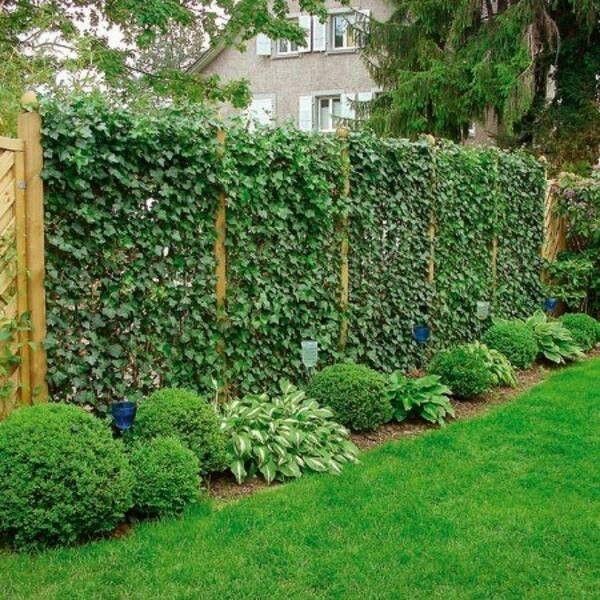
Ivy remains one of the most commonly used evergreen plants that climb trellises, especially for privacy and year-round greenery.
Why Ivy Is Popular
- Dense evergreen growth
- Shade tolerance
- Strong privacy coverage
- Works in cooler climates
Best Uses
- Privacy walls
- Fence coverage
- Shaded garden areas
- Formal landscapes
Important Drawback
Many homeowners underestimate how damaging ivy can become over time.
It can:
- Trap moisture against surfaces
- Damage wood structures
- Spread aggressively into nearby landscapes
Best Practice
Use ivy carefully and maintain regular pruning schedules.
Best For
Large privacy-focused landscapes where evergreen coverage is the priority.
11. Star Jasmine (Best Low-Maintenance Trellis Vine)
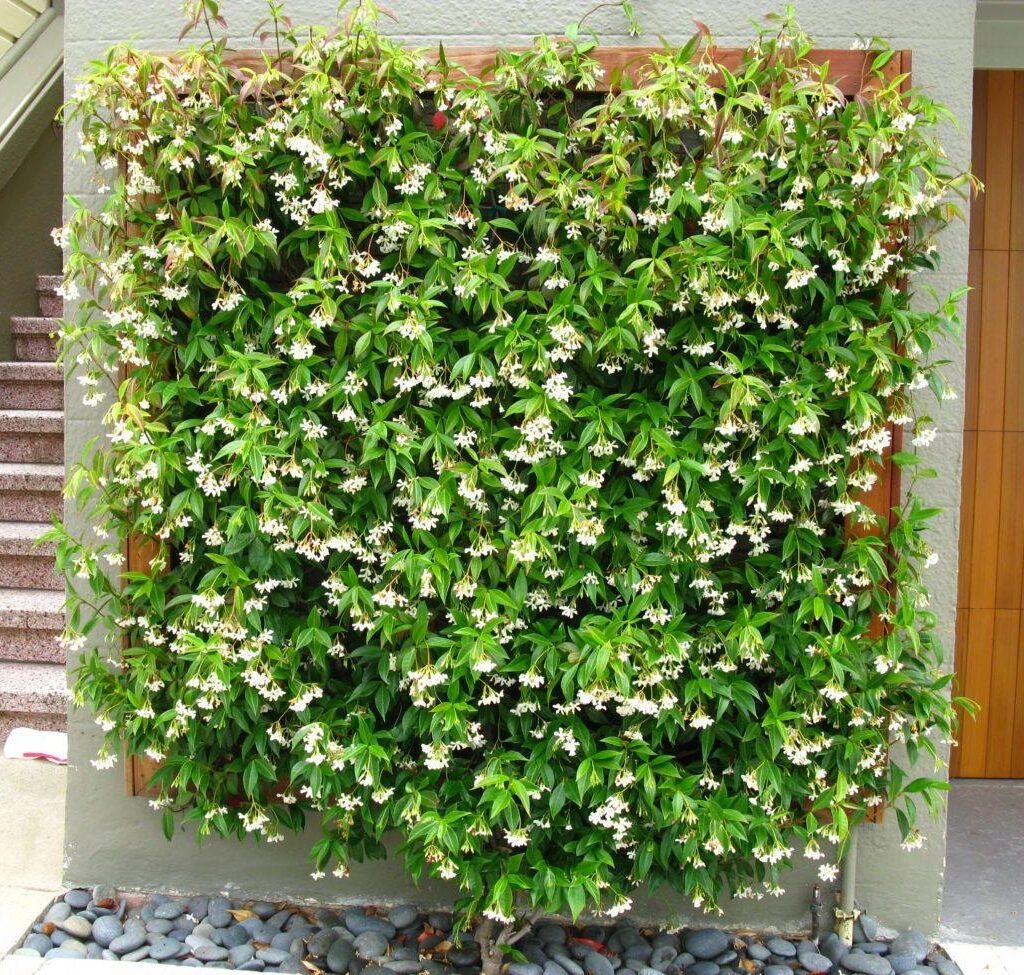
Star jasmine is one of the best low-maintenance climbing vines with flowers for homeowners who want fragrance without aggressive growth.
Why Star Jasmine Performs Well
- Evergreen in warm climates
- Highly fragrant flowers
- Moderate growth speed
- Easier to manage than many flowering vines
Sun Requirements
- Full sun to partial shade
Best Uses
- Patio privacy screens
- Fence trellises
- Small backyard vertical gardens
Best For
Homeowners wanting elegant flowers that grow on a trellis without constant pruning.
12. Sweet Pea (Best Seasonal Trellis Flower)
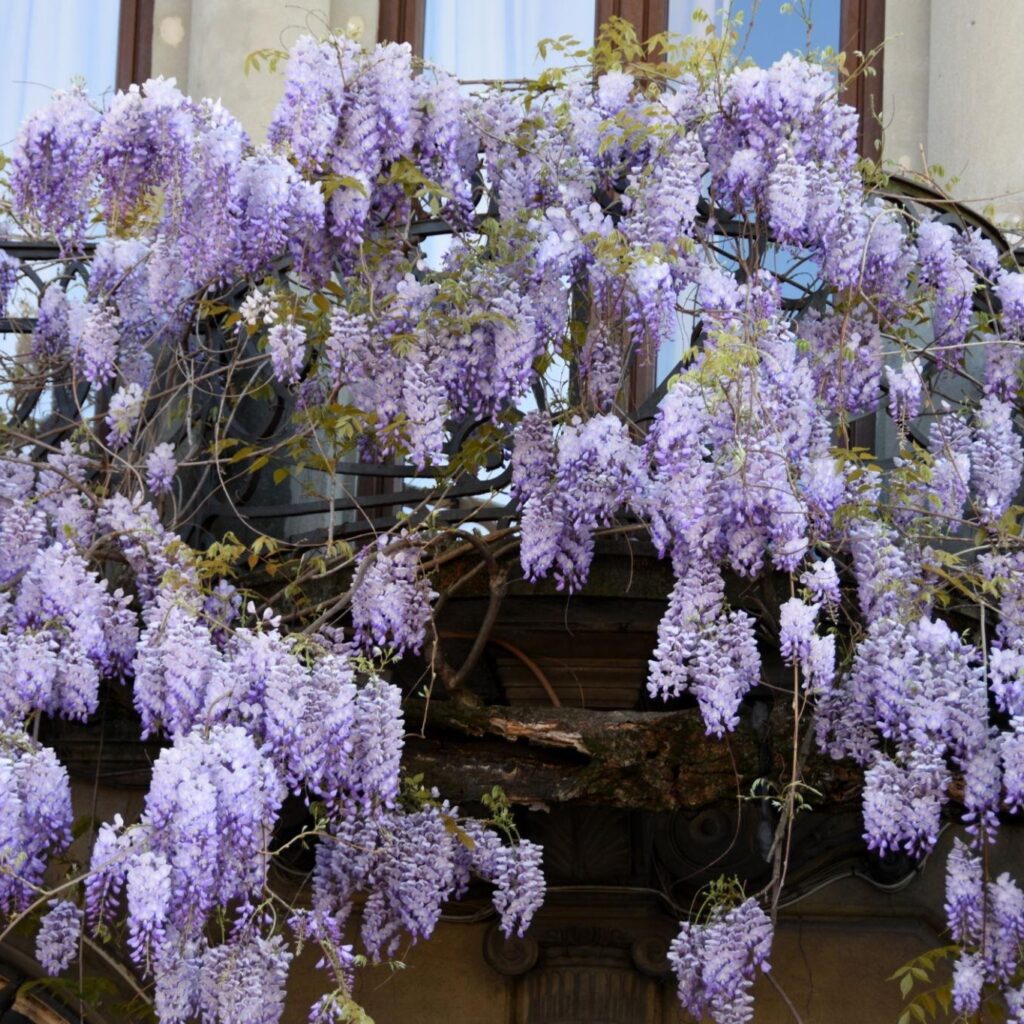
Sweet peas bring soft color and fragrance to spring and early summer gardens.
Although seasonal, they remain one of the most charming additions to any trellis flowers list.
Why Gardeners Love Sweet Peas
- Fragrant blooms
- Wide range of colors
- Excellent for small trellises
- Cottage garden aesthetic
Sun Requirements
- Full sun in cooler climates
- Partial afternoon shade in hotter regions
Best Placement
- Raised beds
- Decorative arches
- Container trellises
- Small garden spaces
Important Note
Sweet peas perform best in cooler weather and often decline during intense summer heat.
How to Choose the Best Vine for Your Trellis
The best vine depends less on appearance and more on compatibility with your space.
Choose Based on Climate
Hot Climates
Best options:
- Bougainvillea
- Jasmine
- Passionflower
Cooler Regions
Best options:
- Clematis
- Ivy
- Climbing roses
Choose Based on Maintenance Level
Low Maintenance
- Star jasmine
- Honeysuckle
- Clematis
High Maintenance but Dramatic
- Wisteria
- Climbing roses
- Trumpet vine
Choose Based on Trellis Strength
Lightweight Trellises
- Clematis
- Sweet pea
- Jasmine
Heavy-Duty Structures
- Wisteria
- Trumpet vine
- Mature ivy
Common Mistakes When Growing Trellis Vines
Even the best climbing vines with flowers can struggle when planted incorrectly.
Avoid these common problems:
- Using weak supports for heavy vines
- Overcrowding multiple vines together
- Ignoring sunlight requirements
- Allowing aggressive vines to spread unchecked
- Overwatering drought-tolerant species
Most long-term vine problems come from poor planning early on.
Best Vines by Use Case
Best for Privacy
- Ivy
- Jasmine
- Trumpet vine
Best Flowering Vine
- Clematis
- Wisteria
- Climbing roses
Best Low-Maintenance Option
- Honeysuckle
- Star jasmine
Best for Small Trellises
- Sweet pea
- Clematis
- Morning glory
Final Thoughts on the Best Vines for Trellis
The most successful trellis gardens are not necessarily the ones with the fastest-growing vines.
They are the ones where the plant matches the structure, climate, and maintenance expectations.
Some homeowners need low-maintenance evergreen privacy. Others want dramatic seasonal flowers. The right choice depends on how you actually use your outdoor space.
When chosen carefully, the best vines for trellis structures can completely transform fences, patios, pergolas, and vertical garden spaces while adding color, texture, and long-term visual impact.