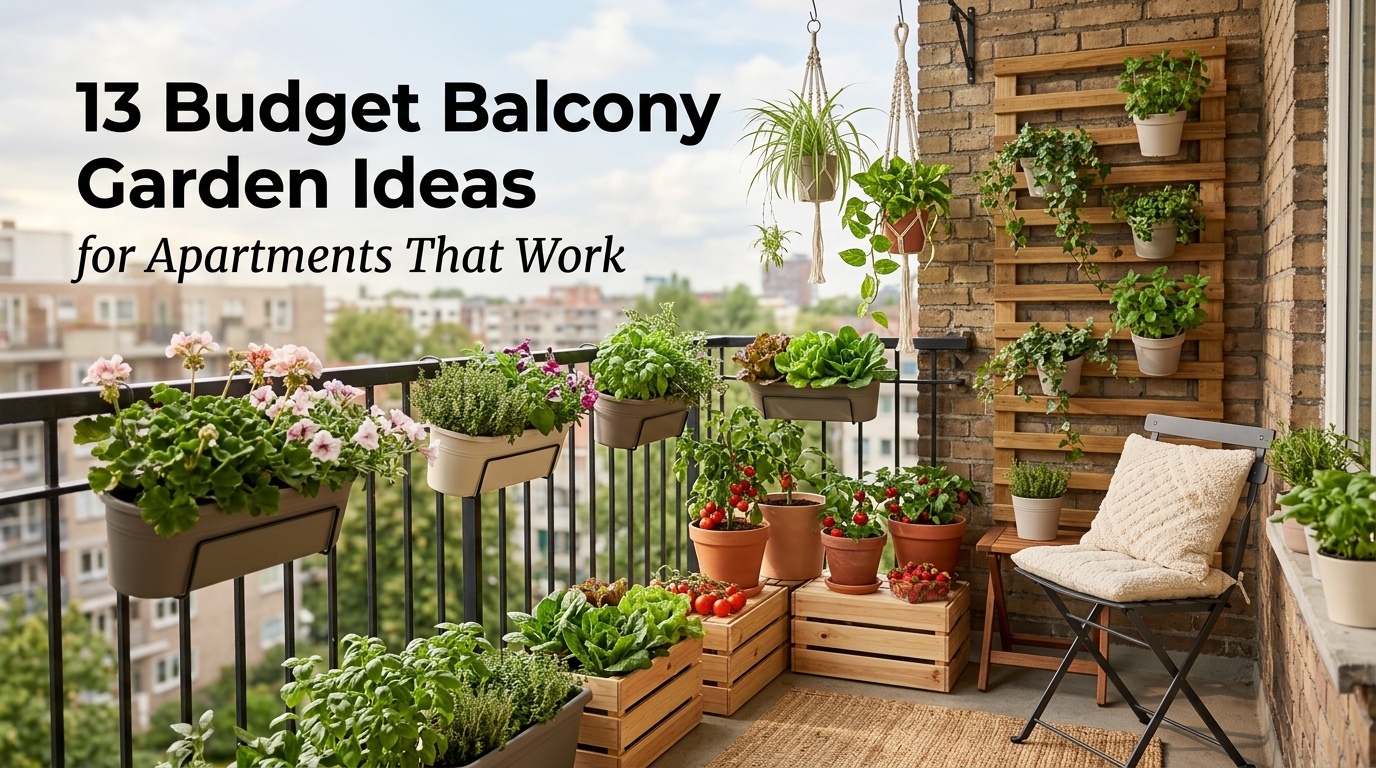
There is something deeply satisfying about stepping outside onto your own balcony and being surrounded by green, growing things. Even a tiny apartment balcony, one that barely fits two chairs and a small table, has the potential to become a genuine garden sanctuary. You do not need a backyard, a large budget, or any prior gardening experience to make it happen.
As someone who regularly works with urban apartment dwellers on sustainable and biophilic design, I can say with confidence that the balcony is one of the most underused spaces in apartment living. It is also one of the most transformative when approached with a little creativity and intention.
These budget balcony garden ideas for apartments are designed to work in real-world conditions: limited floor space, variable sunlight, rental restrictions, and tight budgets. Whether your balcony is a narrow Juliet ledge or a generous wraparound terrace, there is something here to help you turn it into the outdoor green space you have always wanted.
Can You Really Create a Balcony Garden on a Budget?
Yes, absolutely. The most beautiful apartment balcony gardens are rarely the most expensive ones. Strategic plant selection, creative container use, vertical growing structures, and a few well-chosen accessories can transform even the smallest outdoor space for well under one hundred dollars. The key is knowing where to invest and where to improvise.
1. Start With a Vertical Plant Wall
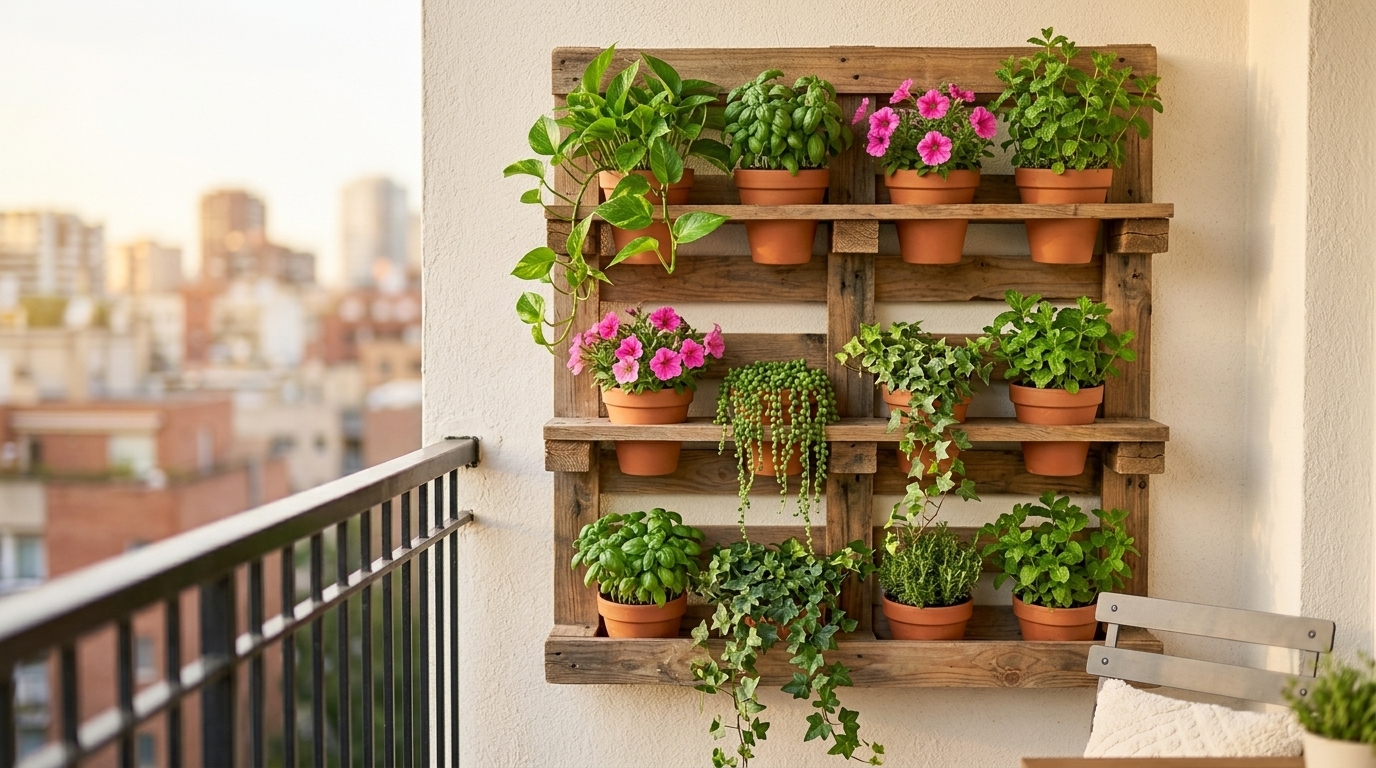
When floor space is limited, the single most impactful move you can make is to grow upward. A vertical plant wall, whether a purchased pocket planter, a repurposed pallet fitted with shelf slats, or a DIY grid of wire mesh and hooks, multiplies your growing area dramatically without using a single additional square foot of floor space.
Vertical planters work beautifully for trailing plants like pothos and string of pearls, compact herbs like basil, thyme, and mint, and flowering varieties like petunias and nasturtiums. Mount the structure against a solid balcony wall or railing and combine plants with varying textures and leaf shapes for a lush, layered effect.
This is one of the most effective balcony garden design strategies for tight spaces and delivers an impressive visual result for a relatively modest investment. A basic vertical pocket planter can be found online or at garden centers for ten to twenty-five dollars, and a DIY pallet version costs even less.
2. Use Railing Planters to Maximize Every Edge
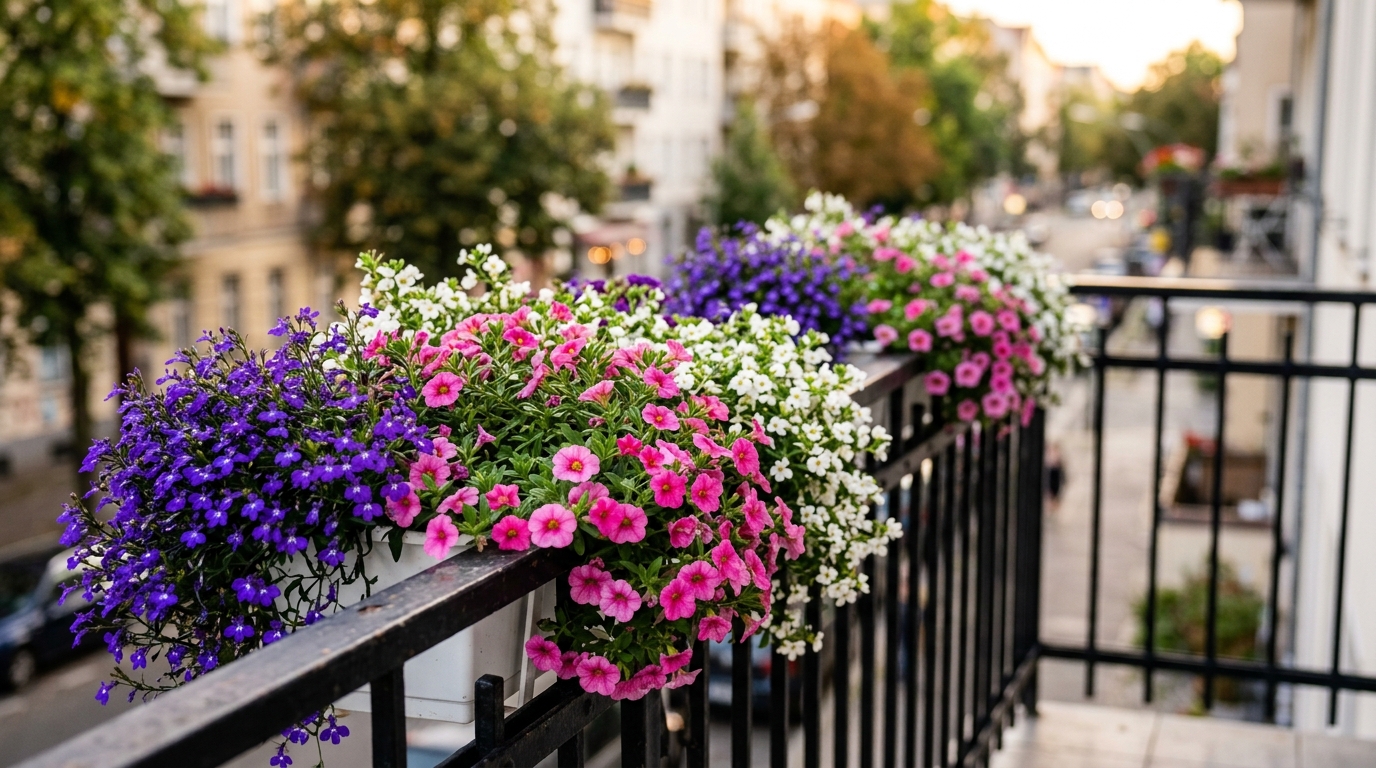
The railing of an apartment balcony is prime growing real estate that most renters completely ignore. Railing planters, which hook or clamp directly onto balcony railings, allow you to line the perimeter of your outdoor space with plants without touching the floor at all.
These planters come in metal, resin, and fabric versions at a wide range of price points. Fill them with trailing plants like ivy, lobelia, or bacopa for a cascading effect that softens the railing visually, or use them for compact herbs and flowering annuals that benefit from the extra sun exposure along the outer edge.
As a sustainable note, choosing self-watering railing planters reduces water waste significantly, which matters both for your plant health and for responsible resource use on an apartment balcony where drainage may be limited.
3. Embrace Container Gardening With Budget-Friendly Pots
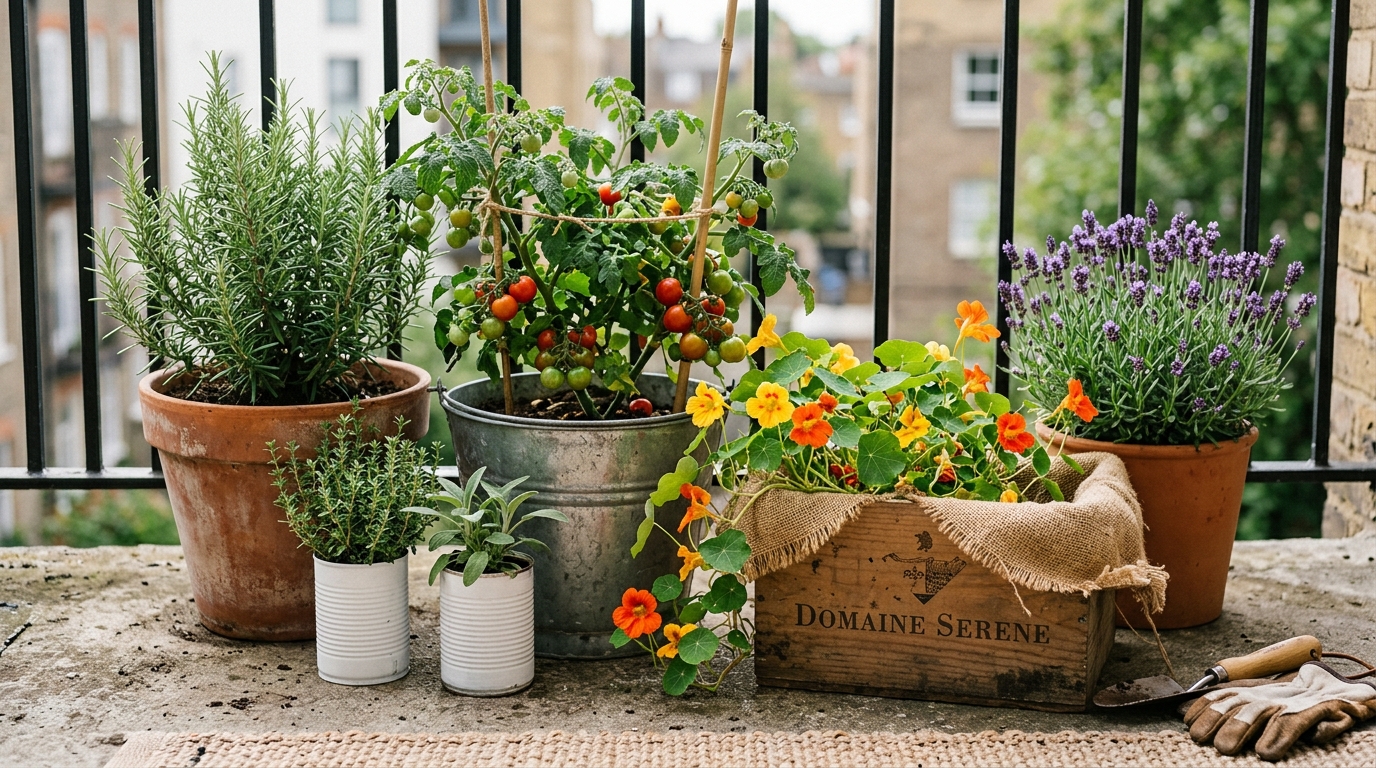
Container gardening is the foundation of any apartment balcony garden, and the containers themselves do not need to be expensive to be beautiful. Some of the most visually interesting balcony gardens are built entirely from repurposed and budget-found containers: tin cans of varying sizes, wooden crates lined with burlap, old colanders, galvanized metal buckets, and terracotta pots sourced from dollar stores or thrift shops.
The unifying factor that makes a collection of mismatched containers look cohesive is consistency in one design element: all terracotta, all painted white, all in the same color family, or all natural wood tones. Pick one visual thread and carry it through the entire container selection.
Ensure every container has drainage holes to prevent root rot. For containers without holes, drill your own or use them as decorative outer pots with a proper growing pot inside.
4. Grow a Balcony Herb Garden
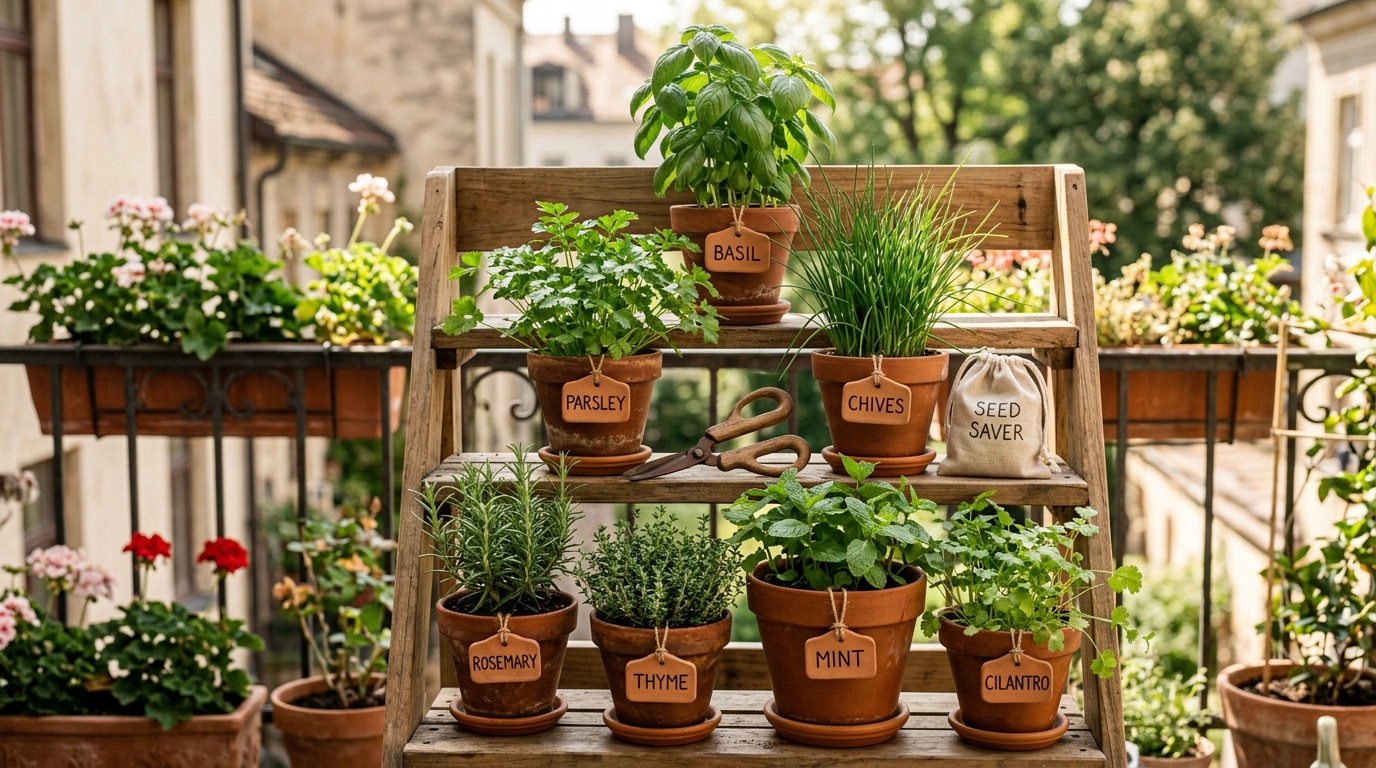
A dedicated herb garden is one of the most practical and rewarding budget balcony garden ideas for apartments because it delivers both beauty and genuine daily usefulness. Fresh herbs on the balcony mean flavorful cooking year-round and the particular satisfaction of snipping something living from your own garden directly into a meal.
Start with five to seven of the most versatile culinary herbs: basil, flat-leaf parsley, chives, mint, thyme, rosemary, and cilantro. Keep mint in its own container since it spreads aggressively and will crowd out neighboring plants if given the opportunity. Most culinary herbs are available as seedlings for one to three dollars each at garden centers and grocery stores, making this one of the most economical garden setups possible.
Group the pots together on a tiered plant stand or wooden crate shelf to create a dedicated herb station that looks designed rather than accidental.
5. Build a Simple DIY Tiered Plant Stand
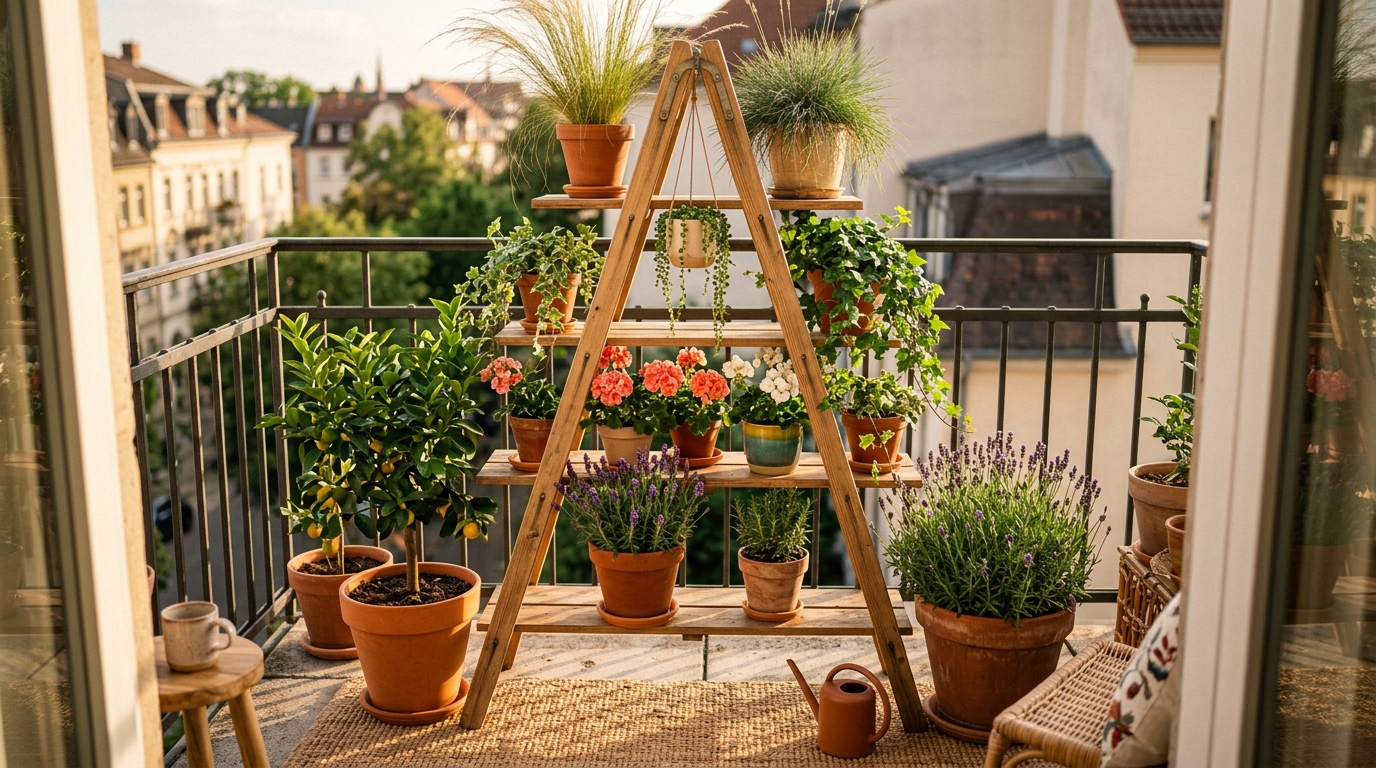
A tiered plant stand gives you three to five levels of growing space in the footprint of a single pot. You can purchase basic metal or wood versions at garden centers for fifteen to thirty dollars, or build a simple version from stacked wooden crates or reclaimed lumber shelves for even less.
The visual impact of a tiered plant arrangement is far greater than the same plants placed at a single level because it creates height, dimension, and the sense of abundance that characterizes a truly lush balcony garden. Place taller plants at the back and top, trailing plants at the edges, and compact flowering plants in the middle tiers for maximum visual interest.
This approach also improves growing conditions by ensuring all plants receive adequate light rather than larger plants shading smaller ones at ground level.
6. Choose the Right Apartment Balcony Plants for Your Light Conditions
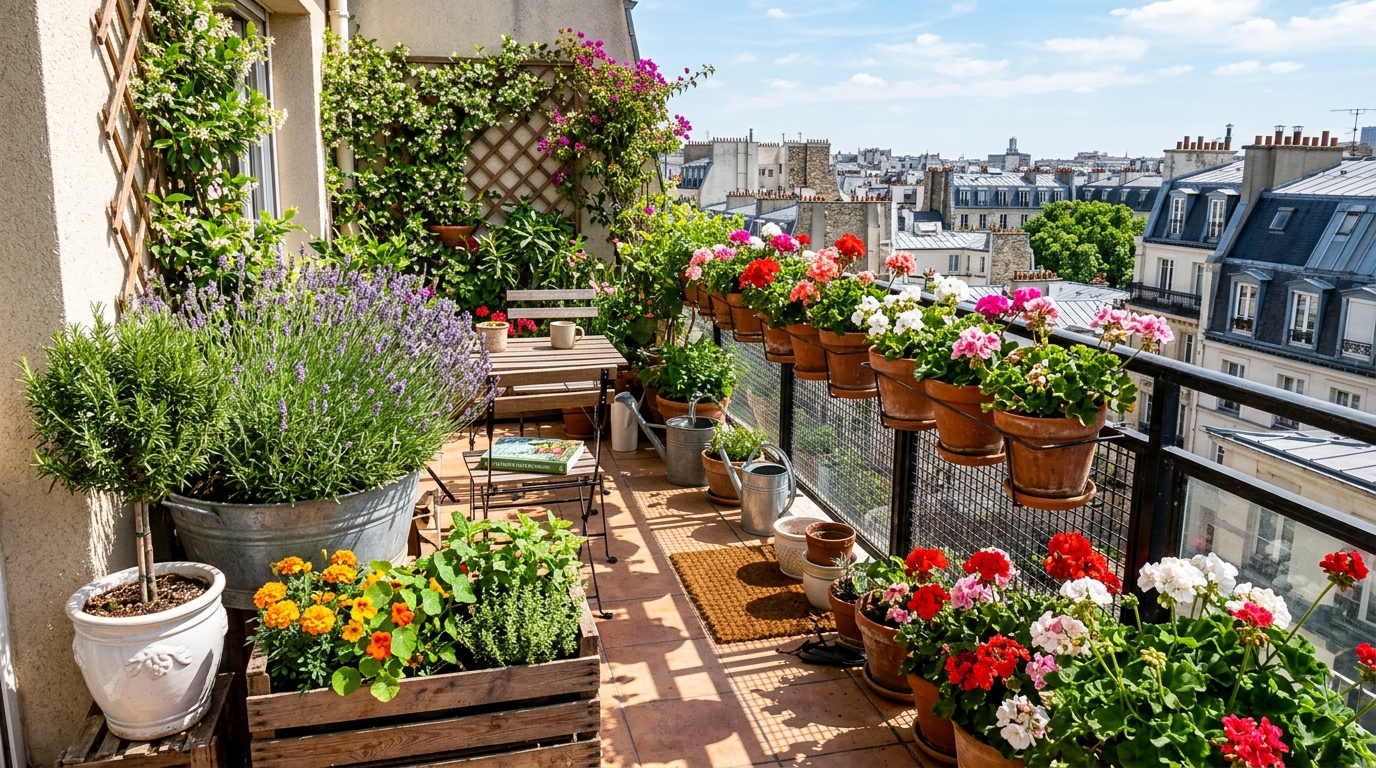
One of the most common and costly mistakes in balcony gardening is purchasing plants without first honestly assessing the light conditions of your specific outdoor space. A plant that thrives in full sun will decline quickly on a north-facing balcony that receives only indirect light, and vice versa.
Spend two or three days observing your balcony throughout the day before buying a single plant. Note how many hours of direct sunlight it receives and from which direction.
For apartment balcony plants in full sun situations, good choices include lavender, geraniums, marigolds, petunias, rosemary, and most succulents. For partial shade balconies, ferns, hostas, impatiens, begonias, and many herbs do well. For deep shade or north-facing balconies, focus on ferns, peace lilies, cast iron plants, and foliage-forward varieties rather than flowering plants that need sun to bloom.
Matching your plant selection to your actual light conditions is the single most important factor in determining whether your balcony garden thrives or struggles.
7. Create a Cozy Seating Corner Surrounded by Greenery
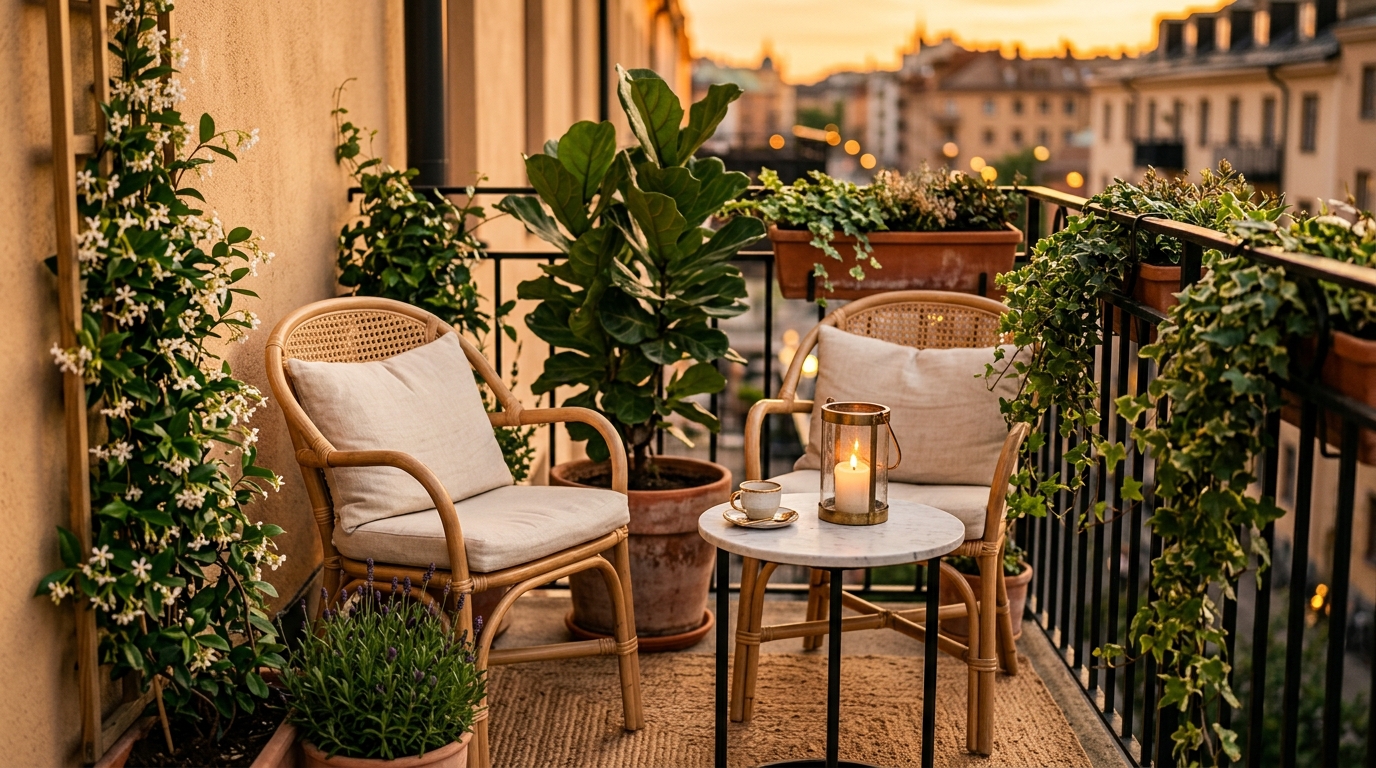
A balcony garden is not just about plants. It is about creating an outdoor living space you actually want to spend time in. Even a small balcony can accommodate a bistro chair or two, a tiny side table, and a surrounding arrangement of potted plants that makes the seating area feel like a green garden room rather than an afterthought.
Position your largest potted plants behind and beside the seating area to create a sense of enclosure. Use railing planters and vertical elements around the perimeter to frame the space. Add an outdoor rug in a warm natural fiber like jute or recycled plastic to define the floor area and soften the hard balcony surface underfoot.
String lights overhead, a small lantern on the table, and a single scented plant like lavender or jasmine within arm’s reach complete a balcony seating corner that feels genuinely restorative.
8. Grow Vegetables and Salad Greens in Containers
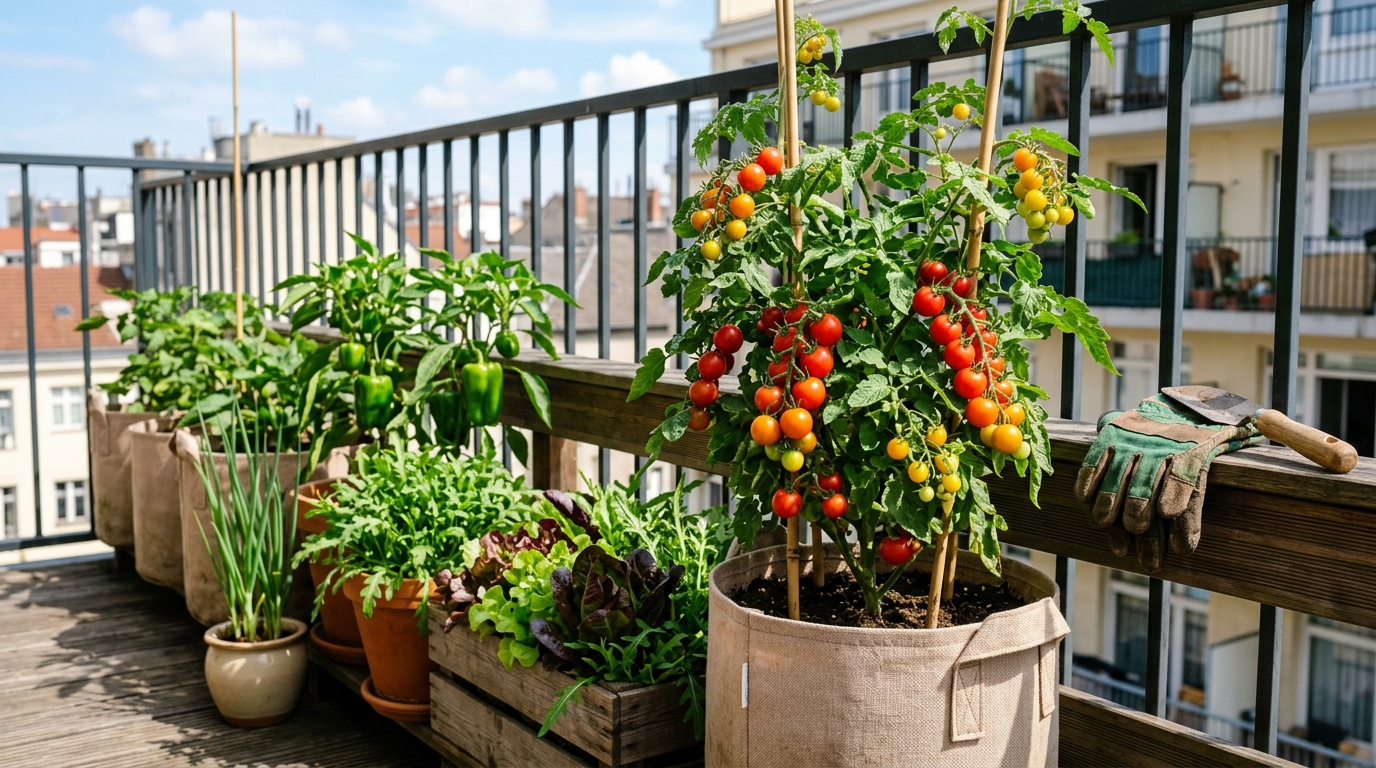
Growing your own food on a balcony is one of the most rewarding extensions of a container gardening practice, and it is far more accessible than most people assume. Many vegetables and salad greens are well-suited to container growing and produce a meaningful harvest even in relatively small pots.
Cherry tomatoes are among the most reliable balcony vegetables, thriving in containers of at least twelve inches in diameter and rewarding minimal care with generous fruit production throughout the warm season. Salad greens including lettuce, arugula, spinach, and kale grow quickly in shallow containers and can be harvested continuously by cutting outer leaves. Radishes, green onions, and compact pepper varieties also perform well in balcony containers.
From a sustainability perspective, growing even a small portion of your own food reduces packaging waste, transportation emissions, and the environmental footprint of your household diet. It is one of the most tangibly sustainable choices an apartment dweller can make.
9. Use Repurposed and Upcycled Containers
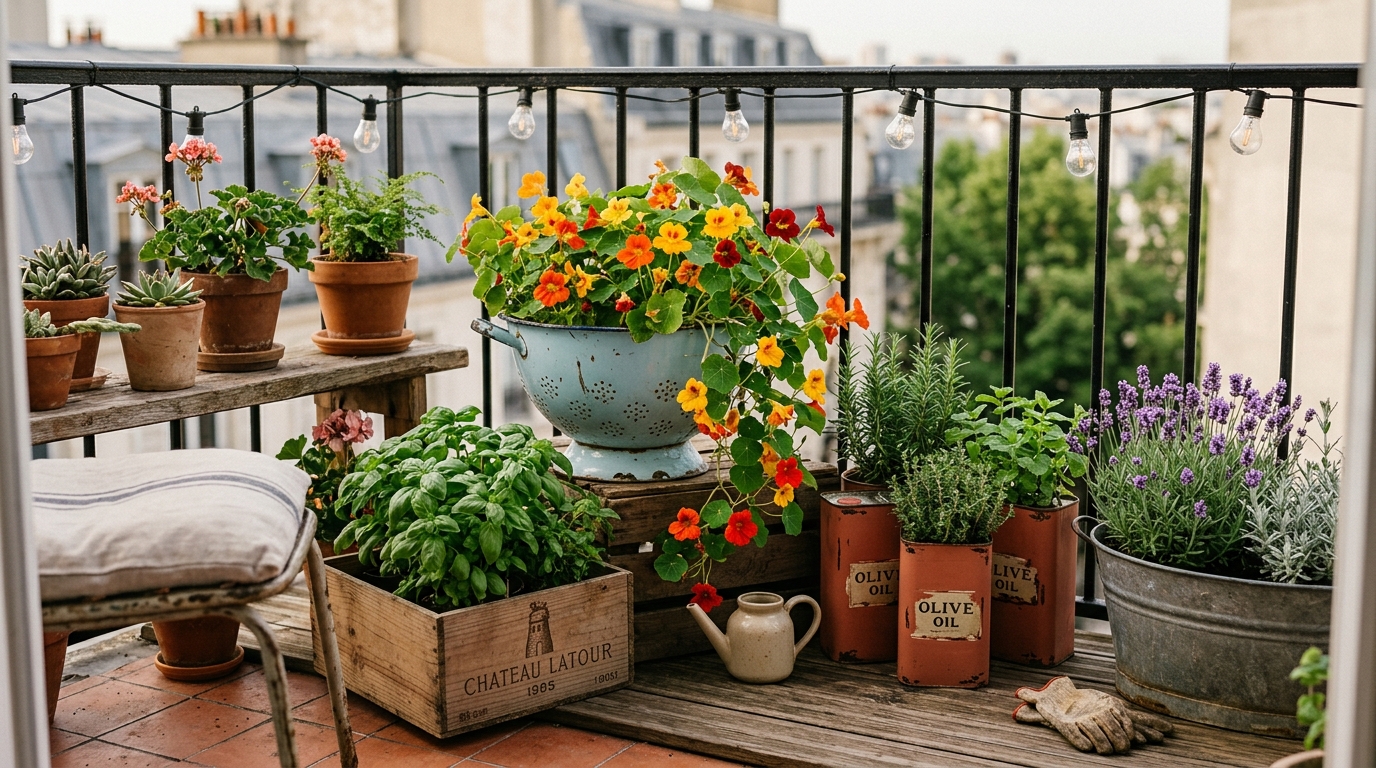
Some of the most visually interesting apartment balcony gardens are built partly or entirely from repurposed containers. Old wooden wine boxes, galvanized metal washtubs, vintage enamel colanders, large olive oil tins, worn wooden crates, and even old boots and teapots have all found new lives as plant containers in creative balcony gardens.
The practical requirement is simple: the container must hold soil without collapsing and ideally have or allow for drainage. Beyond that, the only limit is imagination. Upcycled containers add personality, tell a story, and cost nothing or almost nothing, which aligns beautifully with both budget gardening principles and sustainable living values.
Sand and seal any metal containers to prevent rust. Line wooden containers with landscape fabric before filling with soil to extend their lifespan.
10. Add Climbing Plants on a Simple Trellis
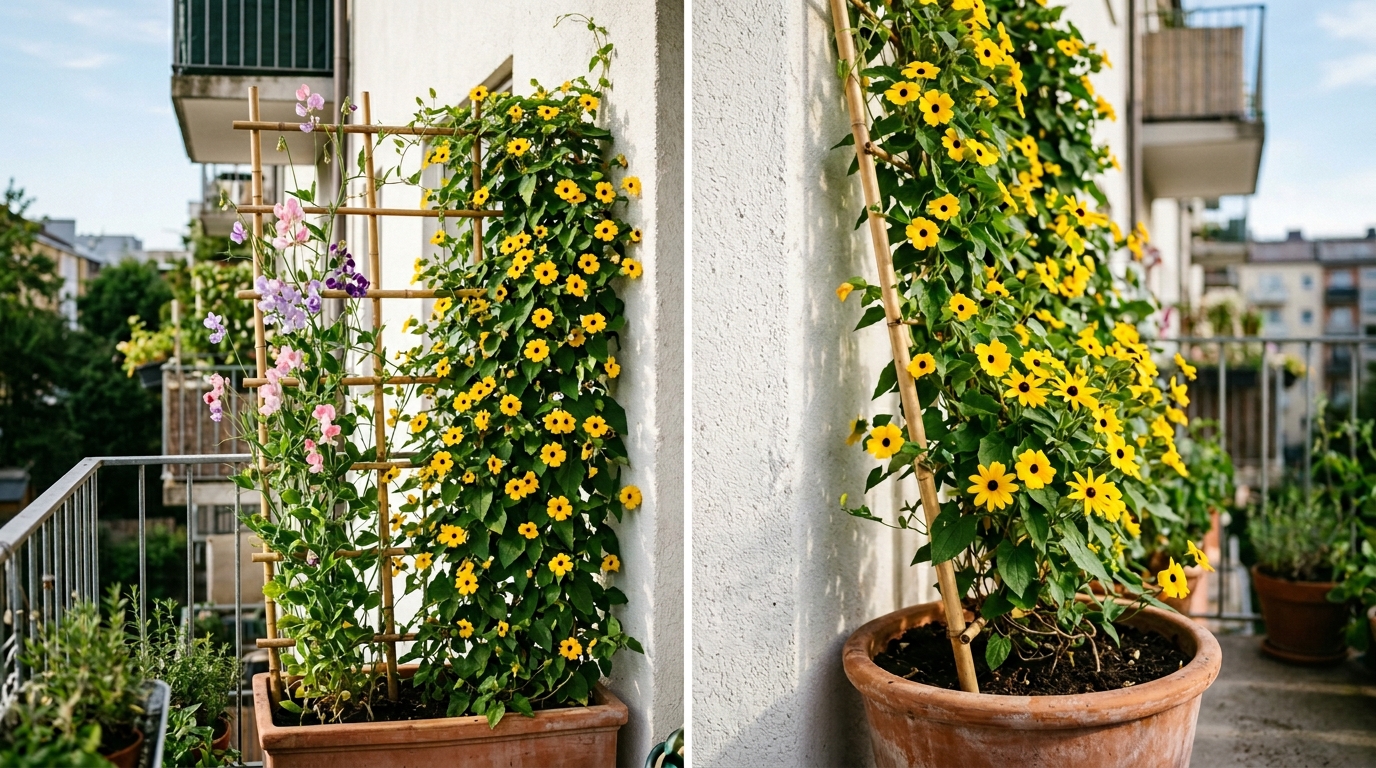
A simple trellis structure against a balcony wall, built from bamboo stakes and garden twine or purchased as a flat panel for ten to fifteen dollars, creates a vertical growing structure for climbing plants that adds extraordinary visual loft to a small outdoor space.
Climbing plants suitable for balcony containers include sweet peas, black-eyed Susan vine, morning glory, climbing nasturtiums, and compact jasmine varieties. Given a trellis to climb, these plants fill vertical space quickly and create a living wall of color and texture that transforms the character of an entire balcony.
This is one of the most visually dramatic balcony garden design moves available at a very low cost, because climbing plants grow quickly and cover a large surface area from a single container investment.
11. Use Grow Bags for Flexible, Affordable Planting
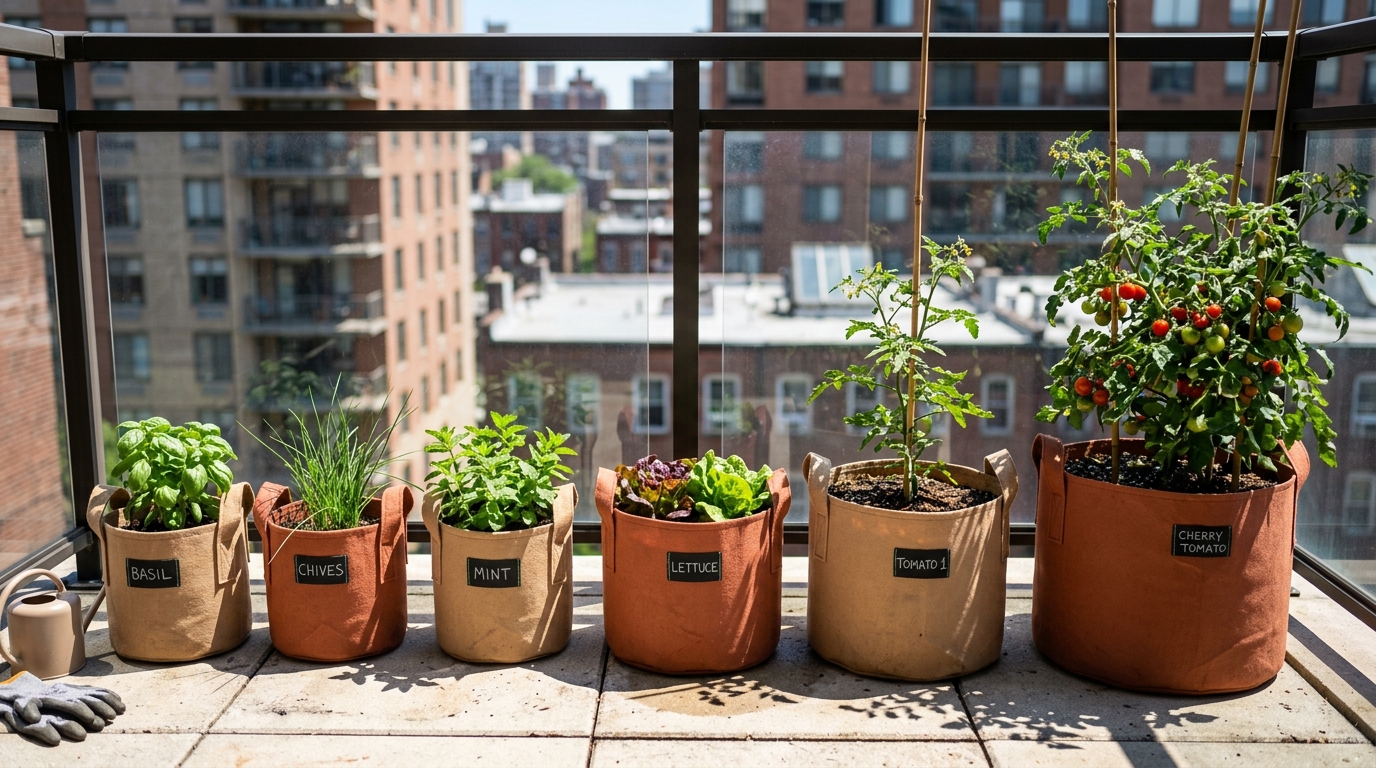
Fabric grow bags have become one of the most popular tools in modern container gardening for good reason. They are lightweight, inexpensive, available in a wide range of sizes, foldable for easy off-season storage, and they promote healthier root development than rigid plastic containers by allowing air pruning of roots at the bag’s surface.
Grow bags in sizes from one gallon for herbs to fifteen gallons for tomatoes and larger vegetables are available online for as little as one to three dollars each. In a range of earthy tones including black, tan, and terracotta, they look considerably more intentional than basic plastic nursery pots while costing far less than ceramic or terracotta alternatives.
For a balcony with strict weight restrictions, fabric grow bags filled with a lightweight potting mix are one of the safest and most practical container options available.
12. Use Lighting to Extend Balcony Garden Enjoyment Into the Evening
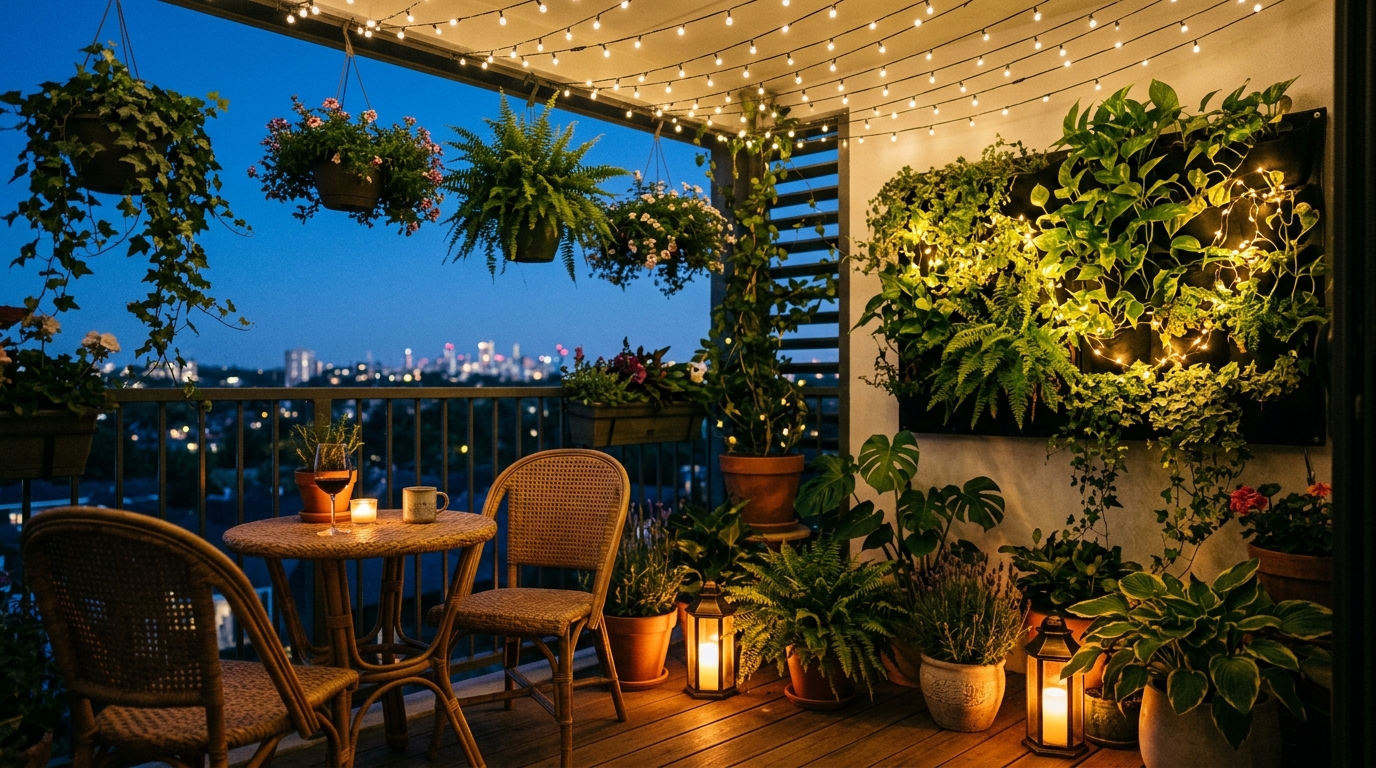
A balcony garden that looks beautiful in daylight but goes completely dark and unused after sunset is missing half its potential. Simple and affordable outdoor lighting transforms the balcony into a usable evening space and gives the plants an entirely different quality of beauty once the sun goes down.
Solar-powered string lights strung along the railing or overhead across the balcony ceiling cost between ten and twenty-five dollars and require no wiring or electricity. Solar lanterns placed among potted plants create pools of warm ambient light. Battery-powered waterproof fairy lights woven through a vertical plant wall illuminate the foliage from within for a genuinely magical evening effect.
Good balcony lighting is not just aesthetic. Research on biophilic design consistently shows that access to natural elements including plants, even viewed by warm artificial light in the evening, contributes meaningfully to stress reduction and psychological wellbeing for urban dwellers.
13. Create a Dedicated Composting Corner
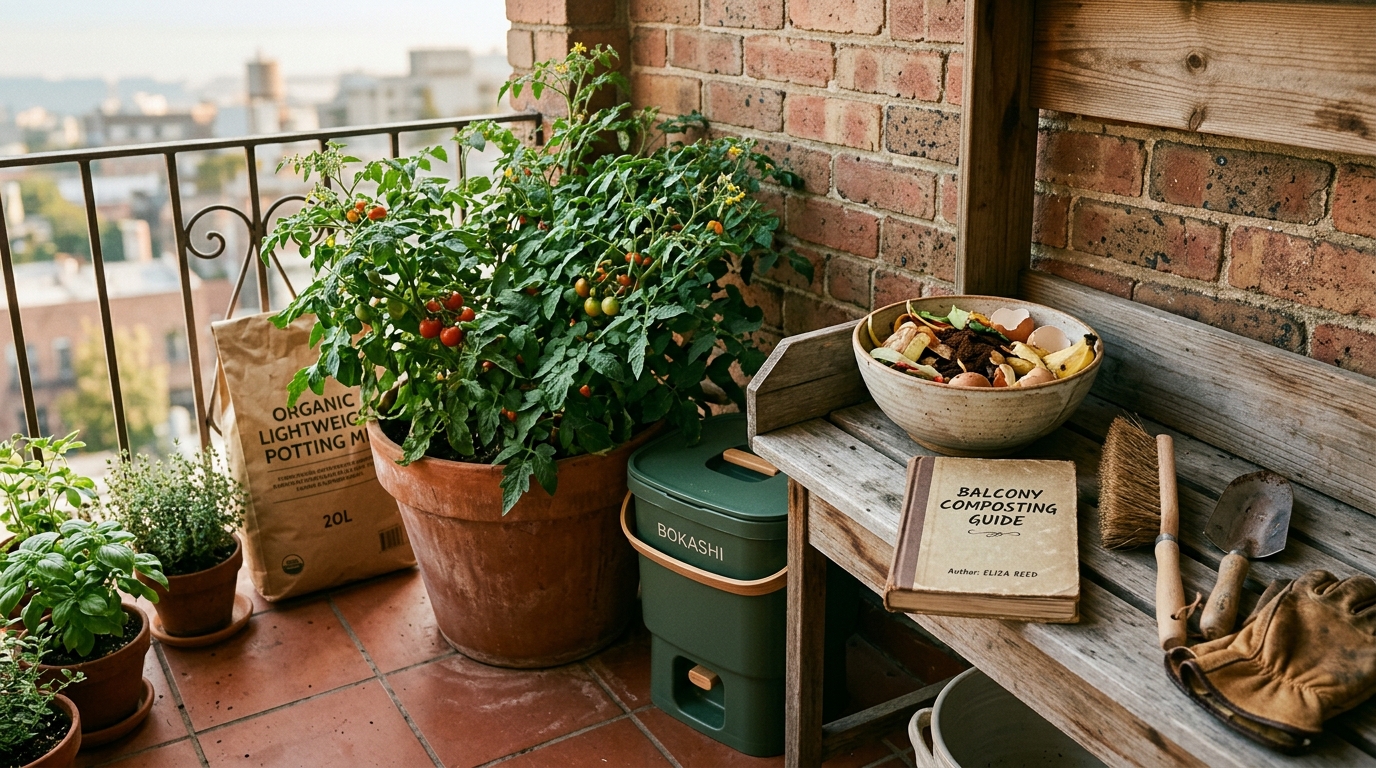
Even on a small apartment balcony, a compact composting setup is possible and worthwhile. A small bokashi bin, a worm composting system, or a compact tumbler composter can all operate in a modest outdoor space and turn kitchen scraps into rich compost for feeding your container plants.
This closes the loop on your balcony garden ecosystem: kitchen waste becomes compost, compost feeds the plants, the plants produce herbs and vegetables that go back into the kitchen. It is one of the most genuinely sustainable practices available to apartment dwellers and dramatically reduces the amount of organic waste going into the landfill from a single household.
Bokashi bins in particular are well-suited to balcony use because they are fully enclosed, odor-controlled, and compact enough to tuck beside a potting bench or behind a larger plant container.
Common Balcony Gardening Mistakes to Avoid
A few consistent issues trip up first-time balcony gardeners regardless of budget or enthusiasm. Knowing them in advance saves significant frustration.
Overwatering is the most common cause of balcony plant failure. Container plants need water when the top inch of soil feels dry to the touch, not on a fixed daily schedule. Factors like container size, plant type, sun exposure, and temperature all affect how quickly soil dries out.
Ignoring weight limits is a safety issue that apartment gardeners must take seriously. Wet soil is significantly heavier than dry soil, and a fully planted balcony with large containers, furniture, and people can approach or exceed structural weight limits. Use lightweight potting mixes, fabric grow bags, and plastic or fabric containers rather than heavy ceramic or stone to minimize load.
Buying plants before assessing light is perhaps the most expensive mistake of all. Always observe your specific balcony conditions before spending money on plants. A beautifully curated sun garden on a deeply shaded north-facing balcony will fail within weeks regardless of how well it is cared for.
Wrapping Notes on Budget Balcony Garden Ideas for Apartments
A balcony garden is not a luxury reserved for homeowners with large outdoor spaces and generous budgets. It is entirely achievable in a small apartment setting, on a modest investment, with a thoughtful approach to plant selection, container creativity, and vertical space use.
The best budget balcony garden ideas for apartments share one quality: they work with the real conditions of the space rather than against them. Assess your light, respect your weight limits, choose plants suited to your climate and exposure, and let the garden grow at its own pace.
Start with three to five plants this weekend. Add a railing planter or a vertical pocket system next month. By the end of the season, you may find that your balcony has quietly become your favorite room in the apartment, which is exactly what a well-tended garden tends to do.
FAQ: Budget Balcony Garden Ideas for Apartments
What are the best apartment balcony plants for beginners?
The most beginner-friendly balcony plants are those that tolerate some neglect and adapt to a range of conditions. Pothos, geraniums, marigolds, cherry tomatoes, chives, and lavender are all reliable starting points. Succulents are excellent for very sunny balconies with a gardener who tends to forget watering. Ferns and begonias work well for shadier exposures.
How do I start a balcony garden on a very small budget?
Start with seeds rather than seedlings, which cost a fraction of the price and are particularly practical for fast-growing herbs and salad greens. Repurpose containers from around the home rather than buying new ones. Focus on a small number of versatile plants rather than a wide variety, and expand gradually as your budget allows.
What is the best potting mix for container gardening on a balcony?
Use a high-quality lightweight potting mix rather than garden soil, which compacts in containers and drains poorly. Look for mixes that contain perlite or vermiculite for improved drainage and aeration. Adding a slow-release granular fertilizer to the mix at planting time reduces the need for frequent liquid feeding throughout the growing season.
Can I have a balcony garden if my apartment lease restricts drilling or wall mounting?
Yes. Railing planters that hook without mounting, freestanding tiered plant stands, vertical pocket planters that hang from a single over-the-railing hook, and floor-based container arrangements all work without any wall drilling or permanent fixture installation.
How do I keep my apartment balcony plants alive during hot summer months?
Group containers together so plants shade each other’s root zones and retain moisture longer. Water in the early morning rather than midday to reduce evaporation. Use self-watering containers or insert water reservoir spikes for plants that dry out quickly. Move the most heat-sensitive plants to a shadier area of the balcony during peak summer heat if your layout allows.