Walk through your front door right now and take an honest look at what greets you. Shoes piled near the door. Coats draped over a chair. Bags on the floor. Keys on the counter that belongs to something else entirely. If that sounds familiar, you are not alone, and more importantly, you are not stuck with it.
The entryway is one of the most storage-challenged spots in any small home or apartment, yet it carries an enormous amount of daily functional weight. Everything coming in and going out of your home passes through this space. Without a real system in place, it becomes a catch-all by default.
The good news is that some of the most effective storage solutions for small entryways are also the most satisfying to build yourself. These DIY entryway storage ideas for small spaces range from beginner-friendly weekend projects to slightly more ambitious builds, all designed to work in tight square footage without requiring a contractor, a big budget, or any prior renovation experience.
Where to Begin With a Small Space Entryway
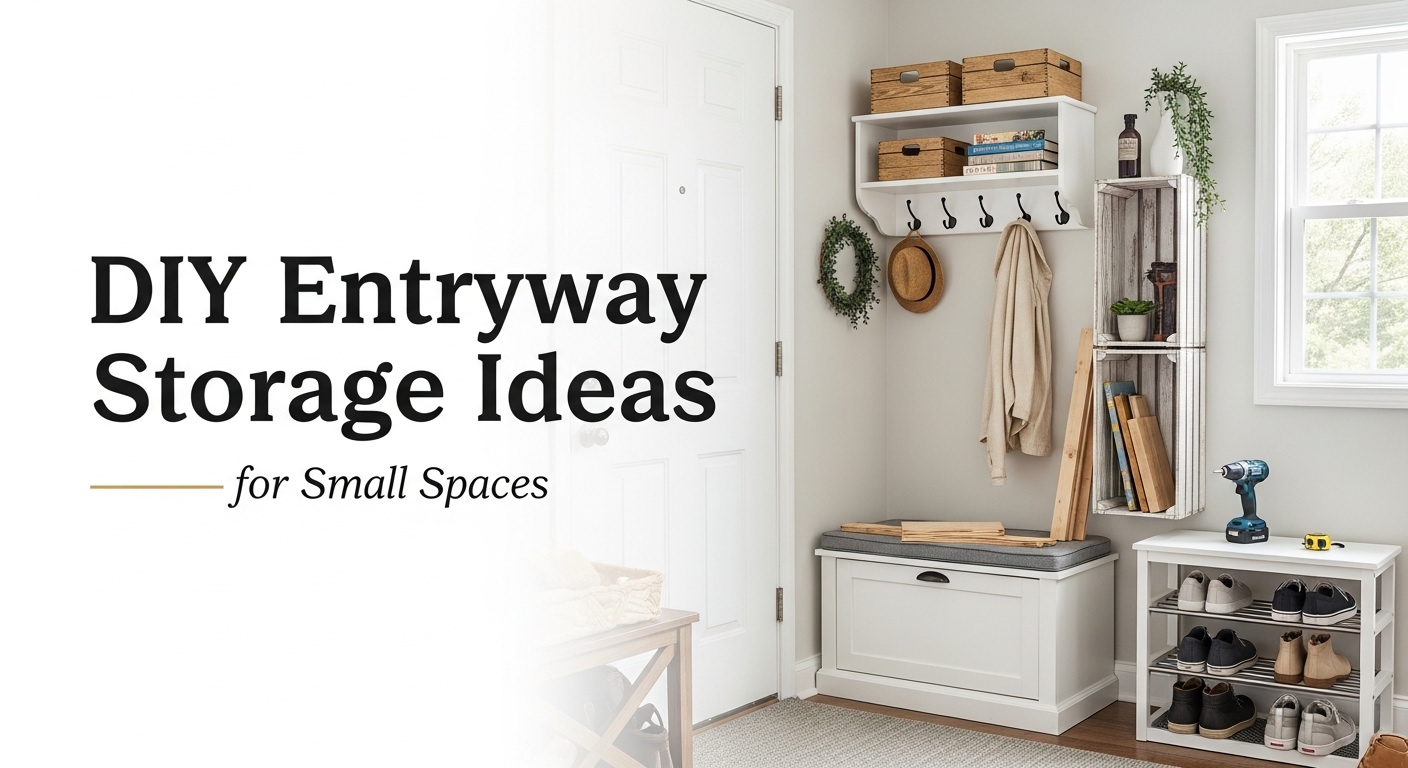
Before buying materials or picking a project, identify your three biggest pain points in the entryway. Is it shoes? Coats and bags? Mail and keys? Most small entryways have one dominant problem. Solving that first with a targeted DIY solution creates immediate, visible improvement, and gives you momentum to tackle the rest.
1. Build a Simple Floating Shelf With Hooks Below
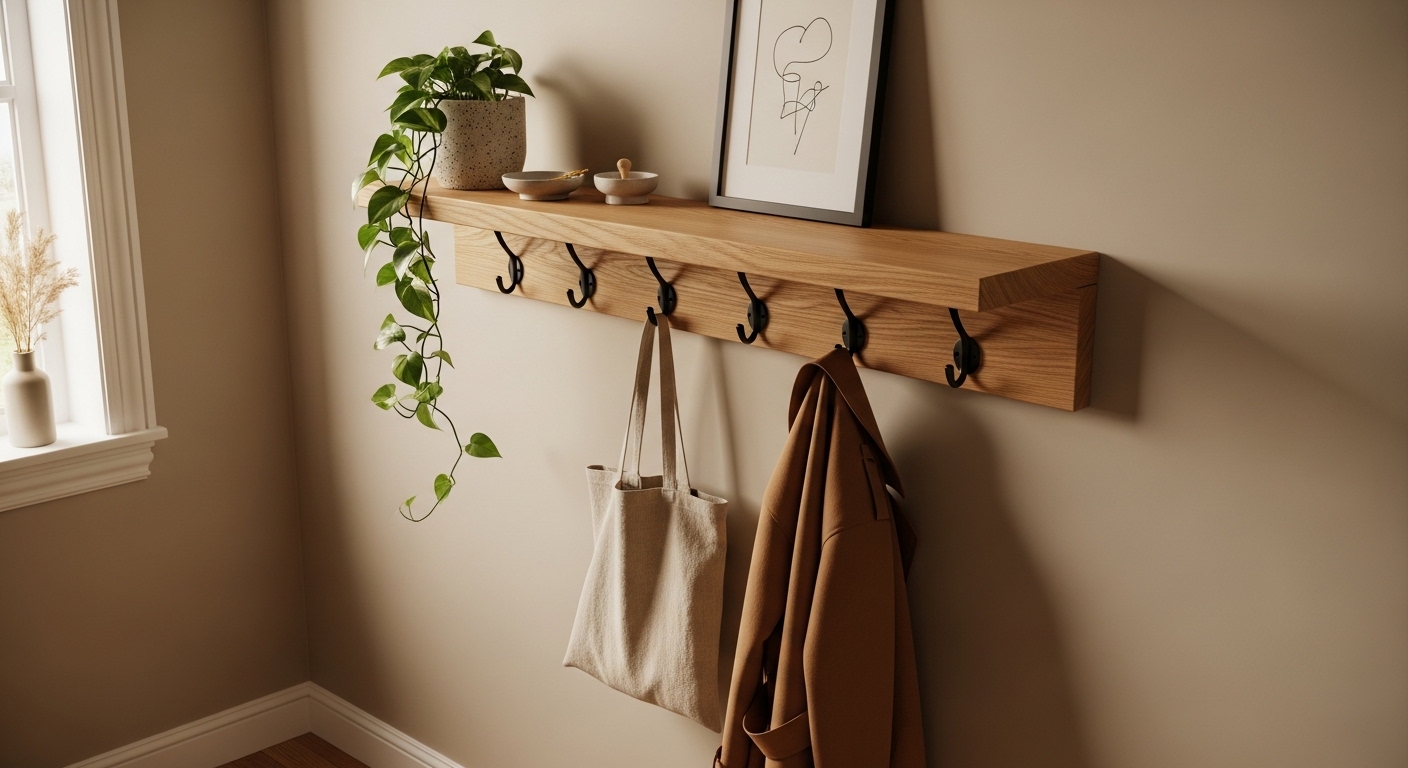
This is the single most versatile DIY entryway storage idea for small spaces, and it is genuinely beginner-friendly. A floating shelf mounted at shoulder height with a row of hooks installed along the underside gives you a surface for decorative items or a key dish up top, and hanging storage for coats, bags, and umbrellas below.
Materials you will need:
- One wood plank cut to your desired length (pine, poplar, or oak all work well)
- Four to six cup hooks or coat hooks in your preferred finish
- Wall anchors and screws rated for your wall type
- Sandpaper, wood stain or paint, and a level
Sand the plank smooth, stain or paint it to match your space, let it cure fully, then mount it level on the wall using proper anchors. Pre-drill your hook holes along the underside before mounting to avoid splitting the wood. The whole project typically costs between twenty and forty dollars and takes a Saturday afternoon.
The result looks intentional and custom, and it does the work of both a shelf and a coat rack in one slim footprint.
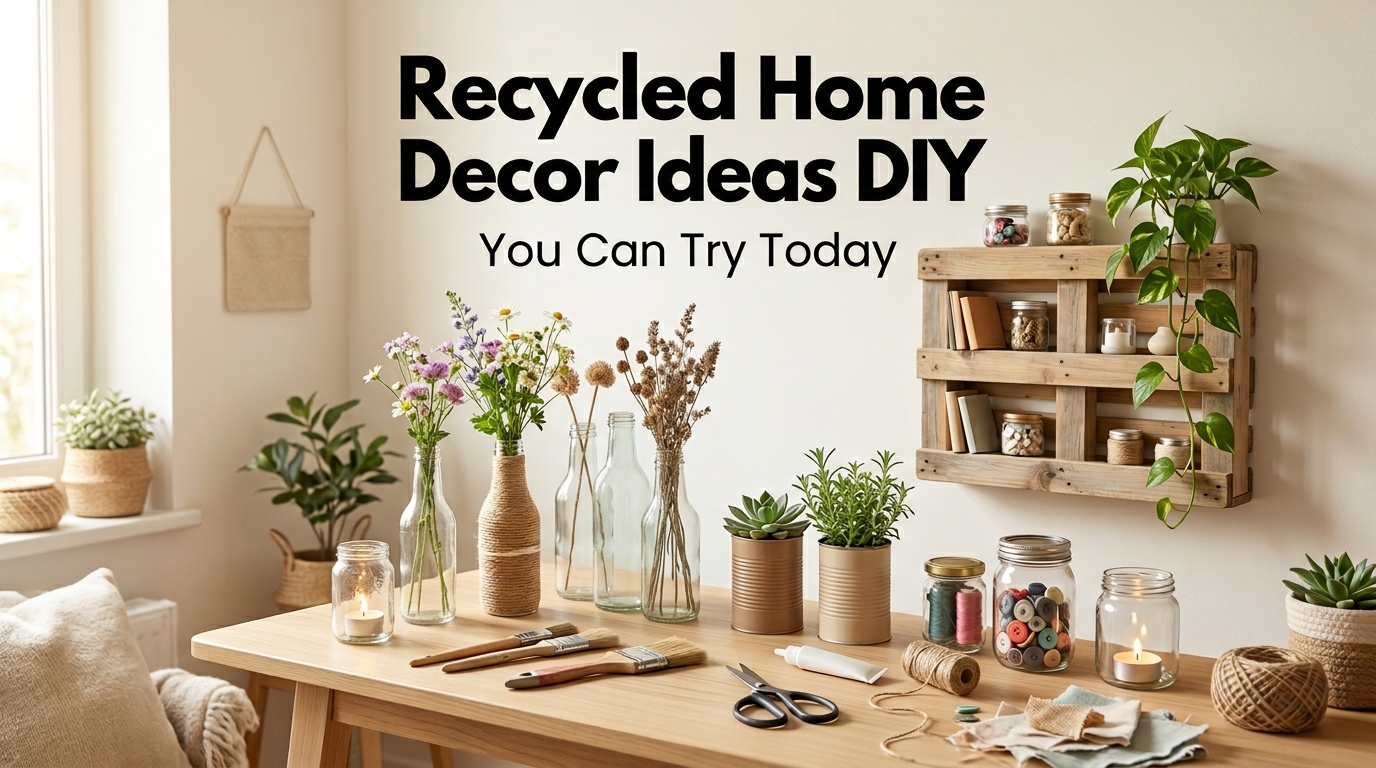
2. Repurpose a Wooden Pallet Into a Shoe Rack
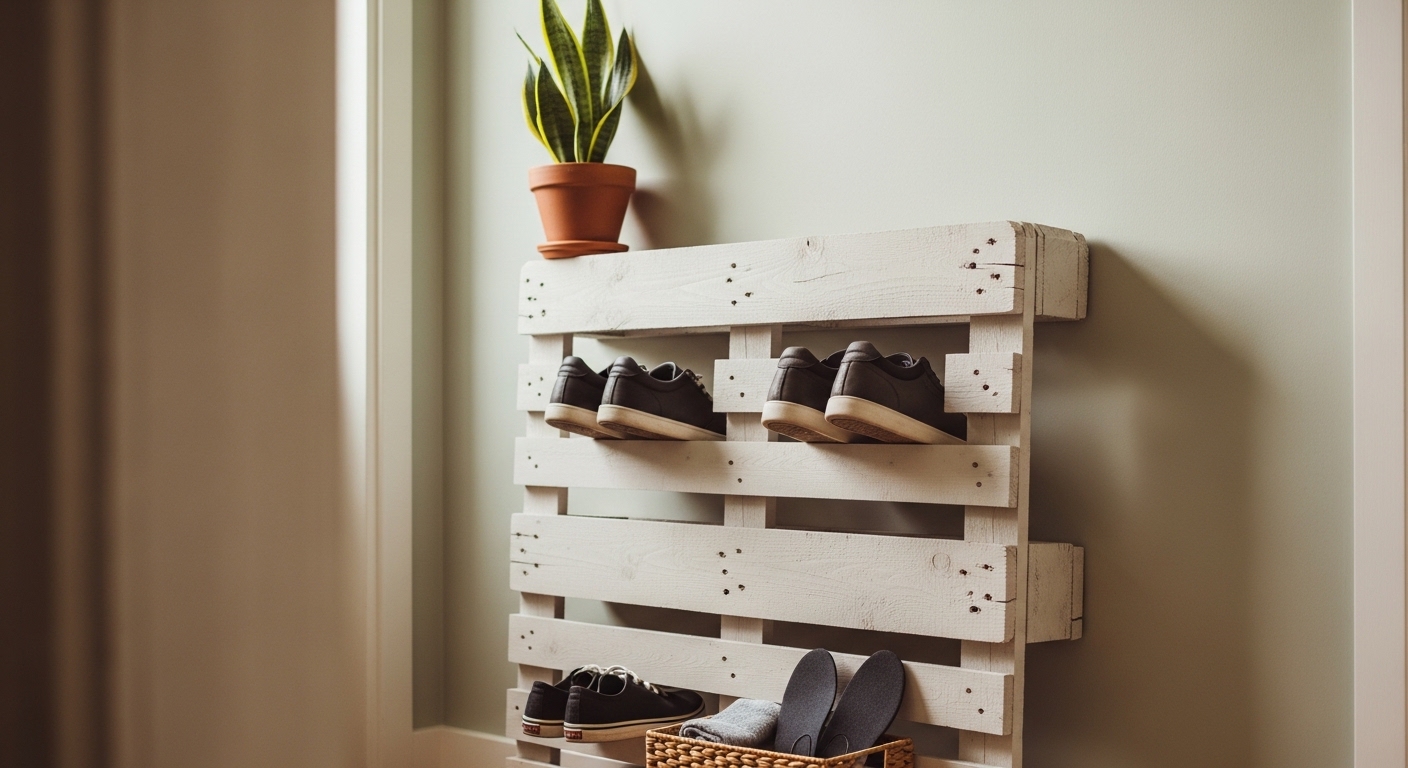
Wooden shipping pallets are one of the most widely available free materials for DIY home projects, and they make surprisingly functional hallway storage ideas when cleaned up and styled properly.
A single pallet mounted horizontally on the wall at a low height, or simply leaned against the wall near the door, creates a shoe storage solution with natural slots for sliding shoes in and out. Sand the pallet thoroughly to remove splinters, apply a coat of exterior-grade paint or wood sealer, and mount it securely if you choose the wall-mounted version.
For a more finished look, add a thin strip of trim along the front edge of each slat. Style it with matching baskets tucked between slats for additional small item storage, and a plant on top to lift it visually from purely utilitarian to genuinely decorative.
This project costs almost nothing if you source the pallet for free, and it recycles a material that would otherwise be discarded, which aligns beautifully with sustainable home design principles I always encourage in renovation projects.
3. Create a Pegboard Entryway Organizer
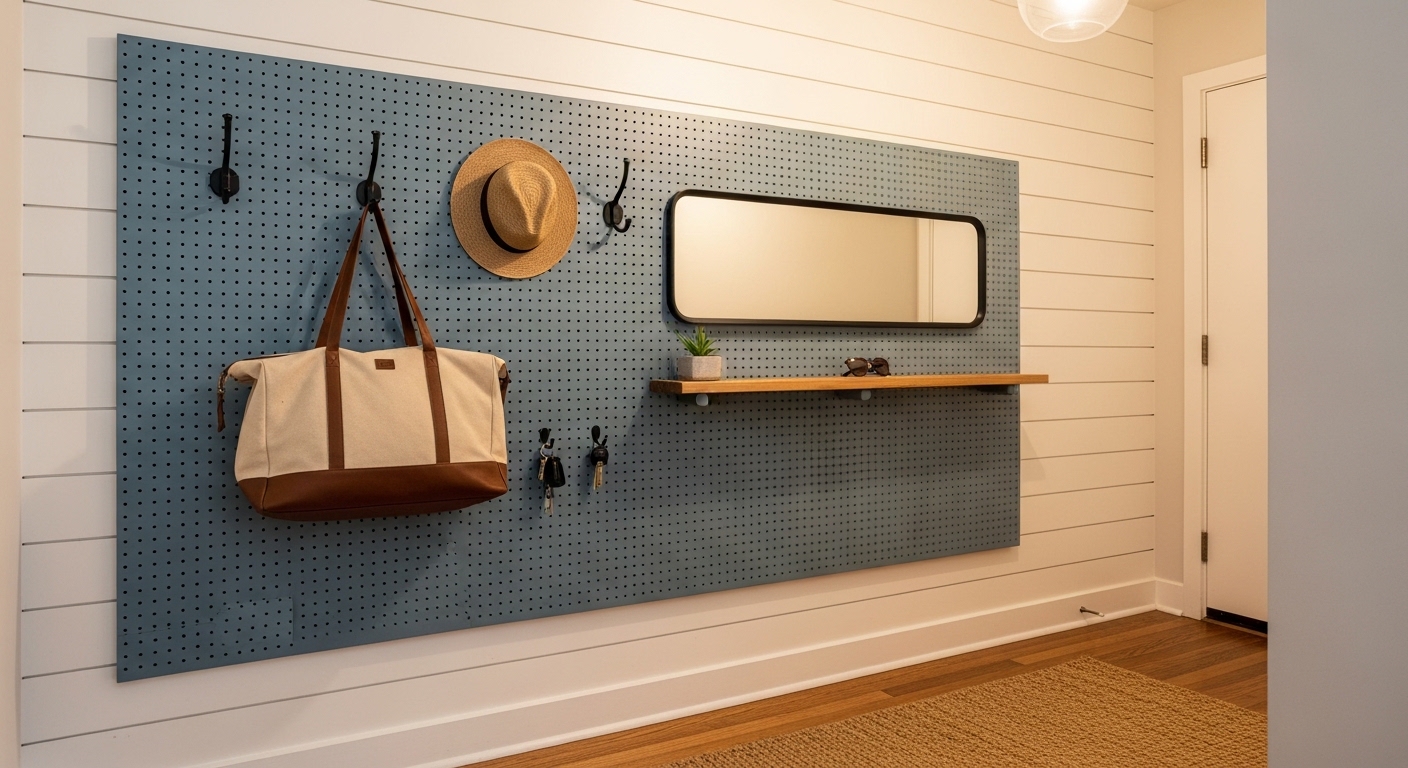
Pegboards have had a well-deserved design renaissance over the past several years, moving far beyond the garage workshop into kitchens, home offices, and entryways. As an entryway organizer DIY project, a painted pegboard panel is one of the most flexible solutions available because it adapts to exactly what you need.
Mount a pegboard panel to the wall using spacers that hold it about half an inch from the surface, which allows the hooks to insert properly. Paint the pegboard in a color that coordinates with your entryway palette before mounting. Then customize it with a combination of:
- Large hooks for coats and bags
- Small hooks for keys
- Shallow shelves or ledges for mail, sunglasses, or a small plant
- Bins or cups for pens, dog leashes, or charging cables
- A small mirror mounted directly onto the board
The beauty of pegboard is that nothing is permanent. You can reconfigure the layout as your needs change, which makes it one of the most practical small space storage investments you can make for a rental apartment since it adapts rather than commits.
4. DIY a Mudroom Bench With Crate Storage
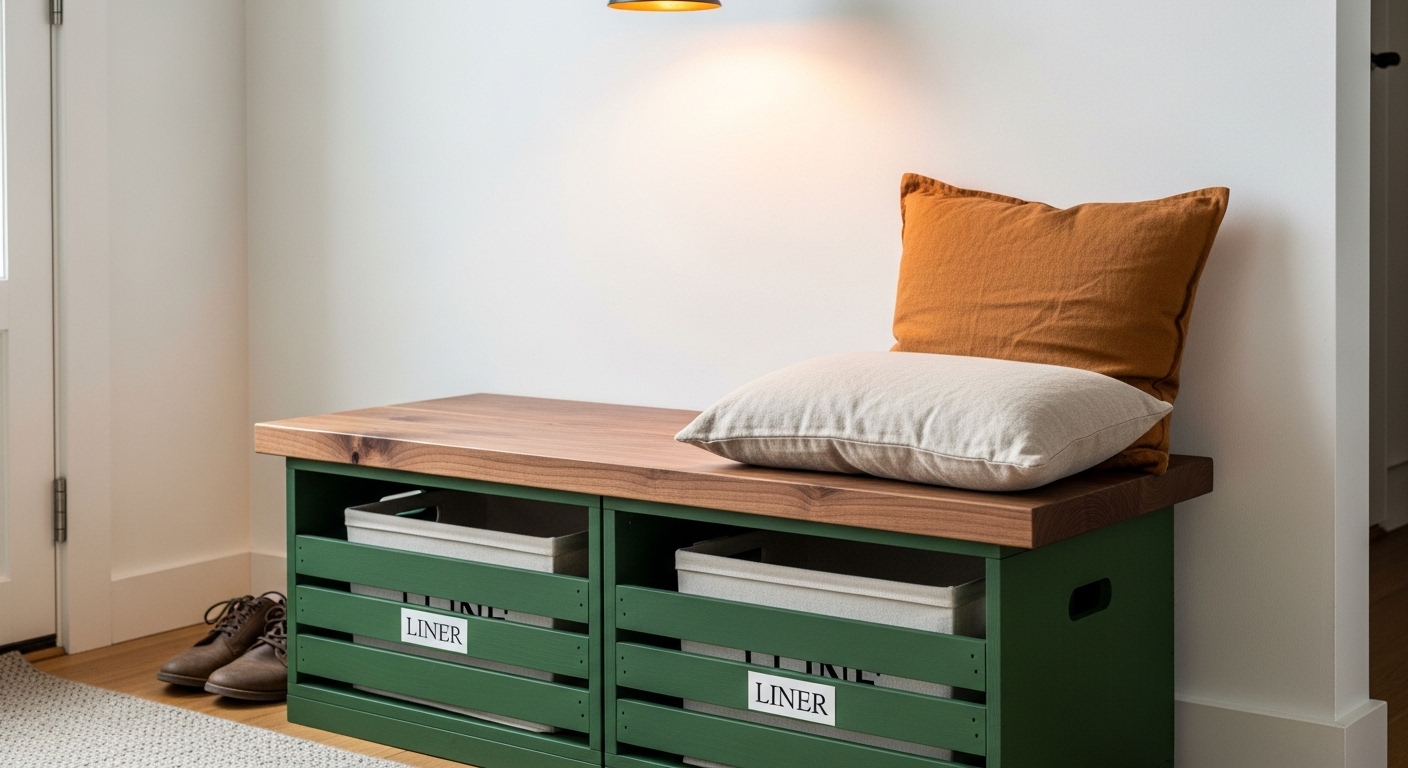
If your entryway has even two to three feet of floor space along one wall, a simple mudroom-style bench with crate storage below is one of the most functional projects in this list.
The basic build uses two to four wooden milk crates or cube storage bins as the base, a single plank of wood cut to size as the seat on top, and optional upholstery in the form of a foam cushion covered with outdoor-grade fabric. The crates below serve as open cubbies for shoes, each person’s bag, or labeled baskets for seasonal items.
For a more polished finish, paint the crates and seat in the same color or complementary tones. Add hairpin legs to the seat plank if you prefer a more elevated, mid-century look. Total material cost for a two-crate version typically runs between thirty and sixty dollars depending on the crates and cushion fabric you choose.
This project solves three problems simultaneously: seating for putting shoes on, shoe storage, and general bag storage, all in a footprint of roughly two feet by one foot.
5. Install a DIY Vertical Garden Cabinet
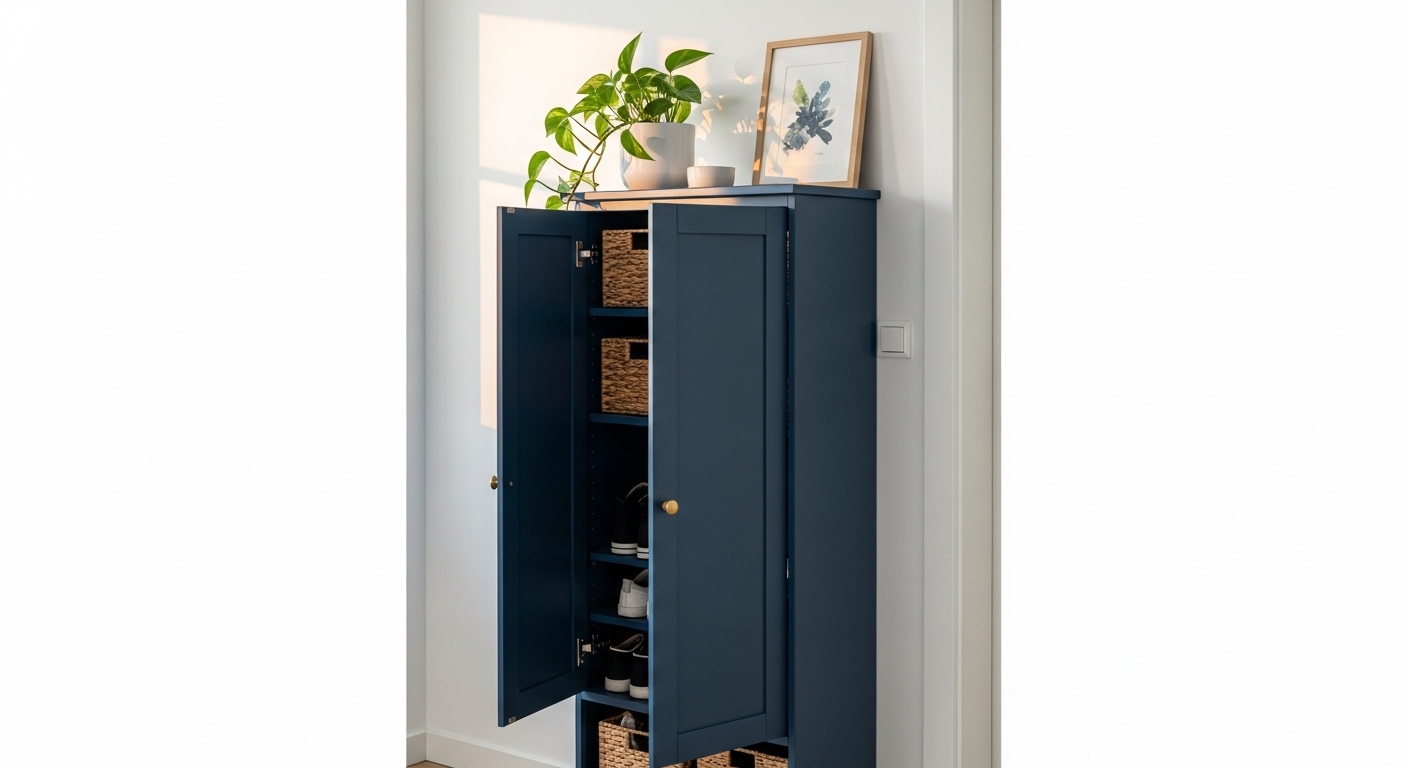
For entryways that function as both storage space and a visual transition into the home, a slim vertical cabinet built from basic lumber or repurposed wooden planks offers enclosed storage that hides everything from view while looking like intentional furniture.
A simple version uses two vertical side panels, a top panel, two or three interior shelves, and a back panel of thin plywood or beadboard. Add a magnetic closure or small knob hardware to the front for a finished look. Paint the entire unit in a color that reads as furniture rather than DIY, such as a deep navy, forest green, or warm white.
Inside you can store shoes on the lower shelves, hooks on the interior door panel for keys and small bags, and open sections for mail or daily essentials. The exterior stays completely clean, which is one of the most effective small space storage outcomes you can achieve in a hallway.
6. Build a Floating Key and Mail Station
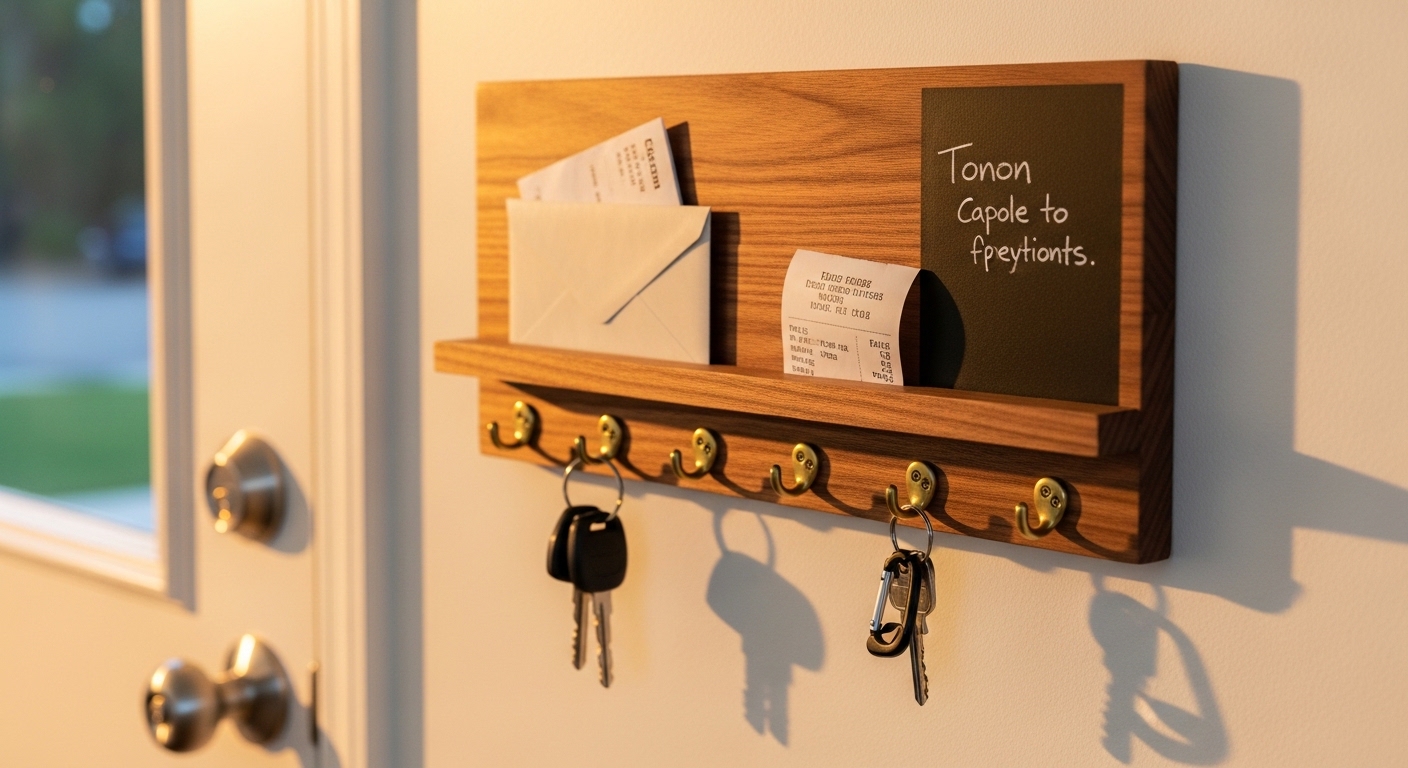
One of the smallest entryway organizer DIY projects on this list is also one of the most immediately impactful. A dedicated key and mail station eliminates the daily search for keys and keeps incoming mail from spreading across every surface in the apartment.
Build it from a single small piece of wood, roughly twelve by eighteen inches, with small individual hooks screwed into the lower portion for key rings and a slim horizontal rail or lip along the front edge to keep mail and cards from sliding off. Mount it beside the front door at a comfortable reaching height.
Optional additions include a small chalkboard panel painted onto the wood surface for notes and reminders, or a built-in charge cord slot if you prefer to charge devices near the door. This project costs under fifteen dollars in materials and takes less than two hours from start to finish.
7. Repurpose an Old Ladder as a Coat and Bag Stand
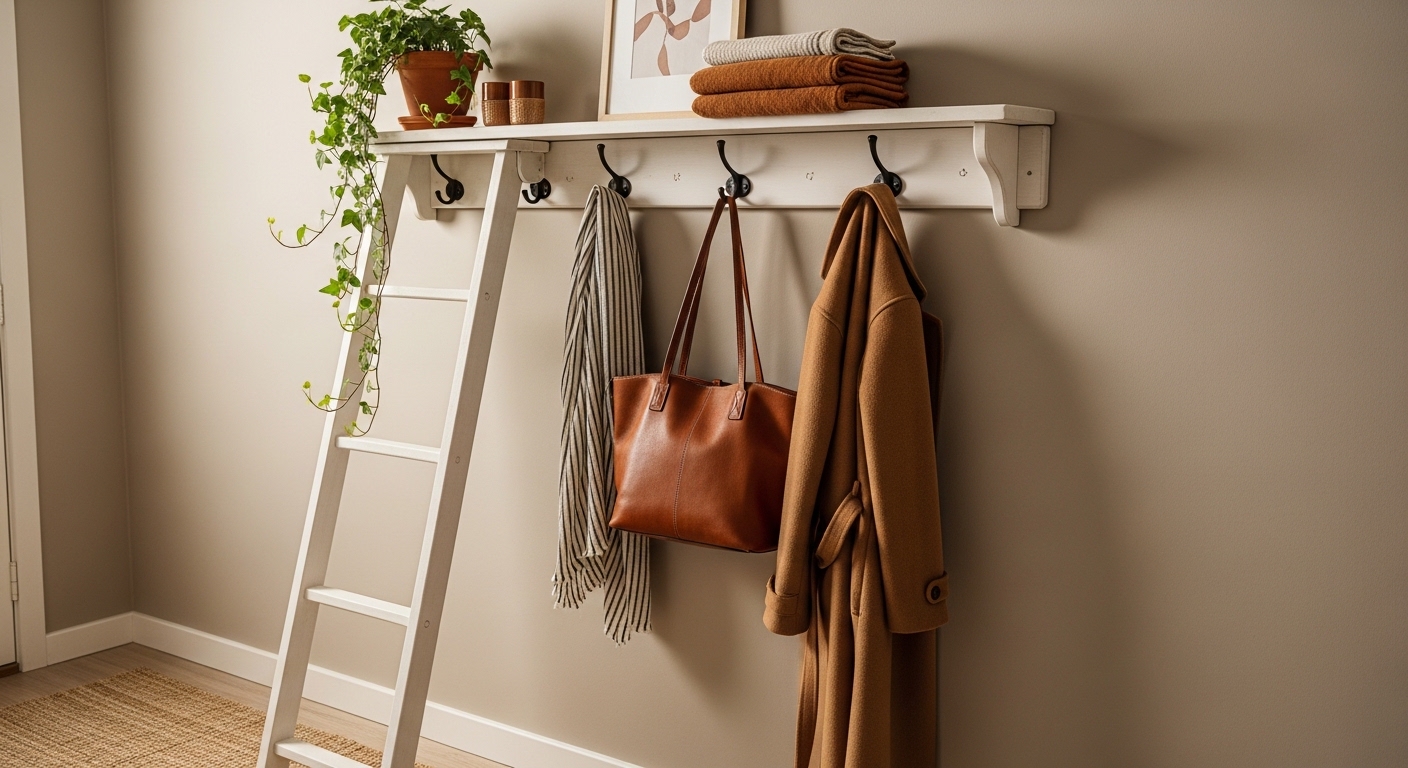
A vintage or reclaimed wooden ladder leaned against the entryway wall is one of the most visually interesting hallway storage ideas that requires zero building skills and zero wall anchoring. Sand and seal the ladder, or paint it in a solid matte color for a more contemporary look.
Use the rungs to hang coats and bags on S-hooks, drape scarves and lightweight items directly over the rungs, and use the top rung as a display ledge for a plant, a small basket, or a framed print leaned casually against the wall.
Vintage ladders are widely available at thrift stores, estate sales, and online marketplaces for between five and twenty dollars. The finished result looks like a considered design choice rather than a storage workaround, which is exactly what the best DIY solutions accomplish.
8. Create a Shoe Tray Station With Pipe and Wood
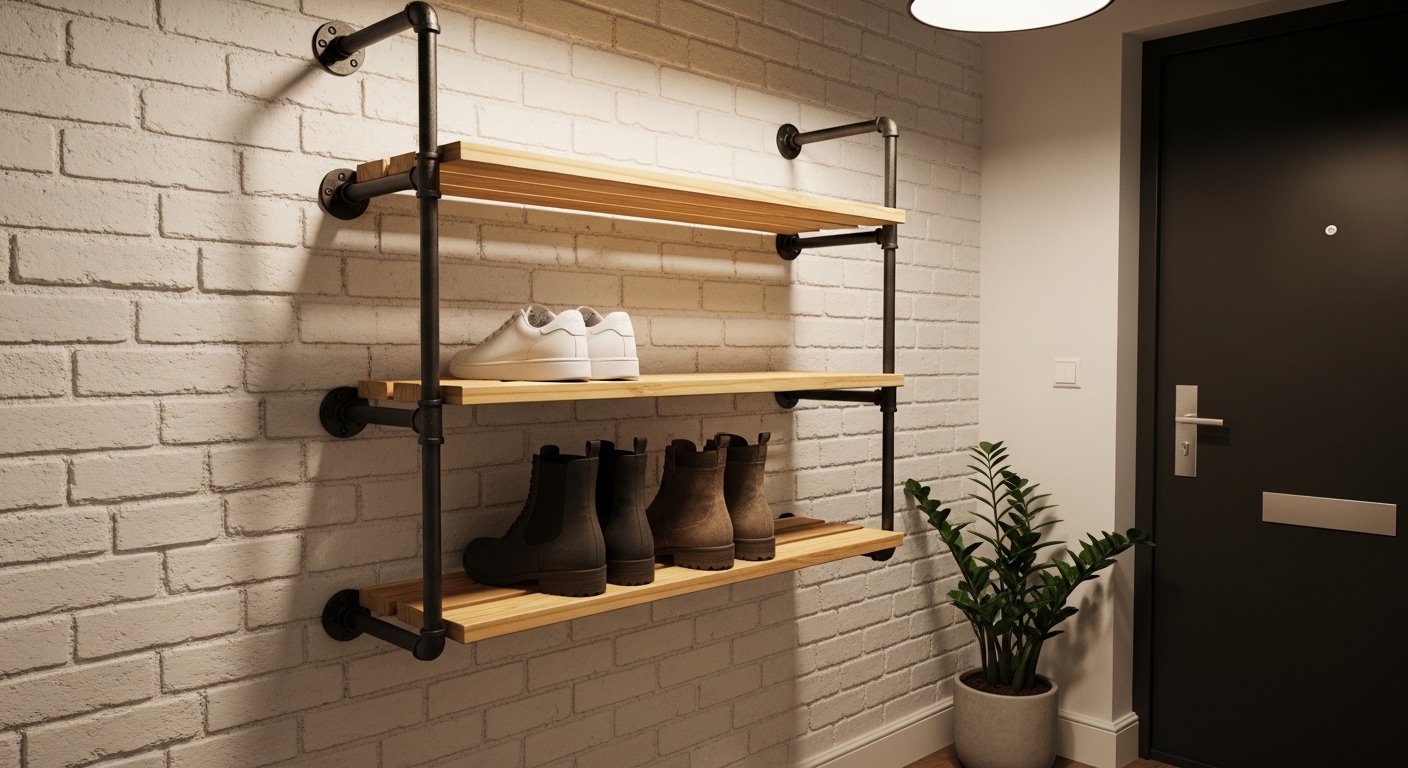
For entryways where shoes are the primary problem, a dedicated DIY shoe tray station keeps everything contained and off the floor in a structured way. This version uses industrial pipe fittings and wood planks to create an open-sided shoe shelf that looks architectural and intentional.
Two vertical pipe flanges screwed into the wall support horizontal pipe rods, over which you lay wood slat shelves cut to size. Each shelf holds one row of shoes. The pipe-and-wood combination gives the finished piece an industrial-meets-Scandinavian aesthetic that works beautifully in modern apartments.
This is slightly more involved than some of the other projects here, but the result is a genuinely furniture-quality piece that costs a fraction of what you would pay in a store.
9. Add Under-Bench Storage With Labeled Baskets
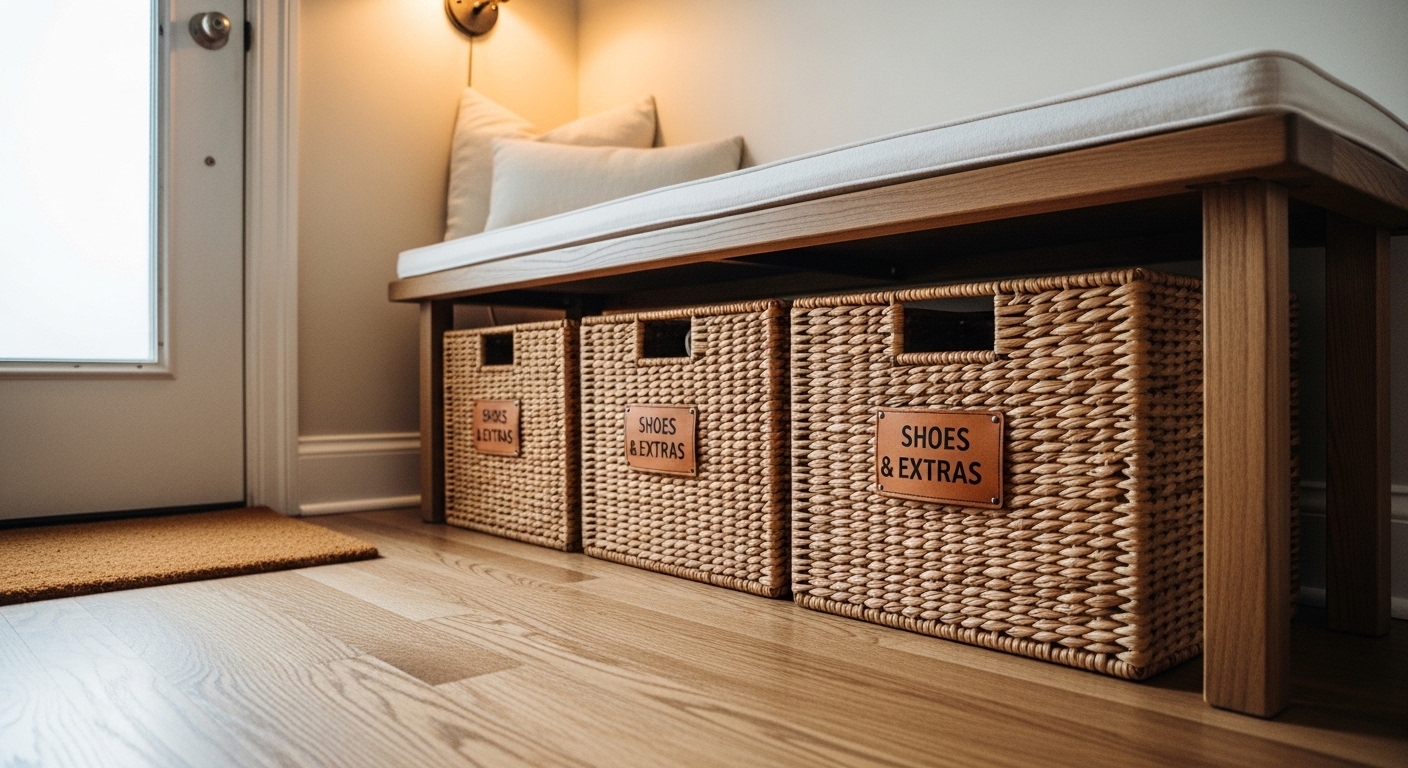
If you already have a bench or small seat in your entryway, the space beneath it is likely being wasted. A simple and zero-construction solution is to fit that space with uniform wire, wicker, or fabric storage baskets, each labeled clearly for a specific category: shoes, dog accessories, seasonal items, reusable bags, and so on.
Label them with printed tags, painted rock labels, or leather stamped tags for a more premium finish. The result looks organized and intentional from the outside and makes daily use significantly more efficient.
This is one of the most accessible DIY entryway storage ideas for small spaces because it requires no tools, no building, and only as much investment as the baskets themselves.
10. Mount a Magnetic Key Strip
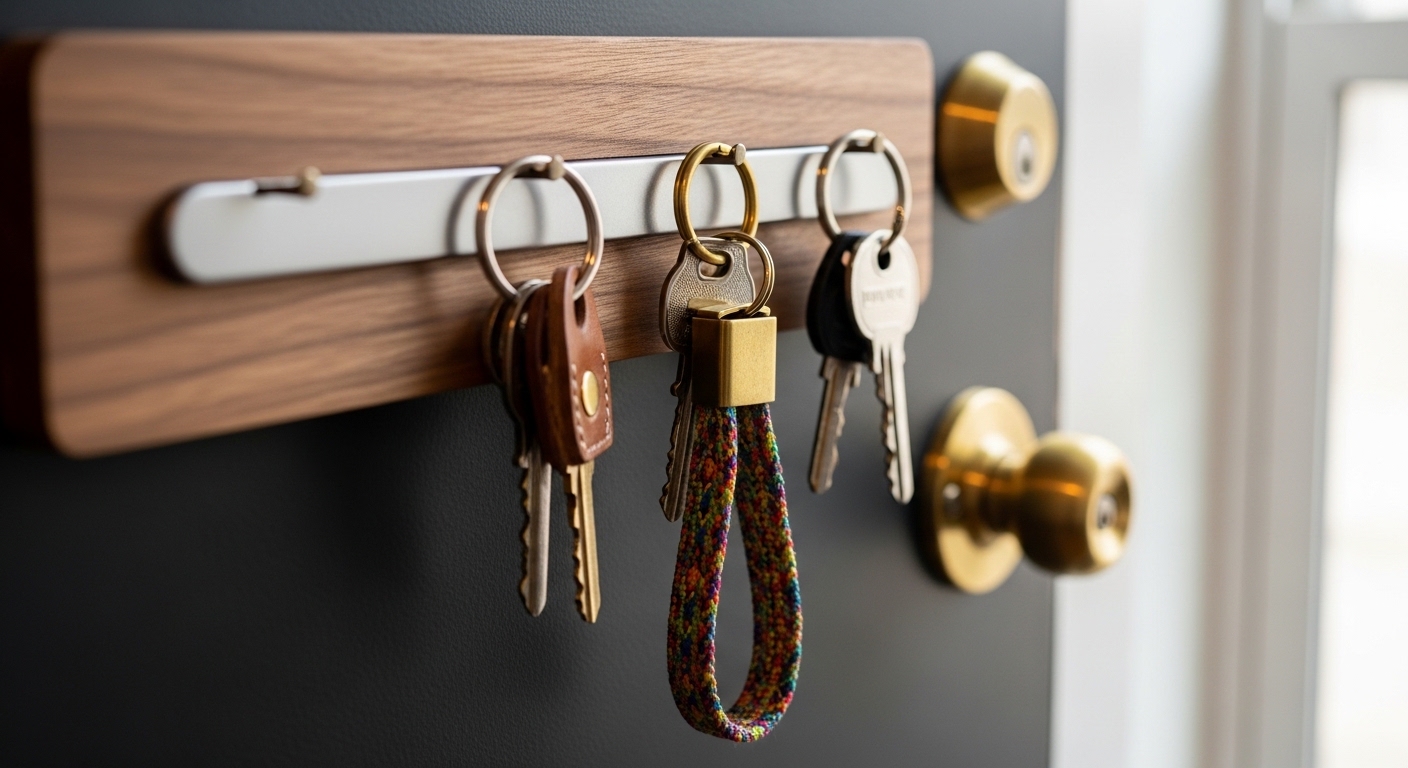
Borrowed from kitchen knife storage, a magnetic wall strip mounted near the front door keeps keys visible, accessible, and off every other surface in the home. Most magnetic strips designed for kitchens mount with two screws and hold keys reliably.
For a more custom look, build your own version using a strip of hardwood and a length of magnetic tape adhered along the surface. Finish the wood to match your other entryway elements and mount it at a height that works comfortably for every member of the household.
The magnetic key strip solves a small but daily annoyance that has an outsized effect on the calm or chaos of a home’s morning routine.
11. DIY a Hanging Fabric Organizer
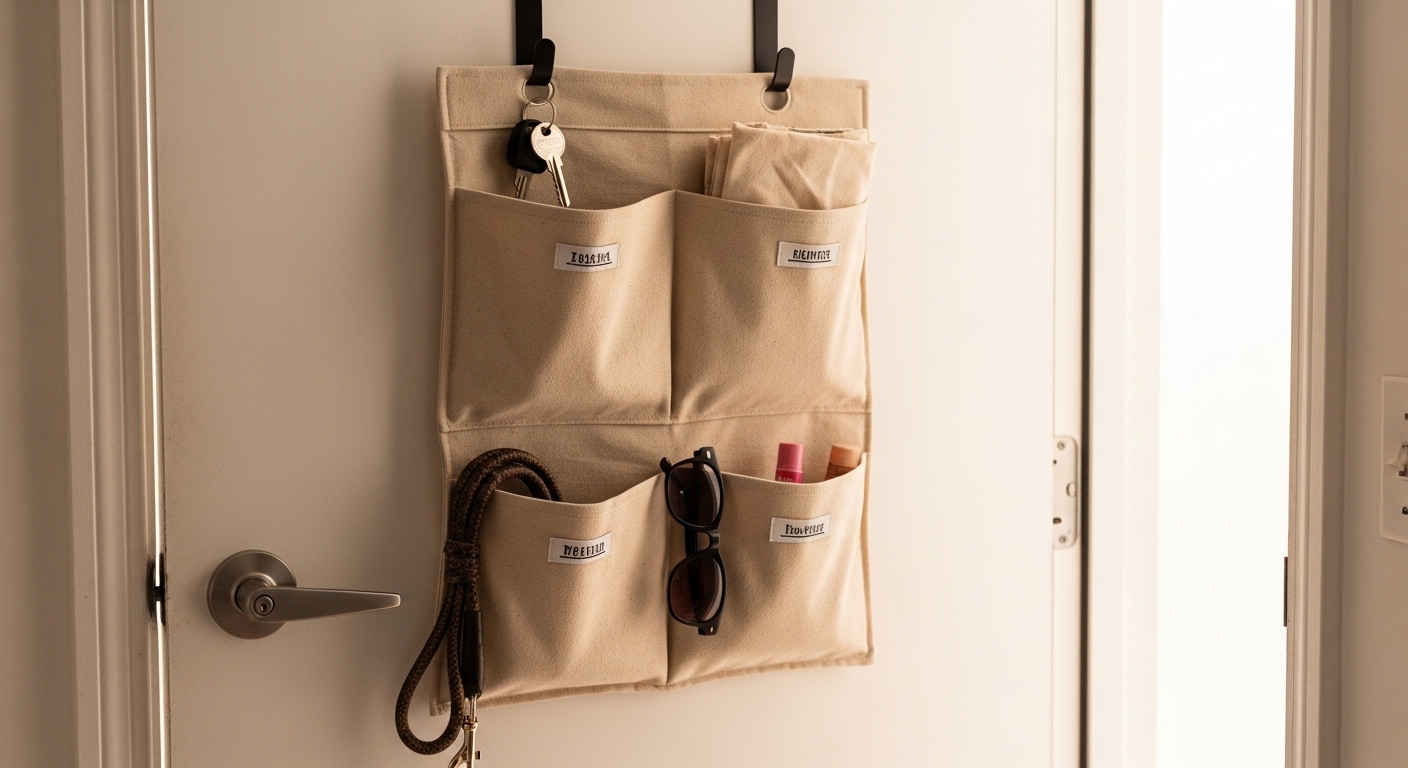
For renters who cannot mount anything on walls beyond a single nail or two, a hanging fabric organizer offers practical small space storage without any permanent fixtures. Sewn from canvas, denim, or heavy linen, a hanging organizer with multiple pockets can hold mail, keys, sunglasses, small bags, dog leashes, gloves, and more.
Hang it from a single command hook or over-the-door hook near the entry. Each pocket can be labeled with an iron-on label or fabric marker. For those comfortable with basic sewing, this project costs under ten dollars in materials. Pre-made versions are also widely available at an accessible price point if sewing is not part of your skill set.
12. Combine Two Projects Into One Entryway Wall System
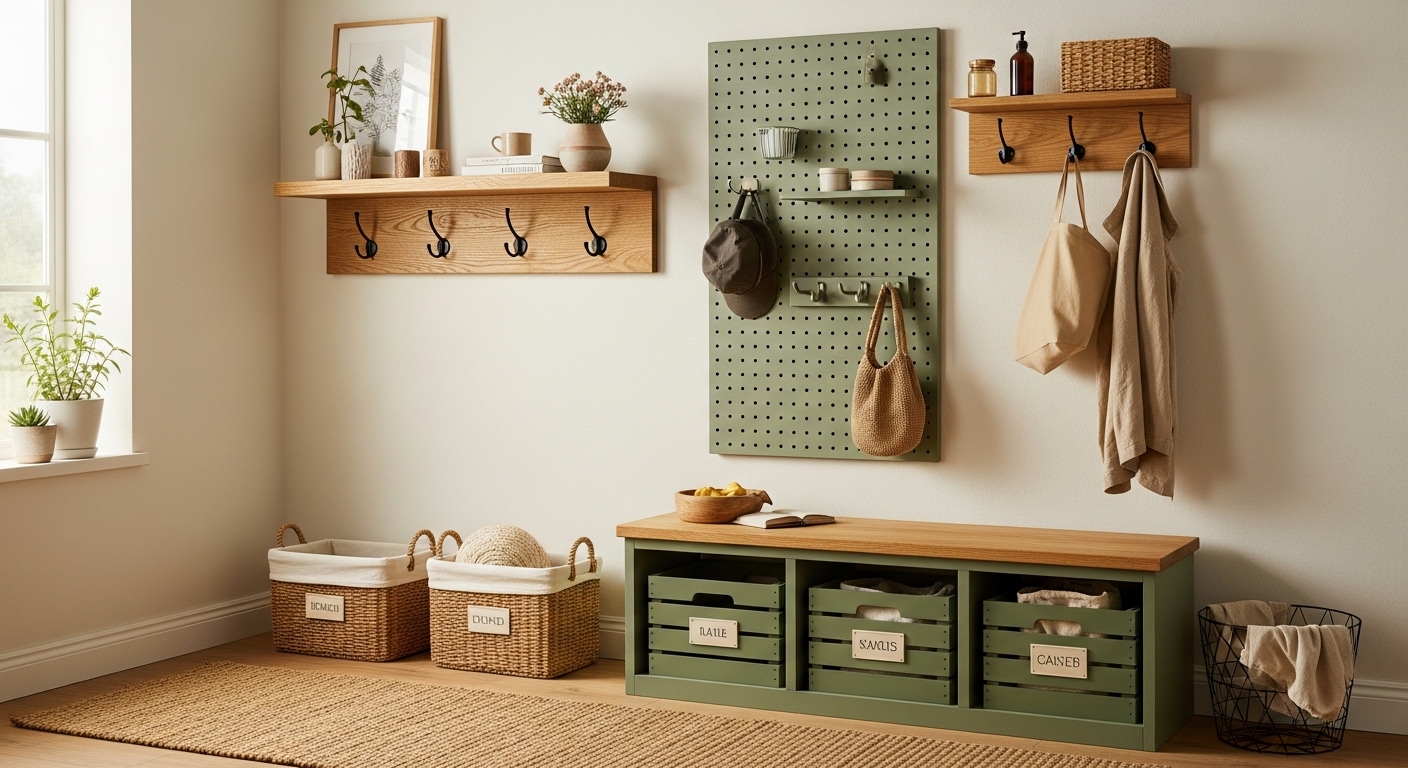
Once you have tried one or two of these individual projects, consider combining them into a cohesive entryway wall system. A floating shelf with hooks, paired with a pegboard panel beside it and a simple bench below, creates a fully functional and visually unified entryway storage solution that rivals anything you would find in a high-end home goods store.
The key to making combined DIY elements look intentional rather than cobbled together is consistency. Use the same wood finish or paint color across all pieces. Choose hardware in the same metal finish throughout. Keep the color palette of baskets and accessories cohesive.
When the individual pieces share a visual language, the whole wall reads as one considered design rather than several separate projects, which is the standard all the best DIY entryway storage ideas for small spaces should aim for.
Common DIY Entryway Mistakes to Avoid
Even well-intentioned projects can fall short if a few key principles are ignored. Here are the most common issues to avoid:
Not using the right wall anchors. A floating shelf or hook rail that falls off the wall because it was mounted into drywall without proper anchors is both a safety risk and a frustrating setback. Always identify your wall type before mounting, use stud finders where possible, and use toggle bolts or appropriate drywall anchors when studs are not available.
Choosing style over scale. A beautiful entryway bench that takes up so much floor space that the hallway becomes impassable defeats the entire purpose. Measure twice, build once, and always check that pathways remain at least thirty-six inches wide after installation.
Underestimating drying and curing time. Paint and stain need proper curing time before being put into daily use. A coat rack put into service before the finish has cured will show wear marks within weeks. Follow manufacturer instructions on drying time, especially for high-traffic items.
Final Thoughts on DIY Entryway Storage for Small Spaces
The entryway is too important to leave to chance, and too small to fill with solutions that do not truly work. The best DIY entryway storage ideas for small spaces earn their place by solving a real daily problem while also looking like they belong in the home rather than like an afterthought.
Start with your biggest pain point. Build one solution this weekend. See how it changes the way you feel walking through your own front door. Chances are, you will want to keep going.
FAQ: DIY Entryway Storage Ideas for Small Spaces
What is the easiest DIY entryway storage project for beginners?
The magnetic key strip and the floating shelf with hooks below are both excellent starting points for beginners. Both require minimal tools, basic materials available at any hardware store, and can be completed in a few hours with no prior DIY experience.
How do I add entryway storage without damaging apartment walls?
Focus on solutions that use over-the-door hooks, freestanding pieces like leaned ladders or standalone shelving units, and command-strip-mounted organizers. Pegboards can also be mounted with minimal wall impact using proper spacers and anchors sized for your wall type.
What wood is best for DIY entryway projects?
Pine is the most beginner-friendly and budget-friendly option. It is easy to cut, sand, stain, and paint. Poplar is a step up in durability and takes paint particularly well. Oak is more expensive but extremely durable and looks beautiful with a clear stain finish.
How much does a DIY entryway storage project typically cost?
Most of the projects in this list range from ten to sixty dollars in materials depending on size and finish quality. A pegboard organizer typically costs twenty to forty dollars. A bench with crate storage runs thirty to sixty dollars. A floating shelf with hooks can cost as little as fifteen to twenty-five dollars.
How do I make DIY entryway storage look built-in and polished?
Consistency is the key. Use the same wood tone or paint color across all pieces, choose matching hardware finishes throughout, and add trim details like edge banding or molding to raw wood edges. Taking time to sand surfaces properly and apply two full coats of paint or stain also elevates the finished result significantly.