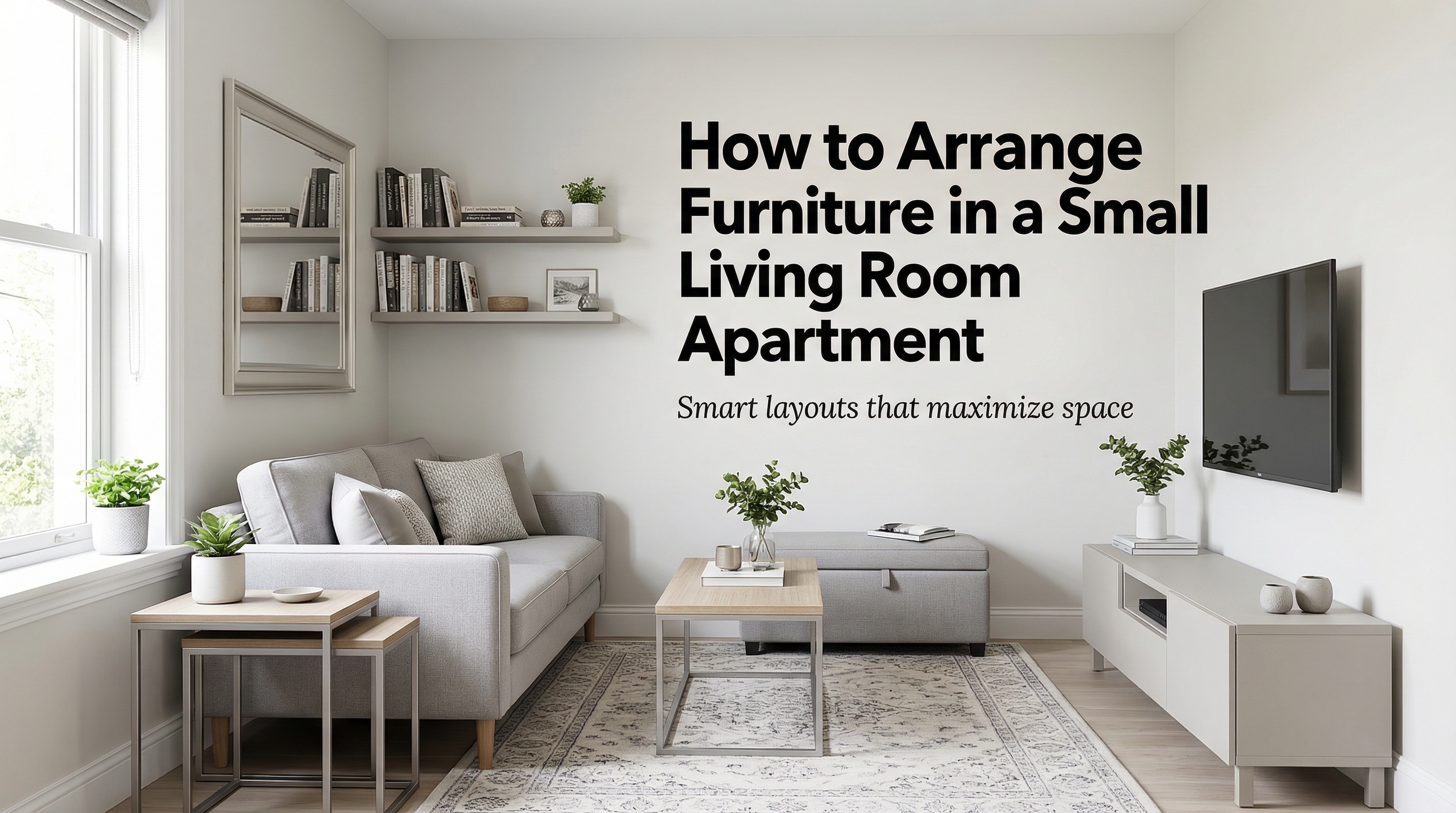
Most people approach a small living room the same way: push everything against the walls, buy the biggest sofa that fits, and hope for the best. It is an understandable instinct, but it is also one of the most reliable ways to make a compact space feel even more cramped.
Knowing how to arrange furniture in a small living room apartment is less about following rigid rules and more about understanding how people actually move through and use a space. Scale, sightlines, traffic flow, and the relationship between pieces all matter far more than the size of the room itself.
I have helped dozens of apartment dwellers rethink their living room layouts without buying a single new piece of furniture. The transformation in most cases is immediate and significant, achieved entirely through rearrangement, editing, and a more intentional approach to how the space is organized. These principles work whether you are setting up a new apartment from scratch or rethinking a layout that has never quite felt right.
Does Furniture Placement Really Make That Much Difference in a Small Room?
It is arguably the single most impactful variable in a small living room. The same furniture in two different arrangements can produce a room that feels open, functional, and beautifully proportioned or one that feels cluttered, cramped, and hard to move through. Getting the layout right costs nothing and changes everything.
Step 1: Measure the Room Before You Move Anything
This step sounds obvious, but most people who attempt a furniture rearrangement skip it. Before moving a single piece, take precise measurements of the room: total length and width, the location and dimensions of every door and window, the positions of electrical outlets and light switches, and any architectural features such as alcoves, columns, or built-in elements.
Transfer these measurements to a simple hand-drawn floor plan on graph paper, or use a free online room planning tool. Cut out paper shapes representing each piece of furniture to scale and move them around the plan before committing to any physical rearrangement.
This process saves an enormous amount of effort and reveals possibilities that are genuinely difficult to visualize in three dimensions. It is the single most professional habit that separates a thoughtful small living room layout from a frustrating afternoon of dragging heavy furniture around.
Step 2: Identify the Focal Point of the Room
Every well-arranged living room is organized around a clear focal point: the visual anchor that the seating faces and the eye travels toward first upon entering. In most living rooms, this is one of the following:
- A fireplace or chimney breast
- A large window with a view
- A television on a feature wall
- A significant piece of art or built-in shelving
In a tiny living room layout, identifying and committing to a single focal point is especially important because attempting to create two competing focal points in a small space almost always produces visual confusion and an arrangement that feels unsettled.
Once you have identified your focal point, orient your primary seating piece, almost always the sofa, toward it. Everything else in the layout builds outward from this starting position.
Step 3: Choose the Right Sofa Size and Position It First
The sofa is the largest piece in most living rooms and the one around which everything else is arranged. Getting its size and position right is the most consequential single decision in any apartment furniture arrangement.
For small living rooms, the most common mistake is choosing a sofa that is too large for the space. As a general rule, the sofa should occupy no more than two-thirds of the wall it faces or sits against. In most small apartment living rooms, this means a two-seater or a compact three-seater in the seventy-two to eighty-four inch range rather than a full-sized three-seater or sectional.
Regarding position, floating the sofa away from the wall is one of the most counterintuitive but consistently effective small living room layout moves. Pushing every piece of furniture flush against the walls in a small room actually makes the space feel more cramped by creating a hollow, undefined center and forcing all activity to the perimeter. Pulling the sofa twelve to eighteen inches away from the wall creates a more defined, purposeful seating zone and makes the room feel larger and more intentionally designed.
The exception is very narrow rooms, where a floating sofa would unacceptably restrict traffic flow. In those cases, keeping the sofa against the wall while floating other smaller pieces is the better compromise.
Step 4: Establish a Clear Traffic Flow
In any living room, but especially in a compact one, the ability to move through the space comfortably without having to navigate around furniture is fundamental to how livable it feels. Standard clearance guidelines provide a useful starting framework:
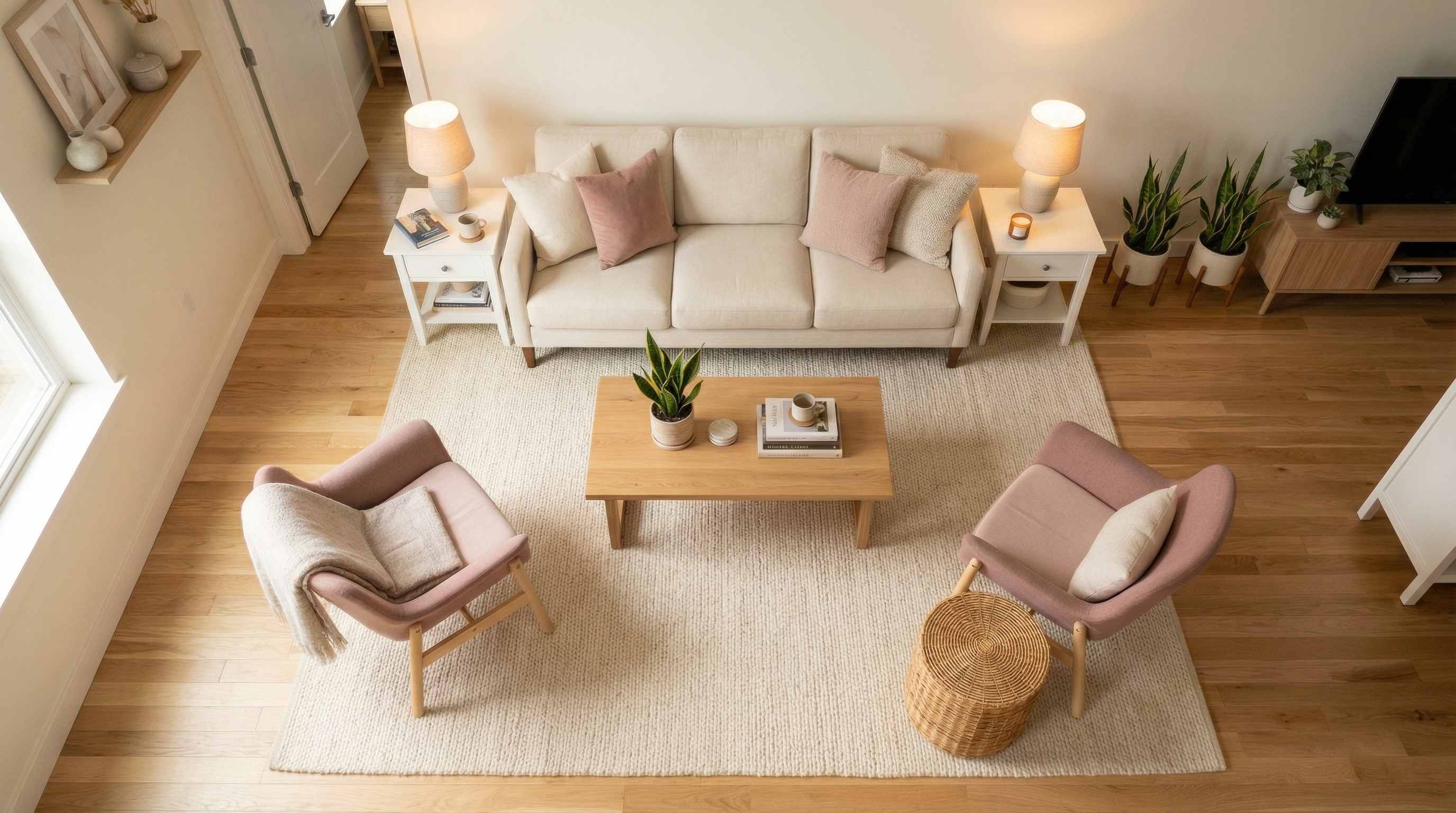
- At least thirty-six inches of clear pathway for main traffic routes through the room
- At least eighteen inches between the sofa and the coffee table for comfortable leg room and the ability to stand up easily
- At least twenty-four inches of clearance in front of any door that swings into the room
- At least twelve inches between the edge of a side table and the nearest wall or adjacent piece
Walk through your planned layout on paper or in person before committing. If navigating from the front door to the kitchen or bedroom requires turning sideways or stepping around furniture, the layout needs adjustment, regardless of how it looks aesthetically.
Step 5: Create a Defined Seating Zone
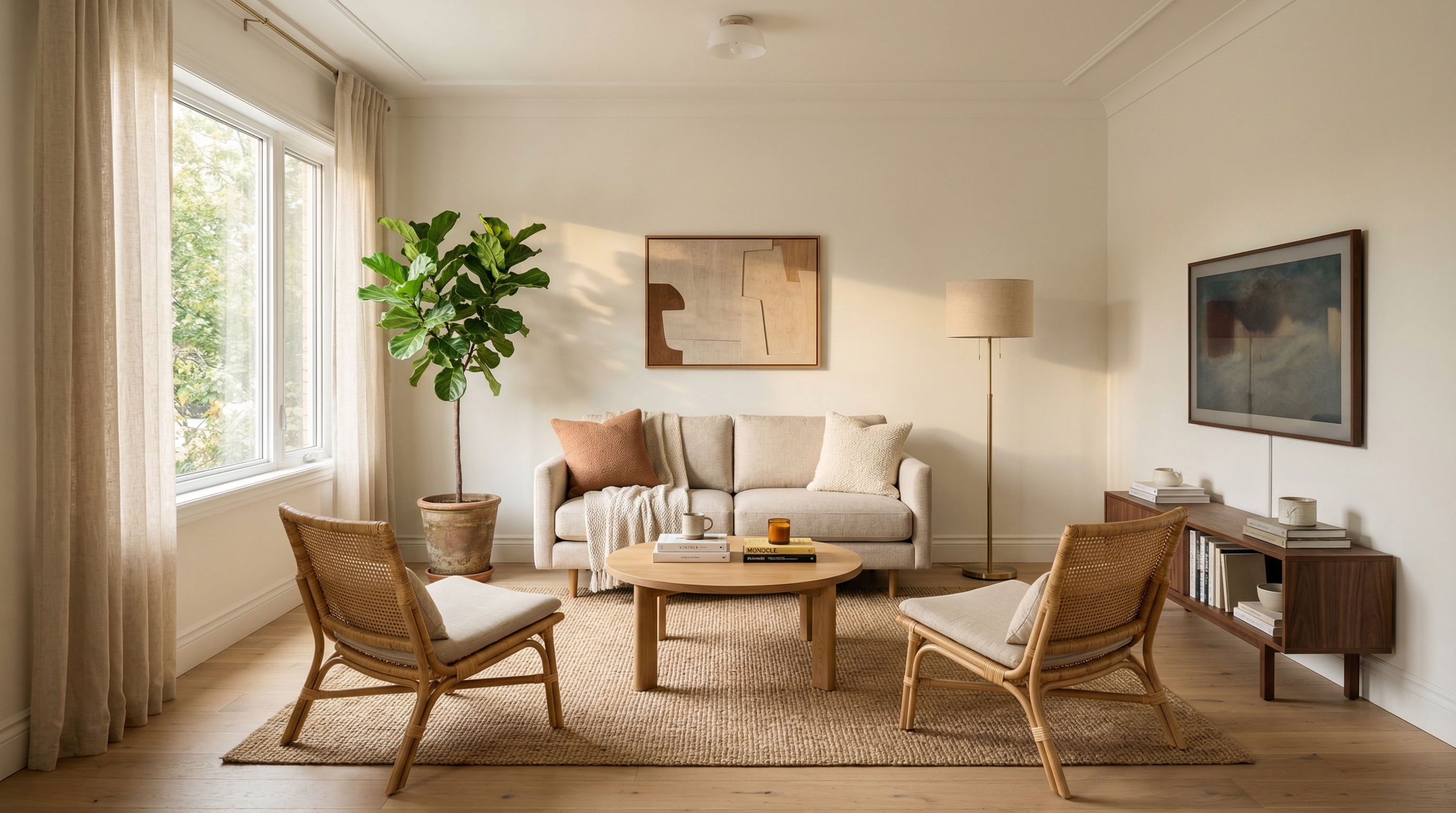
The most successful apartment furniture arrangement strategies for small living rooms involve creating one clearly defined seating zone rather than scattering chairs and accent pieces throughout the room. A cohesive seating group that functions as a single unified area gives the room a sense of intention and makes it feel larger than a collection of individually placed pieces.
A classic small living room seating arrangement uses:
- One sofa as the primary piece facing the focal point
- One or two accent chairs positioned at angles to complete the grouping without directly facing the sofa
- A coffee table or nesting tables centered within the group
- A side table at one or both ends of the sofa for lamps and everyday items
The chairs do not need to be identical to the sofa, but they should share at least one design quality: similar leg height, a complementary color tone, or a similar visual weight. This shared quality is what makes a mixed arrangement read as a curated grouping rather than a random collection.
Step 6: Right-Size Your Coffee Table
The coffee table is the piece most frequently sized incorrectly in small living rooms, and its proportions have an outsized effect on the entire layout.
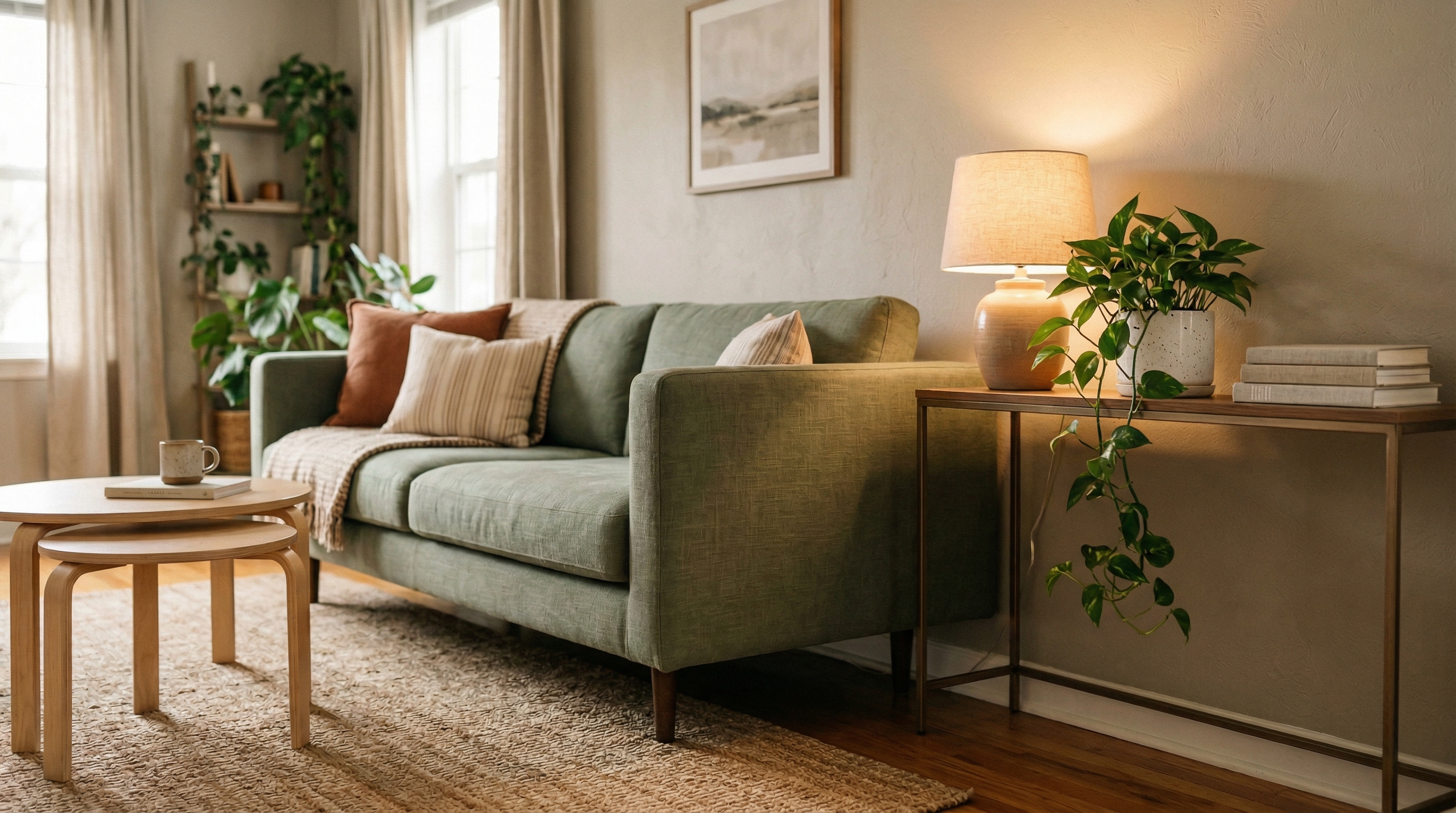
As a practical guide for arranging furniture in a small living room apartment, the coffee table should be approximately two-thirds the length of the sofa and positioned 18 inches from the sofa’s front edge. A table that is too large dominates the seating group’s center and restricts movement. A table that is too small looks lost and fails to anchor the arrangement.
For very compact living rooms, consider these alternatives to a standard coffee table:
- A set of two or three nesting tables that can be spread out or stacked as needed
- A large upholstered ottoman with a tray on top for surface area
- A round table rather than a rectangular one, which softens the geometry and makes navigation easier in tight spaces
- A pair of small side tables placed at either end of the sofa in place of a central table altogether
Each of these alternatives reduces the visual mass at the center of the seating arrangement while maintaining practical surface area.
Step 7: Use Rugs to Define the Space
A well-chosen area rug does more work in a small living room layout than almost any other single element. It defines the seating zone visually, anchors the furniture arrangement, adds warmth and texture, and creates a sense of boundaries that makes even an open-plan space feel intentionally organized.
The most common rug sizing mistake in small living rooms is choosing one that is too small. A rug that only fits under the coffee table and touches nothing else in the arrangement looks like an island and actually makes the room feel smaller. The correct approach is to use a rug large enough to cover at least the front legs of the sofa and to allow all accent chairs to rest on it, which visually connects the seating group into a unified whole.
In a tiny living room layout where a full-sized rug would overwhelm the floor area, a medium rug with at least the front two legs of the sofa on it, combined with the coffee table sitting fully on the rug surface, achieves a similar anchoring effect at a more manageable scale.
Step 8: Address Storage Without Adding Visual Weight
Storage is a genuine challenge in small apartment living rooms where closet space is limited, and everything tends to accumulate in the main living area. The key is choosing storage solutions that address the functional need without adding visual bulk that makes the room feel more crowded.
Effective storage strategies for a small living room include:
- A media console with closed doors rather than open shelving, which hides clutter behind a clean face
- A sofa with built-in storage in the base, accessible by lifting the seat cushions
- Floating wall shelves that use vertical space without occupying floor area
- A storage ottoman that provides both seating and concealed storage in one compact footprint
- Baskets and decorative boxes on open shelves that contain smaller items behind a cohesive exterior
The goal is for storage to be invisible or beautiful. In a small living room, every piece that stores clutter effectively is also a piece that makes the layout feel more spacious and controlled.
Step 9: Place Lighting Thoughtfully to Add Depth
Overhead lighting alone flattens a small room, eliminating the sense of depth and dimension that make a space feel larger. Layered lighting at different heights throughout the living room creates visual interest, draws the eye through the space, and makes the room feel more generous than its actual dimensions suggest.
Position a floor lamp beside or behind the sofa for warm, low-level ambient light. Add a table lamp on the console or side table at mid-height. Use accent lighting on shelves or behind the television to create a sense of depth on that wall. Each light source at a different height contributes a separate plane of illumination that collectively makes the room feel more three-dimensional.
Warm bulbs in the 2700K to 3000K range are particularly important in small living rooms because they create the sense of warmth and enclosure that reads as cozy rather than cramped, which is exactly the feeling a well-arranged compact living room should aim for.
Step 10: Edit Ruthlessly and Resist Overfurnishing
The single most reliable piece of advice for anyone learning how to arrange furniture in a small living room apartment is this: fewer pieces, chosen and placed with more intention, always produce a better result than more pieces crowding the same space.
Every additional piece of furniture in a small living room competes for visual attention, restricts traffic flow, and reduces the sense of openness that makes a compact space feel livable. Before adding any new piece, ask honestly whether it earns its place: does it serve a function that nothing else in the room already serves, does it improve the layout and visual balance, and does it fit the scale of the space?
The pieces that consistently earn their place in a well-arranged small living room are the sofa, one or two accent chairs, a right-sized coffee table or alternative, one or two side tables, a storage piece, and adequate lighting. Everything beyond this core set should justify its presence with genuine function or significant visual contribution.
Small Living Room Layout Ideas by Room Shape
Different room shapes present different layout challenges. Here are the most common configurations and the approaches that work best for each:
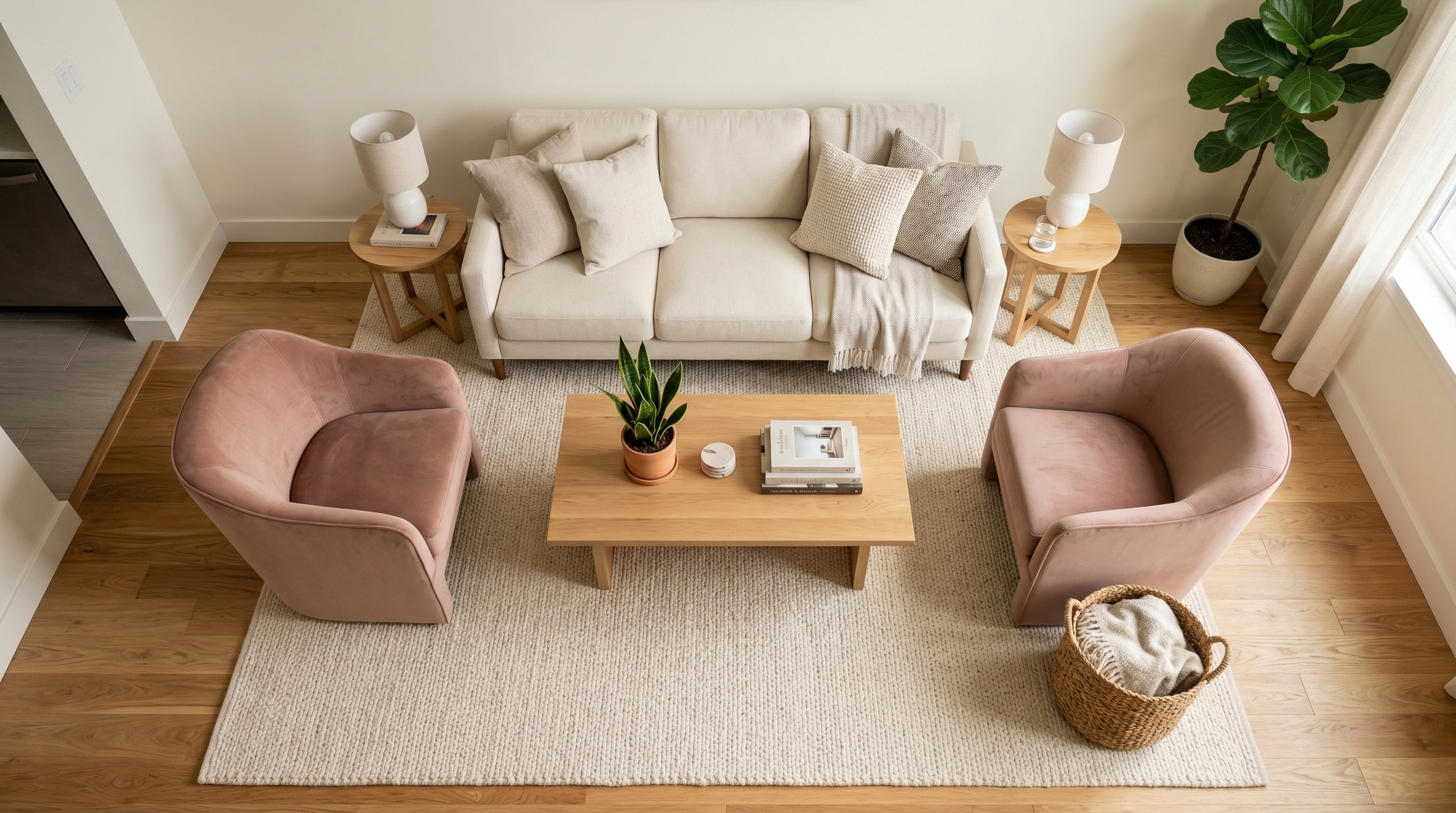
Square rooms tend to naturally create symmetrical arrangements. Place the sofa centered on one wall facing the focal point, with accent chairs on either side of the coffee table, creating a balanced U-shape or L-shape grouping. Avoid placing furniture diagonally in a square room, as it tends to create awkward leftover corners.
Rectangular rooms benefit from furniture arranged to emphasize the length of the space. The sofa typically sits along one of the long walls, with the seating group organized within the center section of the room, leaving clear floor space at either end for traffic flow and visual breathing room.
L-shaped rooms offer a natural opportunity to define two separate zones: a primary seating area in one section and a reading corner, home office nook, or dining area in the other. Use an area rug to define each zone distinctly, and choose a furniture scale appropriate to each section.
Narrow rooms are among the most challenging for apartment furniture arrangement. In a very narrow living room, limit furniture to one side of the main traffic pathway rather than placing pieces on both sides. Consider a compact loveseat or two accent chairs rather than a full sofa, and use a narrow console table against the opposite wall instead of a second seating piece.
Common Furniture Arrangement Mistakes to Avoid
Pushing all furniture against the walls is the most pervasive mistake in small living room layouts. It creates a disconnected, hollow center and forces the seating group to stretch across too large a distance to feel cohesive.
Blocking windows with furniture is a second common issue. Natural light is one of the most powerful tools for expanding a small room. Any piece of furniture that blocks a window cuts off that light source, making the room feel smaller and darker immediately.
Choosing a sectional sofa for a genuinely small living room almost always creates problems. Sectionals are designed for larger spaces, and their fixed L-shape configuration restricts layout flexibility significantly. A standard sofa with a separate accent chair offers far more arrangement versatility and visual lightness in a compact apartment living room.
Ignoring scale when mixing furniture pieces creates a visual imbalance that is easy to feel but sometimes difficult to diagnose. A large, heavy sofa paired with delicate, low accent chairs creates a top-heavy arrangement. Aim for pieces with similar visual weight: a substantial sofa paired with solid accent chairs, or a lighter sofa paired with more architectural chairs.
Wrapping Notes on How to Arrange Furniture in a Small Living Room Apartment
A small living room arranged thoughtfully feels larger, functions better, and looks more considered than a larger room put together carelessly. The principles are consistent: identify a focal point, float the sofa, establish clear traffic flow, right-size every piece, layer the lighting, and edit relentlessly.
Understanding how to arrange furniture in a small living room apartment is ultimately about working with the room rather than against it. Every small space has a natural logic to it, the best version of itself waiting to be uncovered through careful observation and intentional placement. The goal is to find that version and let it breathe.
Start with Step 1 this weekend. Measure the room, sketch the floor plan, and move the pieces on paper before committing to anything physical. You may find that the best arrangement was only a few moves away all along.