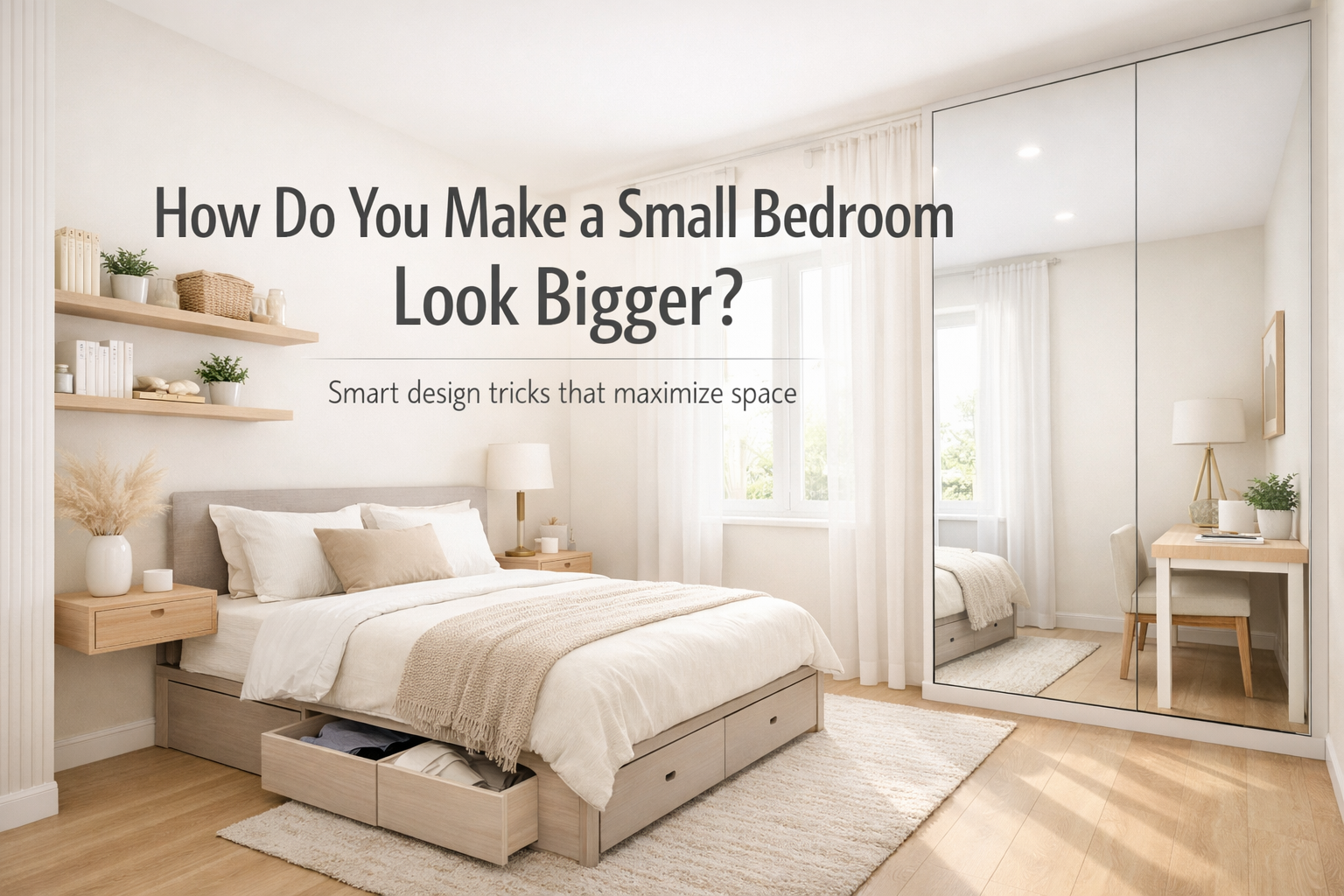
Small bedrooms can feel cramped and limiting, especially when furniture, storage, and decor compete for limited space. But the truth is, the size of a room doesn’t always determine how spacious it feels. With the right design choices, even compact bedrooms can appear open, airy, and comfortable.
Interior designers often rely on clever layout strategies, lighting tricks, and color choices to visually expand a room. If you’re wondering how to make a small bedroom look bigger, the answer usually involves simplifying the space while maximizing light and functionality.
Many of these improvements don’t require major renovations. In fact, some of the most effective ways to make a small bedroom look bigger involve simple decor adjustments.
How Can You Make a Small Bedroom Look Bigger?
To make a small bedroom look bigger, focus on using light colors, maximizing natural light, minimizing clutter, and choosing space-saving furniture. Strategic mirror placement, vertical storage, and consistent flooring can also create the illusion of a larger room.
Let’s explore practical tips to make a small bedroom look bigger that interior designers often use.
1. Use Light Colors on Walls
One of the most effective colors to make a small bedroom look bigger is a soft, light tone.
Light colors reflect more light, which helps a room feel brighter and more open.
Best Color Choices
- Soft white
- Light gray
- Pale blue
- Warm beige
- Soft sage green
Darker colors can sometimes make walls feel closer together, while lighter shades visually expand the space.
2. Use Mirrors to Reflect Light
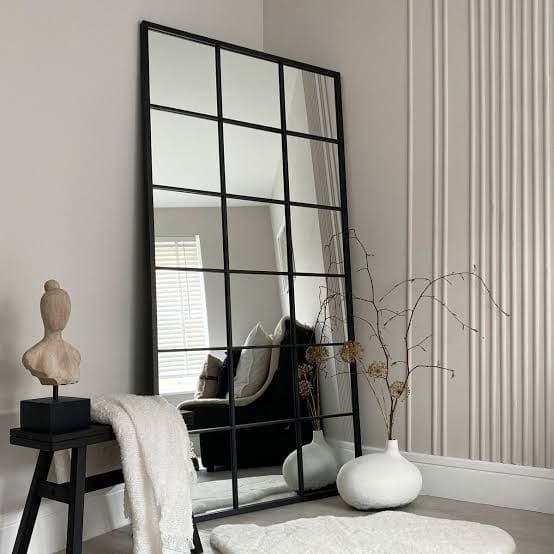
Mirrors are a classic trick used by designers to make rooms appear larger.
When placed opposite a window or light source, mirrors reflect natural light and create the illusion of depth.
Best Mirror Placement Ideas
- Opposite windows
- Behind nightstands
- Full-length mirrors on closet doors
Mirrors visually double the amount of light in the room.
3. Choose Space-Saving Furniture
Large furniture can overwhelm small bedrooms.
Instead, look for compact pieces that serve multiple functions.
Smart Furniture Options
- Beds with built-in storage
- Wall-mounted nightstands
- Slim dressers
- Foldable desks
These options help keep the room functional without overcrowding the layout.
4. Keep the Floor Visible
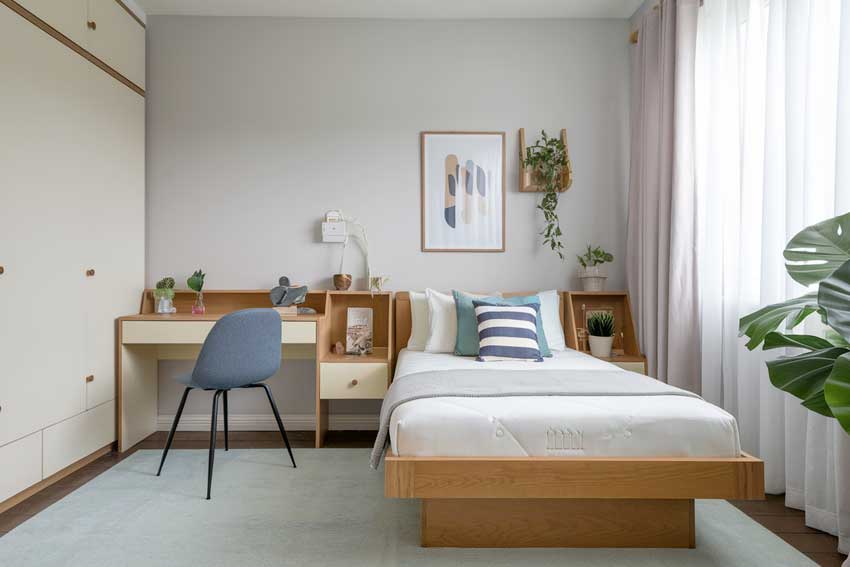
Furniture with exposed legs allows more floor space to remain visible.
When the eye can see more of the floor, the room appears larger.
Examples include:
- Platform beds with legs
- Mid-century style furniture
- Floating shelves
This design approach helps maintain visual openness.
5. Maximize Natural Light
Natural light is one of the most powerful tools for making rooms feel larger.
Ways to Increase Light
- Use sheer curtains
- Avoid blocking windows with furniture
- Choose lighter window treatments
Bright rooms naturally feel more spacious than dark ones.
6. Use Vertical Storage
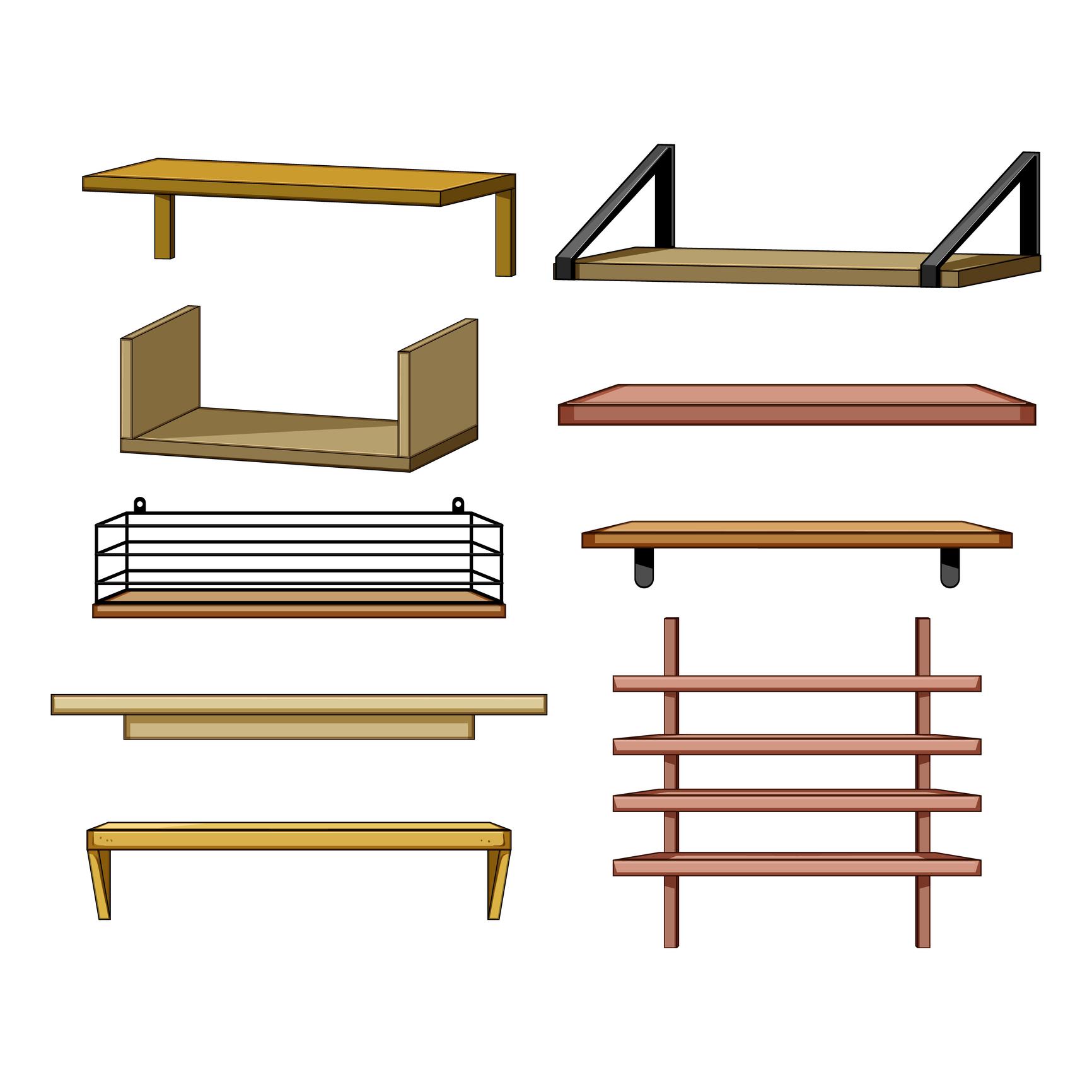
When floor space is limited, vertical storage becomes essential.
Tall shelving units and wall-mounted storage help maximize space without crowding the room.
Examples include:
- Floating shelves
- Tall bookcases
- Wall-mounted storage cabinets
This approach draws the eye upward and makes the room feel taller.
7. Use One Consistent Flooring Style
Switching flooring materials between rooms can visually break up space.
Using consistent flooring helps rooms flow together and appear larger.
For example:
- Continuous hardwood flooring
- Same tile across spaces
- Matching laminate flooring
Consistency creates a seamless visual effect.
8. Keep Decor Minimal
Clutter can quickly make small bedrooms feel even smaller.
Focus on a few carefully chosen decorative pieces rather than filling every surface.
Minimal Decor Ideas
- One statement artwork piece
- A few indoor plants
- Neutral bedding with subtle textures
A clean design helps maintain visual openness.
My Experience Says
Although most of my work focuses on outdoor spaces and landscaping, I’ve noticed that interior design often follows similar principles.
One homeowner I worked with redesigned their small guest bedroom by simply removing bulky furniture and using lighter wall colors. After adding a mirror opposite the window, the room felt noticeably brighter and more open without increasing the actual square footage.
Sometimes improving how light and space interact can dramatically change how a room feels.
Common Mistakes That Make Small Bedrooms Feel Smaller
Even with good intentions, certain design choices can make a small bedroom feel cramped.
Common mistakes include:
- Using oversized furniture
- Blocking natural light with heavy curtains
- Too many decorative items
- Dark wall colors in very small rooms
Avoiding these mistakes can make a significant difference.
Final Thoughts on Making a Small Bedroom Look Bigger
Understanding how to make a small bedroom look bigger often comes down to managing light, color, and furniture placement.
With thoughtful design choices such as lighter colors, mirrors, and smart storage, you can create a room that feels open and comfortable despite limited square footage.
Even small adjustments can significantly improve how a bedroom looks and functions.
What color makes a small bedroom look bigger?
Light colors like white, soft gray, and pale blue help reflect light and create a more open appearance.
Do mirrors really make rooms look bigger?
Yes. Mirrors reflect light and create the illusion of depth, making spaces appear larger.
What furniture works best in small bedrooms?
Compact furniture, multi-functional pieces, and items with visible legs work best.
How do you decorate a small bedroom without clutter?
Focus on minimal decor, vertical storage, and light color palettes.