Modern homes have become increasingly technology-driven, but many homeowners are now seeking something that feels more natural and calming. This shift has fueled the growing popularity of biophilic design, a design approach that reconnects people with nature inside built environments.
Across the United States, interior designers and architects are incorporating natural materials, indoor plants, daylight, and organic textures to create homes that feel healthier and more relaxing.
Understanding what is biophilic design helps explain why this concept is rapidly becoming one of the most influential trends in modern home design.
What Is Biophilic Design?
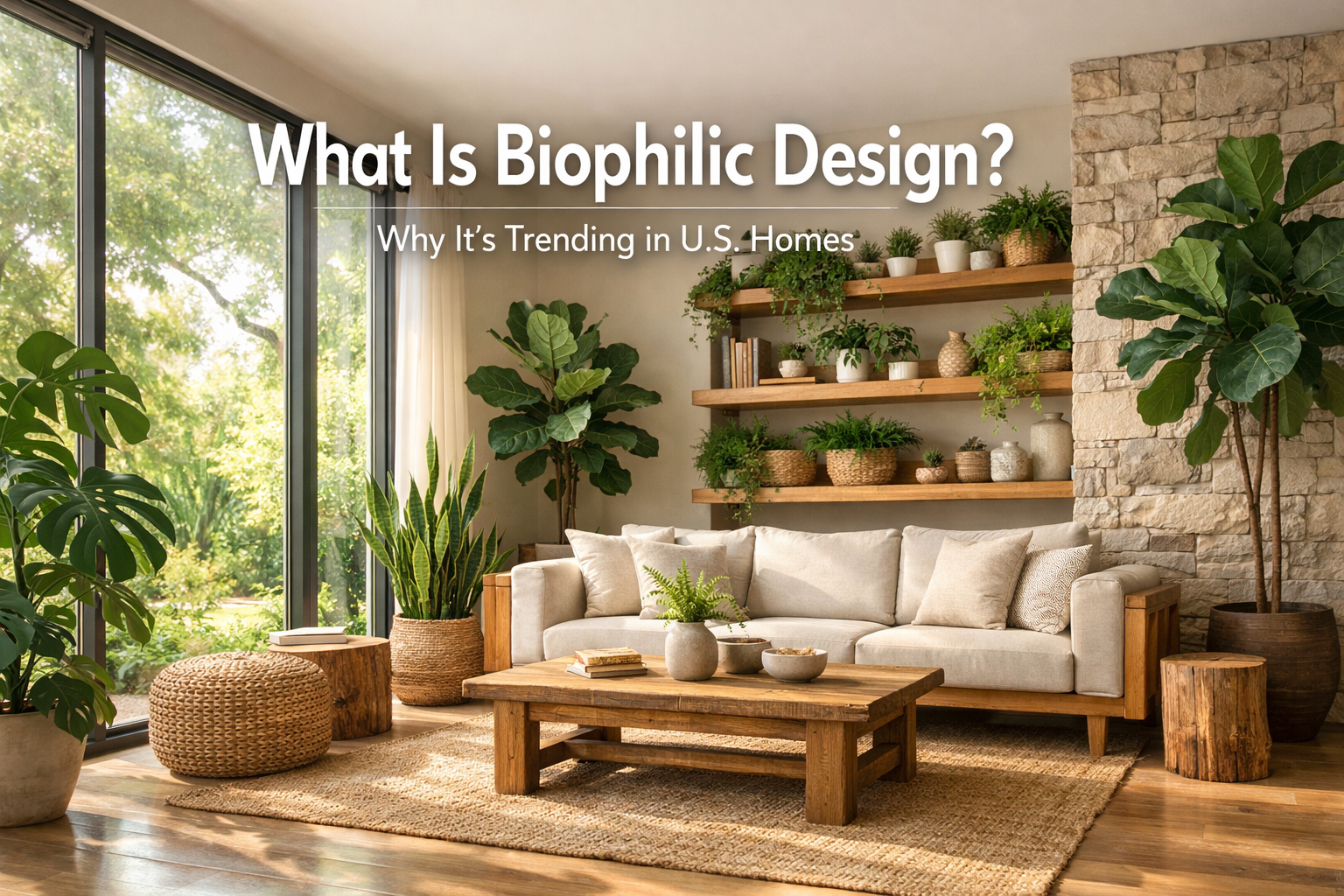
Biophilic design is a design philosophy that integrates natural elements such as plants, natural light, water features, and organic materials into indoor spaces to strengthen the human connection with nature.
This approach focuses on improving well-being, reducing stress, and creating environments that feel more balanced and restorative.
Now let’s explore how biophilic design interior concepts are transforming homes across the United States.
Why Biophilic Design Is Trending in U.S. Homes
Several factors have contributed to the rapid rise of biophilic design architecture and interior design trends in American homes.
1. People Spend More Time Indoors
According to research from the U.S. Environmental Protection Agency, Americans spend about 90% of their time indoors. As a result, interior environments have a significant impact on mental and physical well-being.
Biophilic design helps offset this by introducing elements that mimic outdoor environments.
2. Homeowners Want Healthier Living Spaces
Many homeowners are prioritizing wellness-focused interiors. Natural light, indoor plants, and natural materials can help reduce stress and improve mood.
Studies published in the Journal of Environmental Psychology suggest that environments incorporating natural elements can enhance productivity and mental well-being.
3. Sustainability and Eco-Conscious Living
Eco-friendly design is becoming a priority for many homeowners. Biophilic design architecture often overlaps with sustainable building practices, including natural materials and energy-efficient designs.
Core Biophilic Design Principles
Understanding biophilic design principles helps explain how designers successfully integrate nature into indoor environments.
Direct Connection With Nature
This principle involves bringing natural elements directly into the home.
Examples include:
- Indoor plants
- Water features
- Natural daylight
- Living green walls
Natural Materials and Textures
Using materials that reflect nature creates warmth and authenticity in a space.
Common materials include:
- Wood
- Stone
- Bamboo
- Clay
- Natural fabrics like linen and cotton
Visual Connection With Outdoor Spaces
Homes designed with large windows, sliding glass doors, or indoor-outdoor living areas strengthen the connection with nature.
Views of gardens, trees, or landscapes can have calming psychological effects.
Key Biophilic Design Elements
To fully understand biophilic design elements, it helps to look at how they appear in real homes.

Indoor Plants
Plants are the most recognizable feature of biophilic design home decor. They improve air quality and add vibrant natural textures.
Popular indoor plants include:
- Monstera
- Snake plants
- Fiddle leaf figs
- Pothos
Natural Light
Maximizing daylight improves mood and reduces reliance on artificial lighting.
Design strategies include:
- Larger windows
- Skylights
- Glass doors
- Open floor plans
Organic Shapes and Patterns
Nature rarely follows straight lines. Curved furniture, organic shapes, and natural patterns help create a more relaxed and natural aesthetic.
Biophilic Design Examples in Modern Homes

Some of the most compelling biophilic design examples combine multiple natural elements in a single space.
Example 1: Indoor Garden Spaces
Some homeowners incorporate small indoor gardens or plant walls into living areas.
Example 2: Natural Material Kitchens
Kitchens designed with wood cabinets, stone countertops, and natural lighting create a warm and earthy environment.
Example 3: Indoor-Outdoor Living Rooms
Sliding glass walls and patio extensions blur the boundary between indoor and outdoor spaces.
How to Integrate Biophilic Design in Your Home
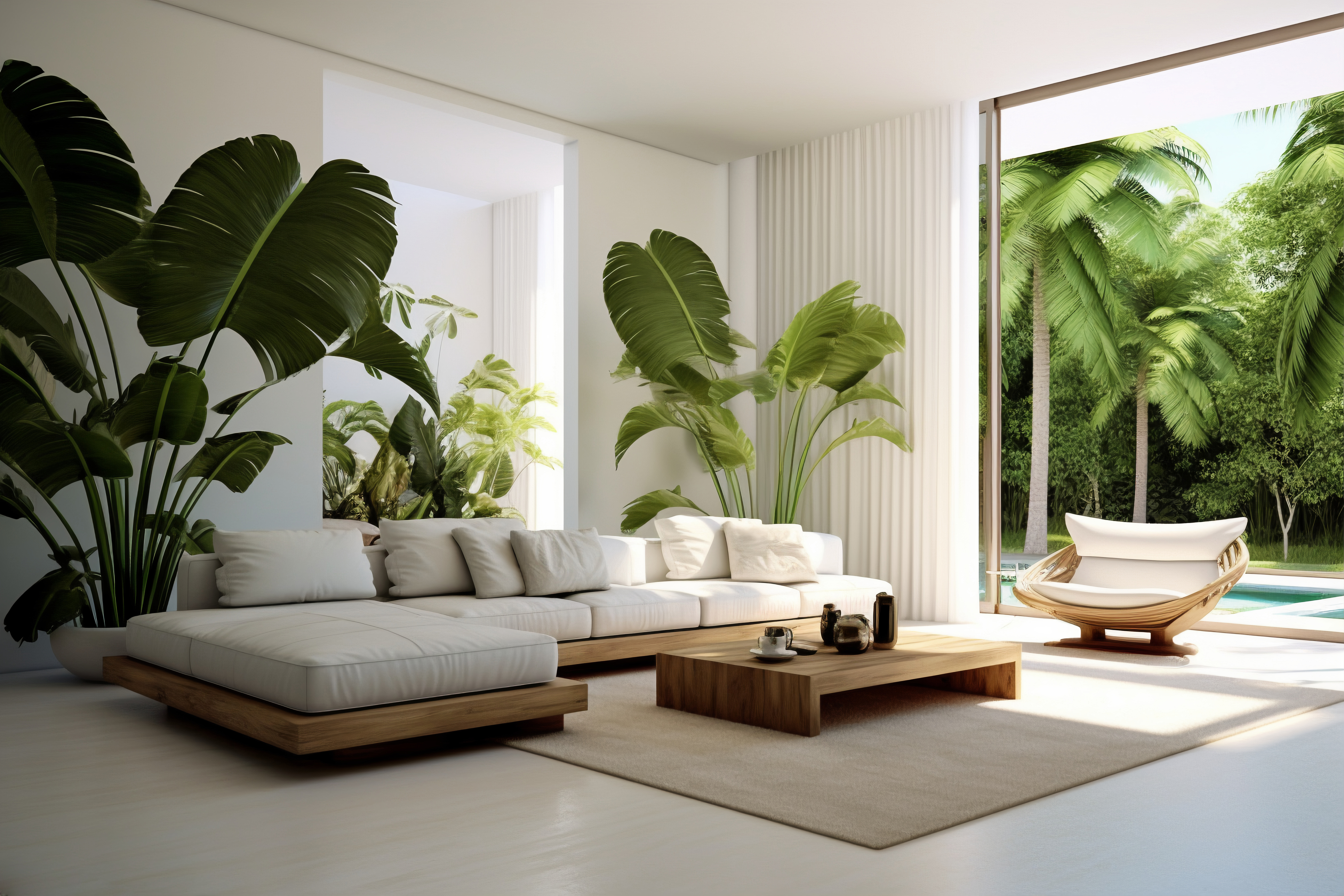
You don’t need a full renovation to incorporate biophilic design interior concepts. Small changes can still create a meaningful connection to nature.
Add More Indoor Plants
Start with low-maintenance plants that thrive indoors.
Use Natural Materials
Introduce wooden furniture, woven baskets, stone accents, or natural textiles.
Improve Natural Lighting
Keep windows unobstructed and consider using lighter curtains to allow more daylight into the home.
Create Nature-Inspired Color Palettes
Colors inspired by nature such as greens, earth tones, and warm neutrals—can enhance the biophilic atmosphere.
My Advice Insight
While my work typically focuses on outdoor landscapes, I’ve seen how strongly indoor environments influence how people feel in their homes.
One homeowner I worked with redesigned their living room to include large indoor plants, natural wood furniture, and wide windows overlooking their garden. Within a few weeks, they mentioned that the space felt noticeably calmer and more relaxing compared to before.
Sometimes the connection between indoor design and outdoor nature can be surprisingly powerful.
Common Mistakes When Using Biophilic Design home decor
Although biophilic design home decor focuses on nature, it’s important to avoid overdoing it.
Common mistakes include:
- Adding too many plants without proper lighting
- Mixing too many natural materials without cohesion
- Blocking natural light with heavy curtains
- Choosing artificial plants instead of real ones
Biophilic design works best when it feels balanced and intentional.
Final Thoughts on Biophilic Design
Understanding what is biophilic design reveals why this concept is quickly becoming a major trend in U.S. homes.
By integrating natural elements such as plants, daylight, organic materials, and outdoor views, homeowners can create living spaces that feel healthier and more connected to nature.
Even small changes like adding indoor plants or increasing natural light can transform how a home feels and functions. As more people prioritize wellness and sustainability, biophilic design interior ideas are likely to remain an important part of modern home design.
FAQs
What is biophilic design in simple terms?
Biophilic design is a design approach that incorporates natural elements like plants, light, and natural materials into indoor spaces.
Why is biophilic design important?
It helps create healthier living environments by reconnecting people with nature.
Is biophilic design expensive?
Not necessarily. Many elements like plants, natural textures, and improved lighting are affordable upgrades.
Can biophilic design work in small homes?
Yes. Even small apartments can incorporate plants, natural light, and organic materials.