A few years ago I was consulting on a renovation for a young couple in Berkeley who had one very specific brief: they wanted their home to feel beautiful, warm, and considered, and they wanted to achieve it without contributing to the cycle of cheap furniture, fast decor trends, and disposable styling that fills landfills every year. That project changed the way I approach sustainable interior design in a lasting way.
What we created together was not a home that looked like a recycling campaign. It was genuinely lovely. Rich in texture, personal in character, and thoughtfully assembled from materials that told a story about where they came from. That is the real promise of zero waste home decor ideas: not sacrifice, not compromise, but a more intentional and ultimately more rewarding way of creating a home.
Whether you are beginning a full sustainable renovation or simply looking to make more conscious choices as you update your space one piece at a time, these ideas will help you build a home that is as kind to the planet as it is beautiful to live in.
What Does Zero Waste Home Decor Actually Mean?
Zero waste home decor is the practice of furnishing and decorating your home in ways that minimize waste, reduce environmental impact, and prioritize longevity over disposability. In practice it means choosing secondhand over new, natural over synthetic, durable over cheap, and repurposed over discarded. It does not mean your home needs to look austere or unfinished. Done well, eco friendly decor is often more characterful and visually interesting than anything you would find in a fast-furniture showroom.
1. Shop Secondhand First, Always
The single most impactful zero waste decorating principle is also the simplest: before buying anything new, look secondhand first. Thrift stores, estate sales, online marketplaces, antique markets, and neighborhood buy-nothing groups are all rich sources of furniture, art, textiles, and accessories that would otherwise end up in landfills.
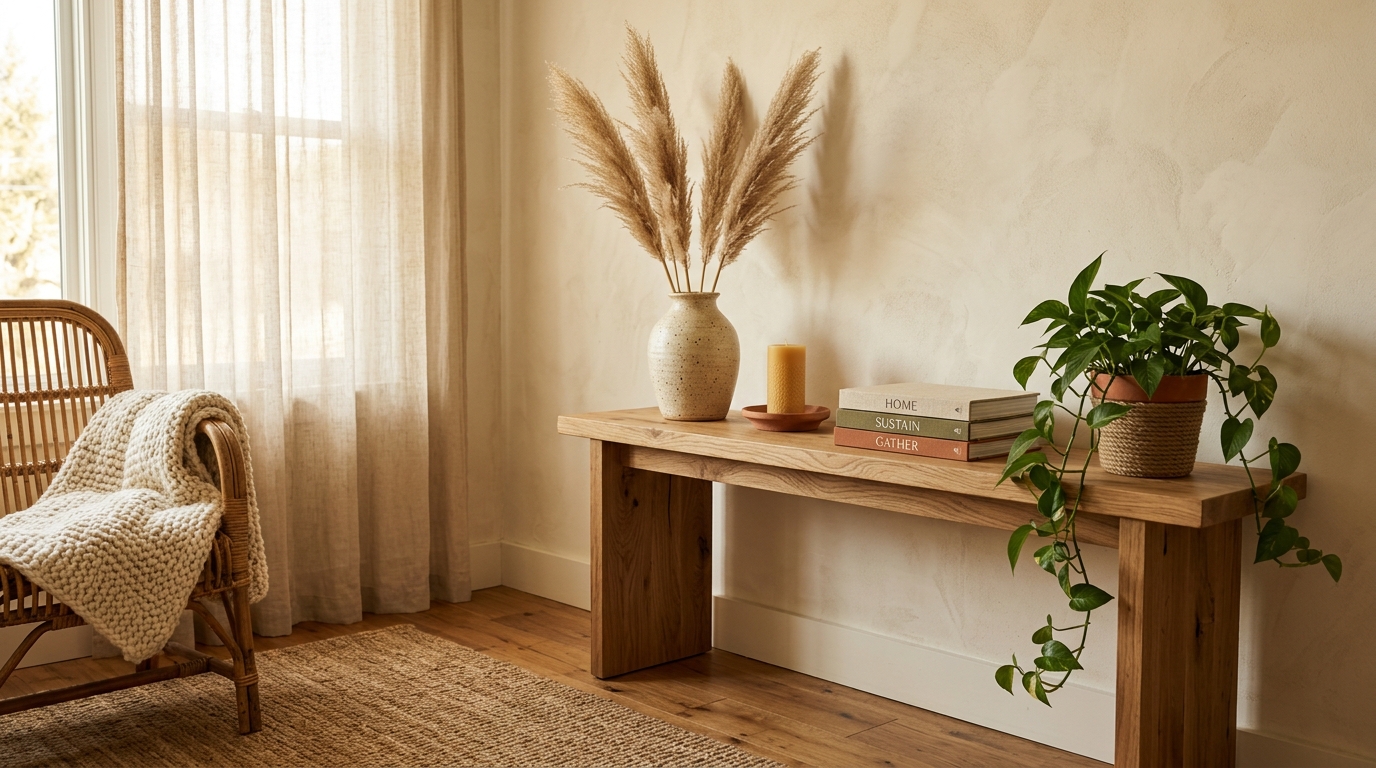
Buying secondhand keeps existing objects in circulation, avoids the energy and material cost of manufacturing new products, and almost always results in more interesting and characterful pieces than mass-produced alternatives. A mid-century credenza from an estate sale, a vintage ceramic lamp from a thrift store, a set of linen curtains from an online secondhand marketplace: these pieces carry history and individuality that brand-new items simply cannot replicate.
This is the foundational practice of zero waste home decor ideas and the one that delivers the highest environmental benefit per decorating decision.
2. Choose Natural and Biodegradable Materials
When buying new is unavoidable, the most sustainable choice is always materials that are natural, renewable, and biodegradable rather than petroleum-derived synthetics that persist in the environment indefinitely.
In practical sustainable interior design terms this means:
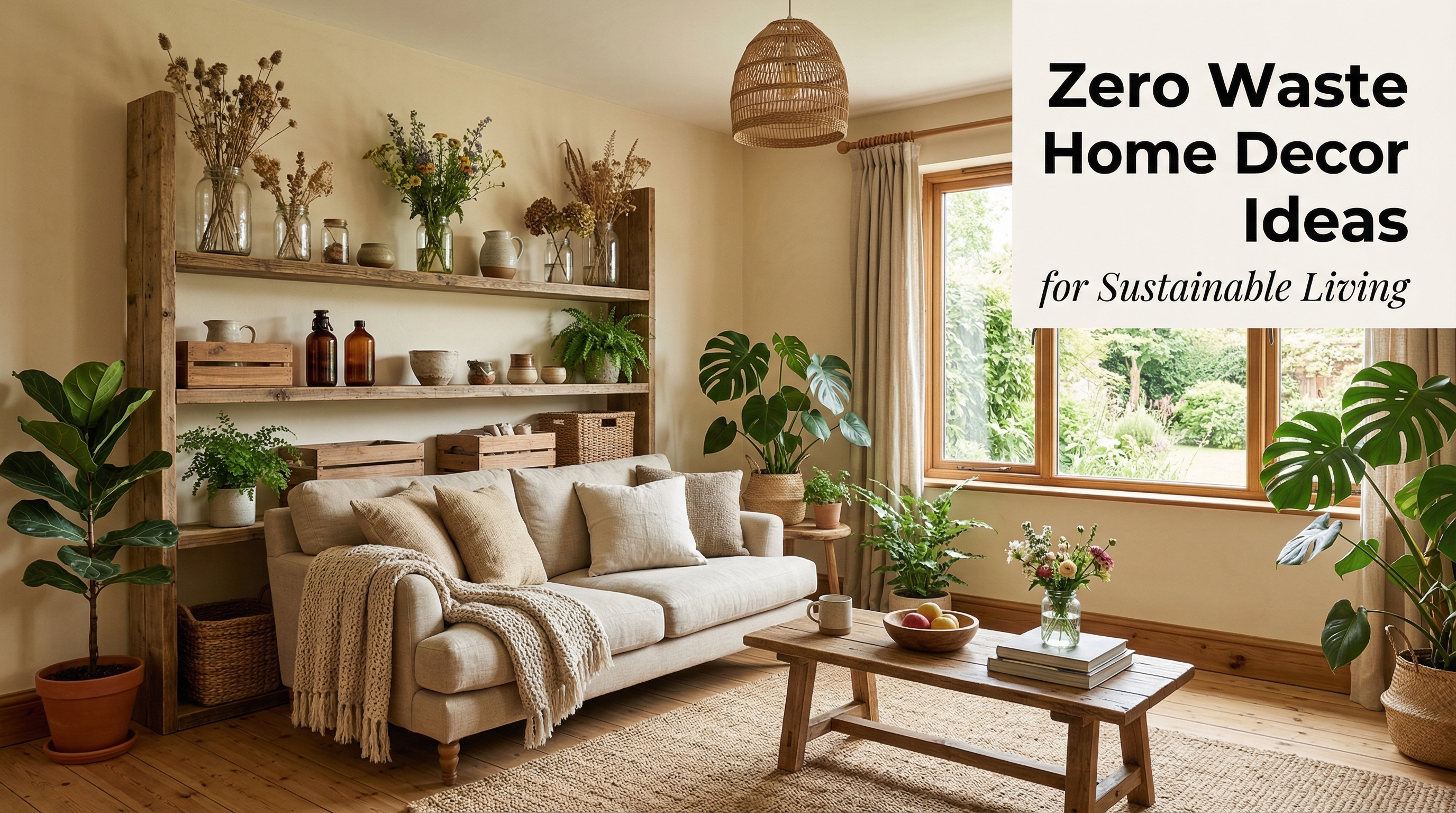
- Furniture in solid wood, bamboo, or rattan rather than particleboard or MDF
- Textiles in organic cotton, linen, hemp, or wool rather than polyester or acrylic
- Rugs in jute, sisal, wool, or natural coir rather than synthetic pile
- Bedding and curtains in natural fibers rather than microfiber blends
- Decorative objects in ceramic, glass, stone, or sustainably sourced wood rather than plastic
Natural materials are not only more environmentally responsible. They are also generally more beautiful, more durable, and more sensory in quality, which is why they have been the foundation of interior design for centuries.
3. Upcycle and Repurpose Before Replacing
One of the most creative expressions of eco friendly decor is the practice of upcycling: taking something worn, outdated, or no longer serving its original purpose and transforming it into something new, beautiful, and useful.
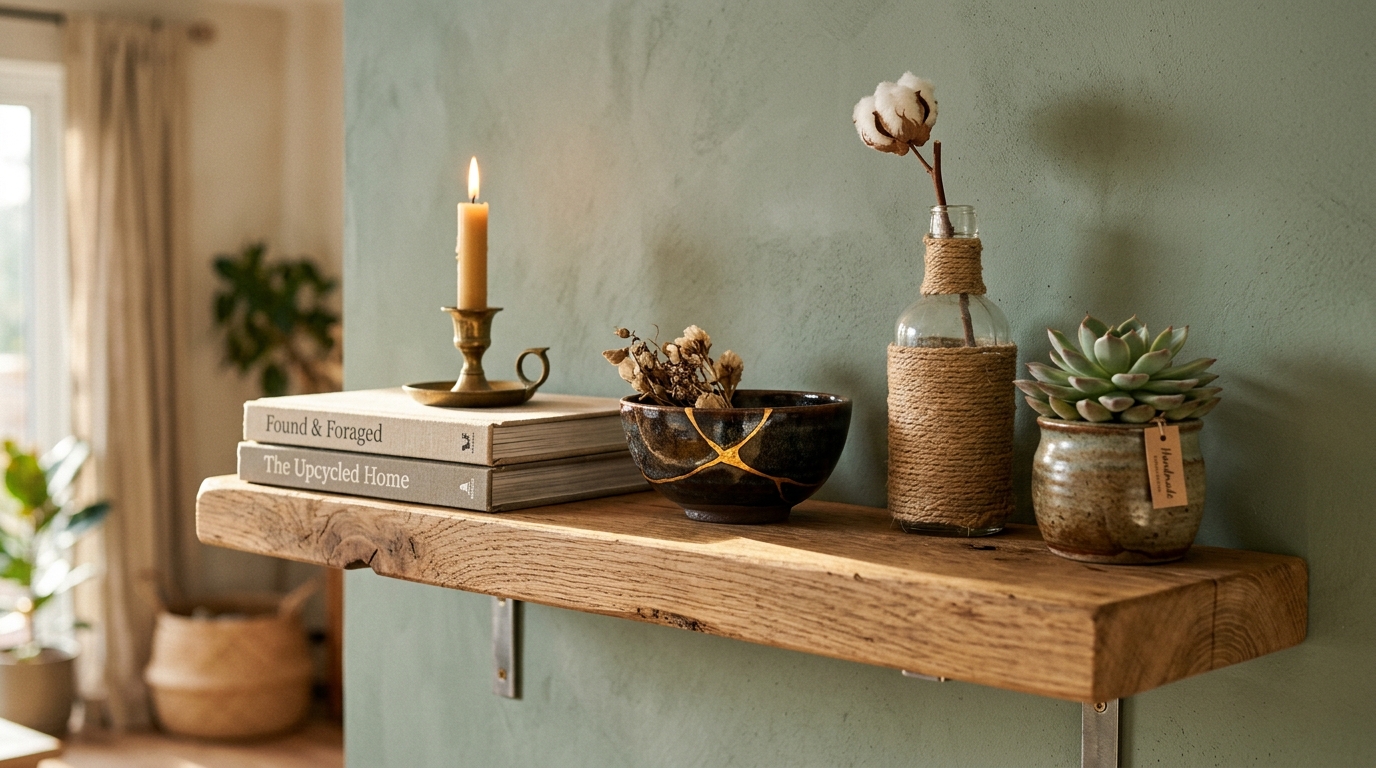
A worn wooden dresser becomes a statement piece with a coat of clay paint and new hardware. An old door becomes a headboard. A collection of wine crates becomes a modular shelving unit. A vintage suitcase becomes a side table. A damaged ladder becomes a towel rack or blanket display. A cracked ceramic pot becomes a beautiful mosaic planter.
Upcycling requires imagination more than skill, and the results are by definition one-of-a-kind pieces that no store could sell you. This practice is at the heart of truly zero waste home decorating because it recognizes that the most sustainable object is always the one that already exists.
4. Use Low-VOC and Natural Paints
Most conventional interior paints contain volatile organic compounds, commonly known as VOCs, that off-gas into the home environment for months or years after application, contributing to indoor air pollution and environmental harm during manufacturing and disposal.
Switching to low-VOC or zero-VOC paint is one of the most impactful sustainable interior design choices you can make when refreshing any room in your home. Natural paint alternatives including clay paint, lime wash, and milk paint contain no synthetic chemicals, are fully biodegradable, and produce interior finishes of exceptional depth and texture that conventional paints cannot replicate.
Lime wash in particular has had a well-deserved design renaissance in recent years, producing softly mottled, aged-looking walls with extraordinary character. It is one of the few zero waste decorating choices that is simultaneously more sustainable and more beautiful than the conventional alternative.
The Environmental Protection Agency notes that indoor air quality can be significantly worse than outdoor air quality in part due to VOC off-gassing from building materials and finishes, making this an important health consideration alongside the environmental one.
5. Decorate With Reclaimed and Salvaged Materials
Recycled decor at its most architectural involves incorporating reclaimed and salvaged building materials into your home as decorative elements. Reclaimed wood from demolished buildings becomes a floating shelf, a dining table, or a feature wall panel. Salvaged brick becomes a fireplace surround or a kitchen backsplash. Old factory windows become wall art or room dividers. Vintage tiles sourced from demolition sales become a unique bathroom or kitchen feature.
Reclaimed materials carry an irreplaceable patina of age and history that new materials simply cannot imitate, which is why they are so sought after in high-end interior design. The difference is that sourcing them directly from salvage yards and demolition sales costs a fraction of the designer price, making this a genuinely budget-accessible form of sustainable decorating.
Architectural salvage yards exist in most major cities and are one of the most treasure-filled resources available to the sustainability-minded home decorator.
6. Invest in Fewer, Better Quality Pieces
The most wasteful approach to home decorating is the fast-furniture mindset: buying cheap, trend-driven pieces frequently and replacing them just as frequently as they wear out or fall out of fashion. A flatpack bookcase that lasts three years and ends up in a landfill has a far greater environmental cost than a solid wood bookcase that lasts thirty years and can be passed on or sold when you no longer need it.
The zero waste home decor philosophy applied to furniture purchasing is simple: buy less, buy better, buy once. Identify the pieces that matter most in each room, invest in the highest quality versions you can reasonably afford, and resist filling remaining space with cheap supplementary items that will need replacing within a few years.
This approach is more economical over time, more beautiful in result, and dramatically more sustainable in its environmental footprint. Quality craftsmanship, solid materials, and timeless design are the three qualities to prioritize.
7. Bring Living Plants Into Every Room
Plants are perhaps the most genuinely zero waste decorating element available because they produce no waste, require no manufacturing, improve indoor air quality, support biodiversity, and bring the natural world directly into the built environment.
From a sustainable interior design and biophilic design perspective, incorporating living plants throughout the home is not merely aesthetic. Research published by NASA and subsequently confirmed in numerous independent studies suggests that certain houseplants can measurably reduce indoor air pollutants including formaldehyde, benzene, and trichloroethylene, which are commonly off-gassed by conventional building materials and furnishings.
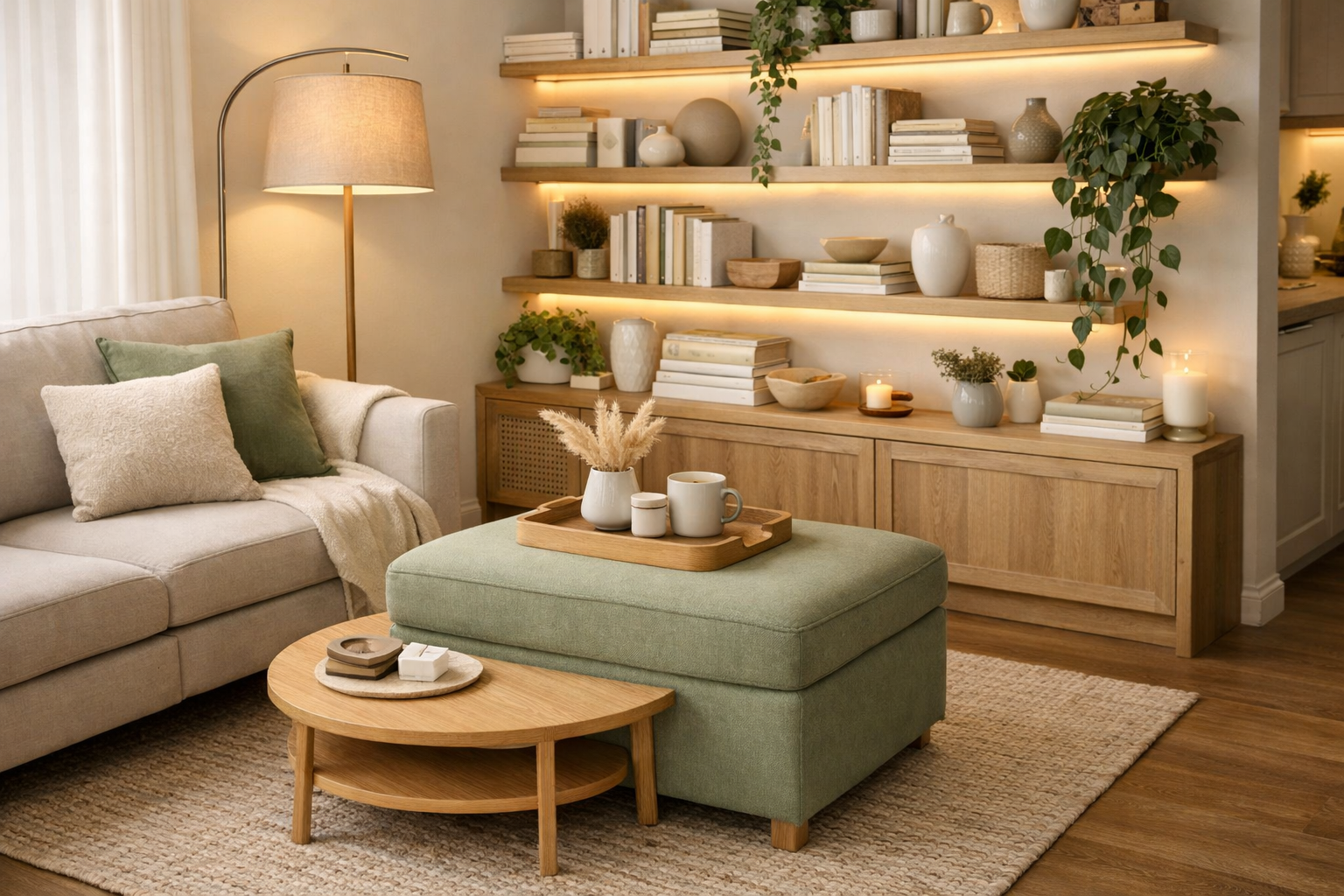
Beyond air quality, the biophilic benefit of living plants in the home environment is well-documented: access to natural elements including plants reduces cortisol levels, lowers blood pressure, and improves mood and cognitive function for the people living among them.
Propagate plants from friends and family rather than purchasing new ones whenever possible. A cutting from a friend’s pothos, a divided clump from a neighbor’s snake plant, or a leaf propagation from your own existing succulent costs nothing and adds to the living abundance of your home without any manufacturing footprint.
8. Choose Beeswax or Soy Candles Over Paraffin
Unfortunately, those common paraffin candles are made from a petroleum byproduct, and burning them releases toxic compounds like toluene and benzene. In the context of eco friendly decor, switching to beeswax or soy wax candles is a small change with meaningful benefits for both indoor air quality and environmental impact.
Beeswax candles burn cleanly, last significantly longer than paraffin alternatives, and emit negative ions that some research suggests may improve indoor air quality. Soy wax candles are biodegradable, made from a renewable agricultural resource, and burn cleanly when paired with a cotton or wooden wick rather than a synthetic one.
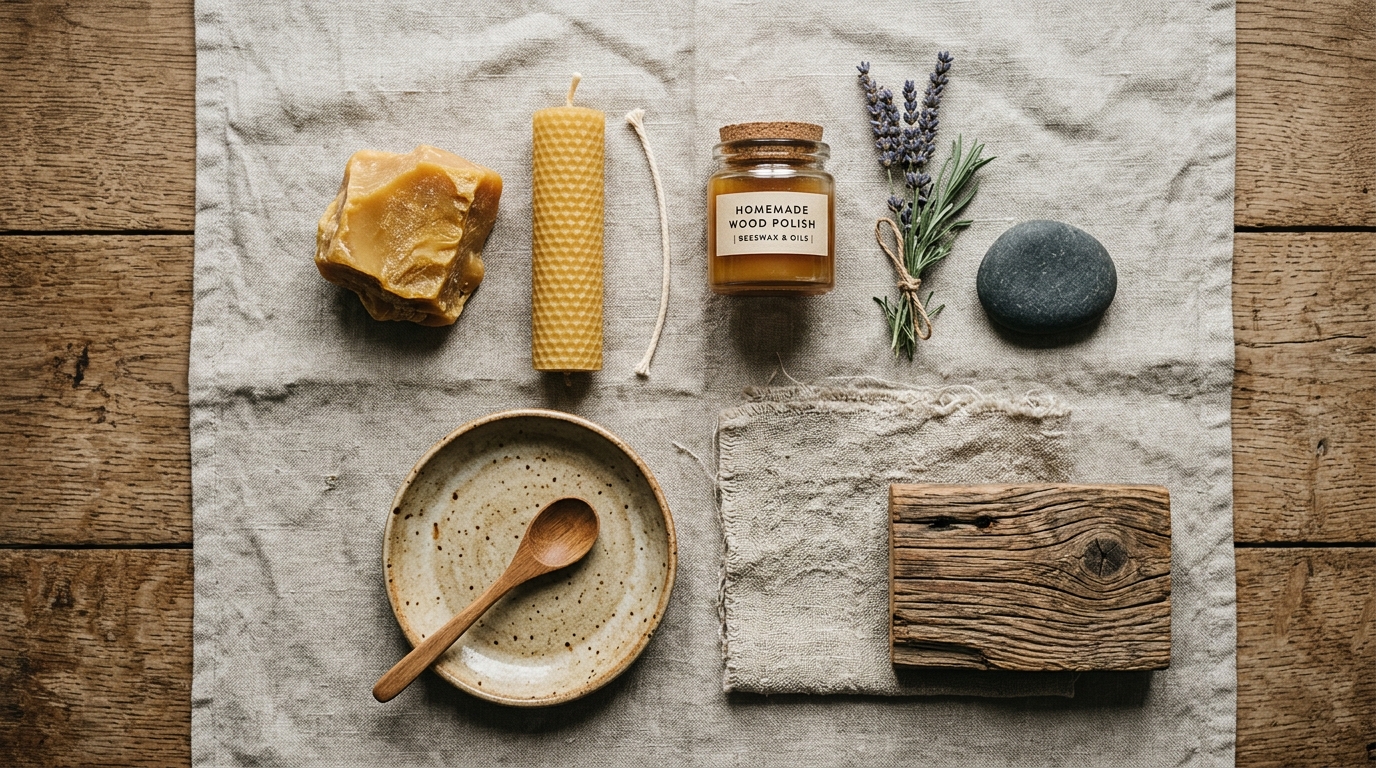
For the most sustainable option of all, make your own candles from beeswax sheets rolled around a cotton wick, which requires no heating, no equipment, and produces a beautiful rustic result that doubles as a handmade decor element.
9. Use Textile Scraps and Natural Fabric as Decor
The fashion and textile industry is one of the most waste-generating industries on earth, and fabric scraps, remnants, and worn textiles represent a significant portion of that waste. Incorporating textile scraps thoughtfully into your home decor addresses both sides of this problem.
Patchwork cushion covers sewn from fabric remnants. A throw blanket made from interlocking fabric squares. Woven wall hangings created from yarn ends and textile scraps. Macrame art from leftover cotton cord. Framed fabric swatches as textile art. All of these are legitimate and beautiful zero waste home decor ideas that give new life to materials that would otherwise be discarded.
Natural fabric remnants are widely available at fabric stores for very little cost, and many sewing communities and online groups exist specifically to share and exchange textile scraps for exactly this kind of creative reuse.
10. Refinish and Restore Rather Than Replace
Before replacing any piece of furniture or decor that is showing its age, consider whether restoration is possible. Refinishing a scratched wooden table, reupholstering a worn armchair, repairing a broken ceramic object with kintsugi gold joinery, or replacing the hardware on an outdated dresser are all forms of recycled decor practice that extend the life of existing objects and eliminate the waste of replacement.
Kintsugi, the Japanese art of repairing broken ceramics with gold-dusted lacquer, is worth particular mention here because it embodies a philosophy directly aligned with zero waste living: that repair makes an object more beautiful and more meaningful rather than less. A kintsugi-repaired bowl sitting on a kitchen shelf is not a compromise. It is a statement about the value of things that have history, wear, and a story.
11. Make Your Own Cleaning and Care Products
This extends the zero waste philosophy beyond decorating choices and into the ongoing maintenance of the home. Conventional cleaning products come in single-use plastic packaging, contain synthetic chemicals that enter waterways, and are replaced far more frequently than they need to be.
Making your own multipurpose cleaner from white vinegar, water, and essential oils costs almost nothing, eliminates plastic packaging, and works effectively on most household surfaces. Beeswax wood polish made from beeswax and a neutral oil conditions and protects wooden furniture without the synthetic chemicals found in commercial alternatives.
Taking care of your existing possessions with natural, homemade products is one of the most consistent expressions of the zero waste principle: things that are well cared for last longer, need replacing less often, and contribute less to the waste stream over their lifetime.
12. Embrace Negative Space and Edit Ruthlessly
One of the most overlooked principles of sustainable interior design is the relationship between consumption and clutter. A home that is constantly filled with new decorative purchases, however consciously chosen, still generates more material consumption than one that is edited to contain only what is genuinely needed and loved.
Negative space in interior design is not emptiness. It is the deliberate absence of objects that allows the objects that remain to breathe, to be seen, and to matter. A beautifully made ceramic bowl on an otherwise clear shelf is far more visible and appreciated than the same bowl surrounded by twenty other objects competing for attention.
Editing your home ruthlessly and regularly, donating or passing on what no longer serves you rather than letting it accumulate, and resisting the cultural pressure to constantly acquire new things: these are zero waste practices that cost nothing and contribute meaningfully to both the visual quality and the environmental footprint of your home.
13. Source Locally and Support Artisan Makers
When purchasing new decorative objects is the right choice, sourcing from local artisan makers is one of the most aligned expressions of eco friendly decor values. A handmade ceramic vase from a local potter, a woven basket from a regional maker, a small-batch candle from an independent producer using natural materials: all of these choices support local economies, eliminate long-distance shipping emissions, ensure you know something about how and where your objects were made, and result in pieces of genuine quality and individuality.
Farmers markets, local craft fairs, independent design studios, and community maker spaces are all excellent sources of locally made, sustainably produced decorative objects that carry meaning well beyond their aesthetic value.
The global shipping infrastructure behind mass-produced home goods generates significant carbon emissions per item. Choosing locally made alternatives eliminates this footprint entirely for each purchase and builds a more resilient local creative economy in the process.
Building a Zero Waste Home One Decision at a Time
The most important thing to understand about zero waste home decor ideas is that they do not require a complete overhaul of your home or lifestyle all at once. The most sustainable approach is incremental: making one more conscious choice each time a decorating decision arises, until the cumulative effect of those choices creates a home that genuinely reflects your values.
Replace your next candle with a beeswax version. Choose secondhand before new for your next furniture purchase. Repaint a tired piece rather than replacing it. Propagate a plant rather than buying one. Repair rather than discard. Each individual choice is small. The aggregate of many small choices over time is a home that is genuinely beautiful, deeply personal, and kinder to the planet than almost anything a showroom could offer.
Wrapping Notes on Zero Waste Home Decor
The most beautiful homes I have worked in as an architectural consultant are rarely the most expensively furnished ones. They are the ones where every object has been thoughtfully chosen, where materials are honest and natural, where things have been repaired and restored rather than discarded, and where the space feels like it has been assembled by someone with genuine values rather than a generous credit card.
That is the real promise of zero waste home decor ideas: a home that is not only more sustainable but more characterful, more personal, and ultimately more satisfying to live in. The planet benefits, your indoor environment improves, and your home becomes a genuine expression of who you are and what you care about.
Start with one idea from this list. Let it lead to another. The rest follows naturally.
FAQ: Zero Waste Home Decor Ideas
Is zero waste home decor more expensive than conventional decorating?
Not necessarily, and often the opposite is true. Buying secondhand is almost always cheaper than buying new. Upcycling existing pieces costs very little. Propagating plants is free. Natural materials like clay paint and beeswax candles may cost slightly more upfront but last significantly longer than synthetic alternatives, making them more economical over time. The most expensive zero waste choice, investing in high-quality sustainable furniture, costs more initially but far less over the lifespan of the piece.
What are the easiest eco friendly decor swaps to make right now?
The easiest immediate swaps include replacing paraffin candles with beeswax or soy versions, switching to low-VOC paint for your next room refresh, choosing a natural fiber rug over a synthetic one, and shopping secondhand for your next decorative purchase rather than buying new. None of these require significant effort or lifestyle change but each delivers meaningful environmental benefit.
How do I make my home look stylish with recycled and secondhand decor?
The key is curation and consistency. Choose secondhand pieces that share a visual language: similar material tones, a consistent color palette, or a cohesive design era. Paint mismatched thrifted frames in the same color. Group upcycled containers in matching tones. Edit your display to include only the pieces that genuinely work together. Secondhand and recycled decor looks stylish when it is thoughtfully edited, not when every available surface is filled.
What natural materials are best for sustainable interior design?
The most versatile and sustainable natural materials for home decorating include solid wood, bamboo, rattan, jute, sisal, linen, organic cotton, hemp, wool, natural cork, terracotta, ceramic, and glass. All are renewable or recyclable, biodegradable at end of life, and generally far more durable than synthetic alternatives. Avoid composite wood products like MDF and particleboard, which contain formaldehyde-based adhesives and cannot be recycled.
Can I practice zero waste decorating in a rented apartment?
Absolutely. Many of the most impactful zero waste decorating practices require no permanent changes to the space at all. Choosing secondhand furniture, using natural textiles and rugs, incorporating plants, switching to natural candles, upcycling existing pieces, and editing your possessions to reduce consumption are all fully compatible with rental living. When painting or other modifications are permitted, low-VOC and natural paint options are available in every rental-appropriate color range.