Can we talk about how tired everyone is of cold, gray, perfectly sterile interiors? The ones that look incredible in a photograph and feel absolutely nothing like a home you actually want to live in? The ones where you are afraid to put a coffee cup down in case you ruin the composition?
Yeah. A lot of people reached the same conclusion at the same time. And the design world responded.
Enter Afrohemian decor, the trend that Pinterest named one of its top predictions for 2026, and honestly one of the most genuinely exciting shifts in interior design in years. According to Pinterest Predicts 2026, searches for Afrohemian home decor jumped by 220 percent year over year, and related searches like African boho living room and Afro chic home decor are climbing fast alongside it.
That is not a blip. That is people collectively deciding they want their homes to feel warm, soulful, layered, and real. And if you have been quietly craving exactly that kind of space without quite having the vocabulary for it, you just found your answer.
What Is Afrohemian Decor and Why Is Everyone Suddenly Obsessed With It?
The name is a blend and so is the style. Afrohemian decor is a fusion of African craft traditions, heritage motifs, and artisanal pieces combined with the relaxed, layered, eclectic spirit of bohemian interiors, producing a result that feels soulful, expressive, and grounded rather than overly styled.
What makes it different from the generic boho aesthetic that dominated Instagram for the better part of a decade is depth and intention. Generic boho can feel like a collection of things someone liked at a home goods store. Afrohemian feels like a collection of things someone loved, sought out, and brought home with a story attached.
The style sits at the intersection of meaningful maximalism, where people are craving personality in their spaces again, and craftsmanship as the new luxury, where pieces that show the maker’s hand and carry a story feel more valuable than anything mass produced.
That combination is exactly why this trend has the staying power it does. It is not about buying a specific product. It is about adopting a design philosophy that values authenticity, warmth, and the kind of layered beauty that takes time to build. You cannot get it in an afternoon at a furniture chain. And somehow that is precisely the point.
The Afrohemian Color Palette: Getting the Foundation Right
Before you move a single piece of furniture or buy a single cushion, you need to understand the Afrohemian color palette, because this is where most people either nail the look or lose it entirely.
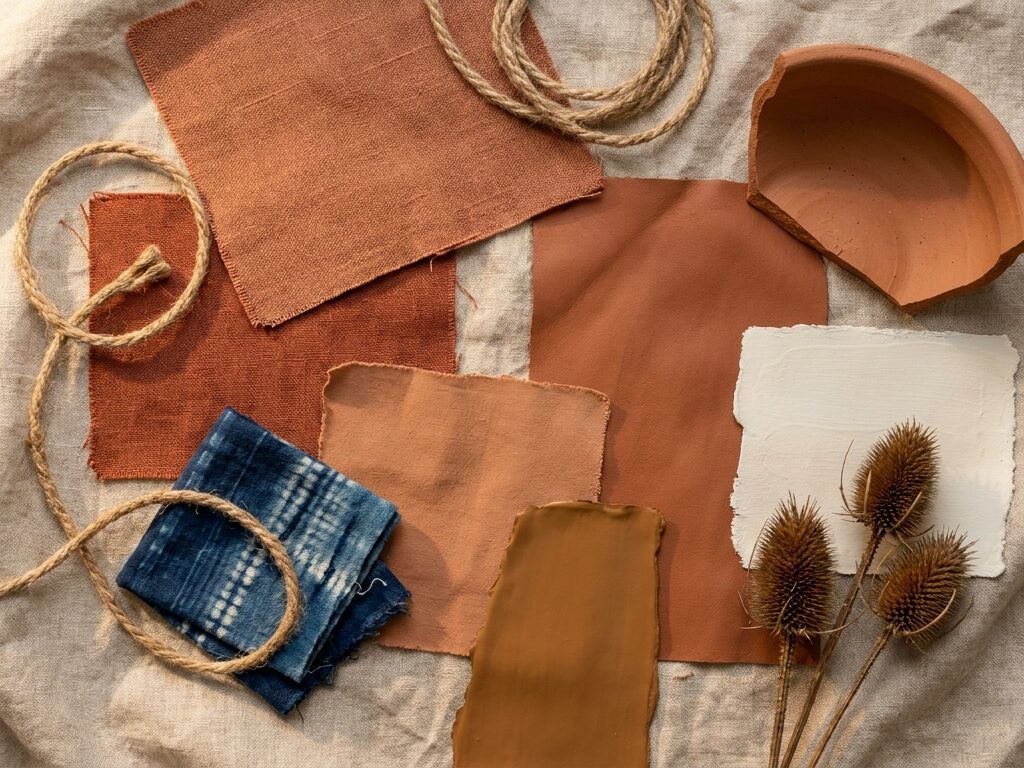
The defining backdrop for this style is a soft off-white that mimics natural lime wash, acting as a calm, luminous canvas for everything bolder that follows. From there, the palette builds through earthy, warm, and grounded tones. Think terracotta, rust, clay, caramel, deep warm brown, and muted saffron. These are not the colors of a paint store display. These are the colors of actual earth, actual clay, actual sun-baked landscape.
Terracotta, rust, clay, caramel, and deep browns define the Afrohemian vibe at its core, providing a warm, grounded foundation that makes every layer you add on top feel cohesive rather than chaotic.
The accent layer is where you can introduce deeper tones: forest green, indigo, deep ochre, dusty plum. Use these sparingly, the way a painter uses a dark accent, to add drama and depth without overwhelming the warmth of the base.
What to avoid: cool grays, stark clinical whites, and anything with an icy or modern-minimal quality. Those tones fight the entire intention of Afrohemian interior design and will make your most beautiful pieces look out of place.
15 Afrohemian Decor Ideas for Every Room
1. Start With a Statement Woven Jute or Sisal Rug
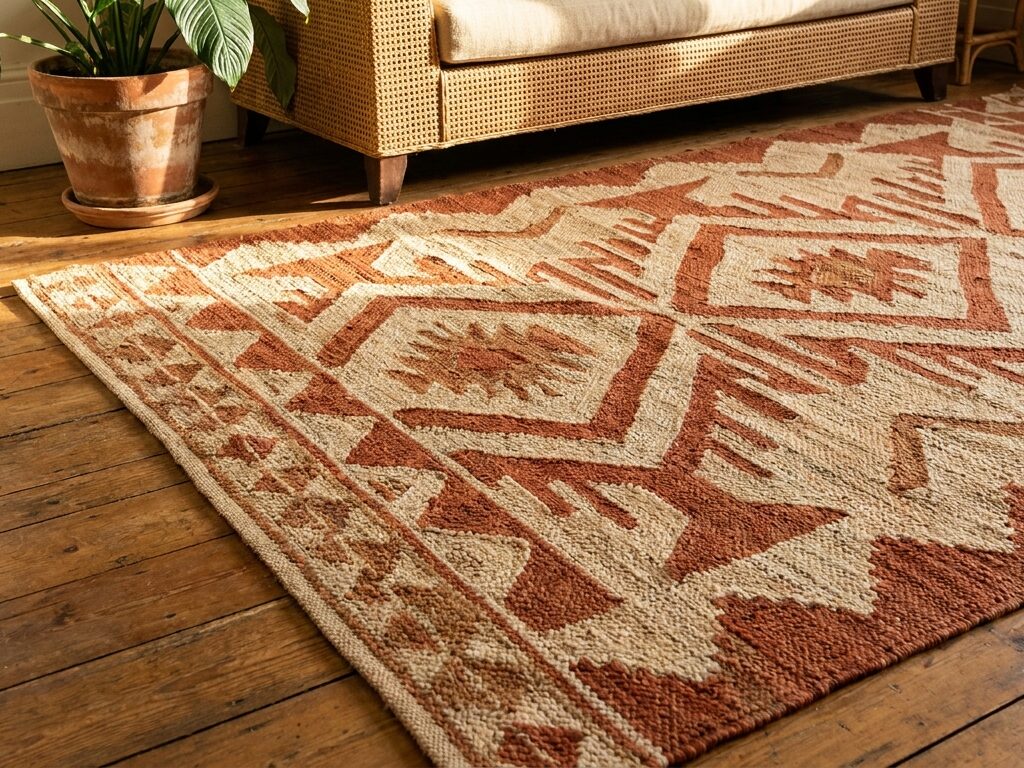
The rug is the foundation. In Afrohemian interior design, the floor covering sets the tonal and textural direction for everything else in the room, which means getting it right is not optional.
Look for handwoven jute or sisal rugs with visible weave texture and natural color variation. Geometric patterns, tribal motifs, and organic asymmetric designs all work beautifully. The imperfection of a handwoven rug is a feature, not a flaw. It tells you something made by human hands, and in this aesthetic, that is worth more than any machine-perfect finish.
2. Build a Layered Textile Wall
Blank walls are the enemy of the Afrohemian aesthetic. In this style, walls are not backgrounds. They are canvases.
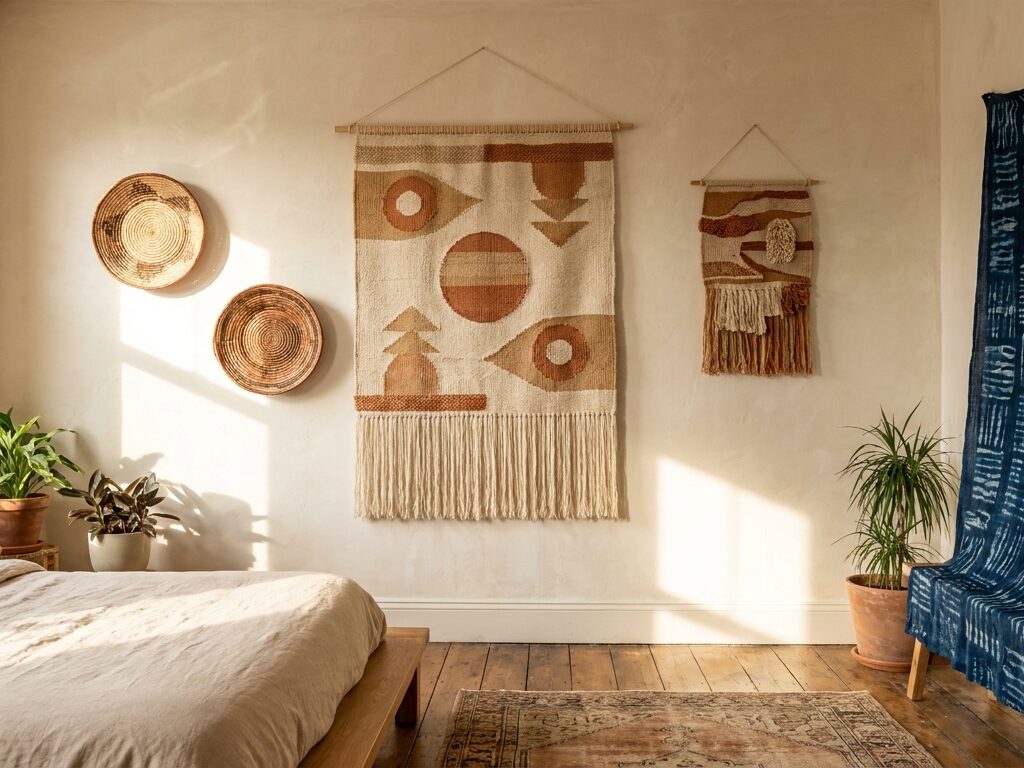
Woven wall hangings and statement textiles are hallmarks of Afrohemian spaces, with adire fabric panels and globally inspired art telling stories that mass-produced prints simply cannot. A large woven wall hanging in warm natural fibers, a length of adire-dyed indigo fabric hung as a textile panel, or an arrangement of handmade fiber art pieces in varying textures creates a backdrop that is rich, personal, and impossible to replicate.
The key is layering at varying depths: one large statement piece anchored by two or three smaller ones at different heights. Let the textiles breathe. Overcrowding the wall turns richness into noise.
3. Bring in Rattan and Bamboo Furniture
Natural elements like wood, rattan, bamboo, jute, sisal, and clay are foundational materials in Afrohemian design, bringing organic texture and warmth that synthetic alternatives simply cannot replicate.
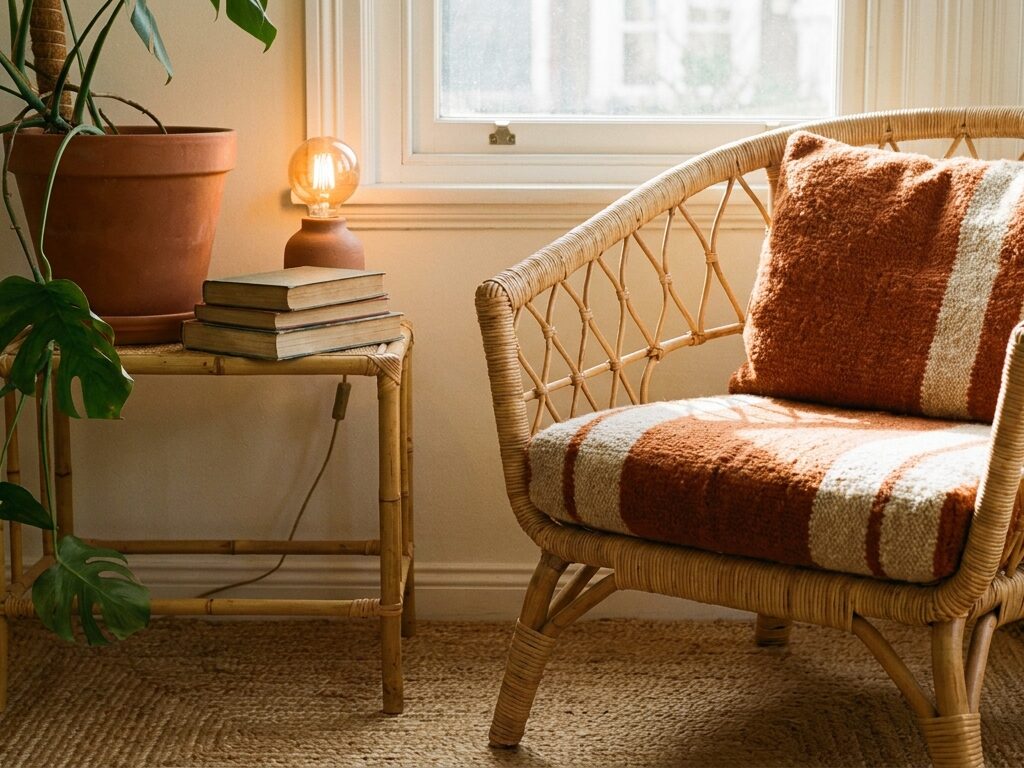
A rattan armchair with a chunky woven cushion. A bamboo side table beside a low sofa. A woven rattan headboard in the bedroom. These pieces do not need to be expensive or rare. They need to feel natural, slightly imperfect, and deeply connected to the material world.
What you want to avoid is the overly polished, lacquered rattan look that reads more like a resort lobby than a soulful home. Unfinished or lightly oiled natural rattan has the right quality. It looks lived-in from the moment you bring it home.
4. Style an African Boho Living Room With Low Seating
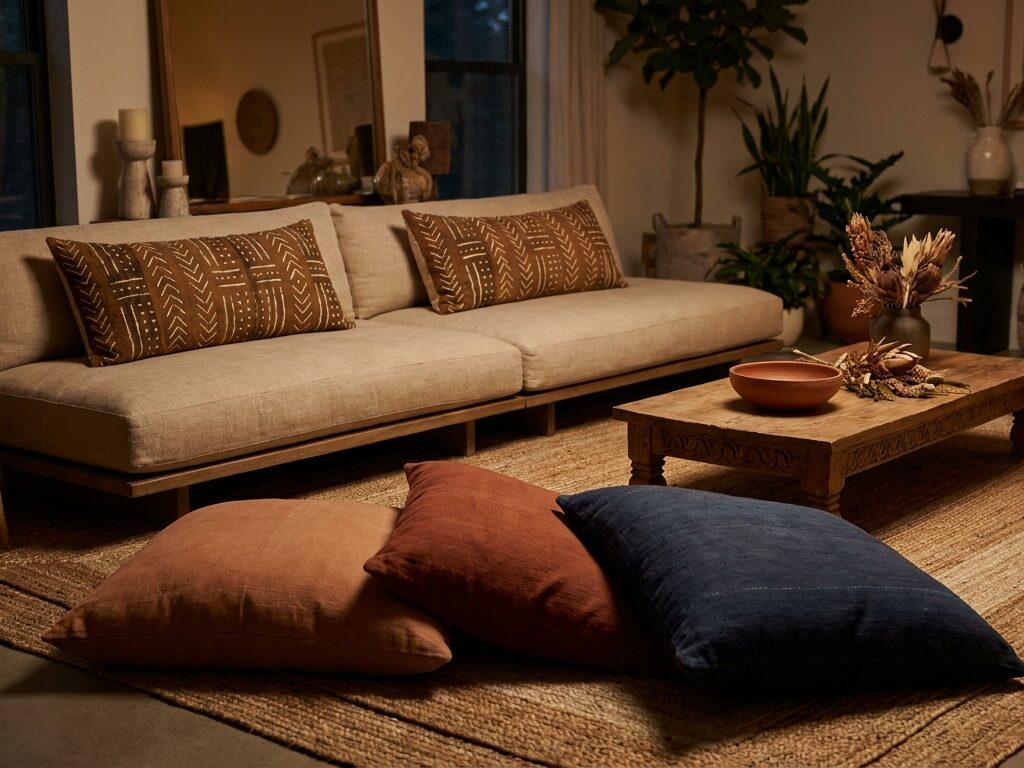
This is one of the most distinctive and immediately recognizable elements of an African boho living room: the relationship with the floor. Low seating, floor cushions, and relaxed sofas create an inviting, laid-back feel that defines Afrohemian interiors and encourages the kind of communal, unhurried socializing the style was built for.
Large floor cushions in mudcloth-inspired fabric beside a low-profile sofa dressed in earthy linen. A collection of woven poufs around a carved wooden coffee table. The effect is genuinely welcoming in a way that a formal upright sofa arrangement rarely achieves. It says: sit down, stay awhile, there is no rush here.
5. Display Handwoven Baskets as Wall Art
If there is one Afrohemian decor idea that has completely taken over Pinterest in 2026, it is this one. Searches for rattan and bamboo beaded elements are up 50 to 60 percent year over year as part of the broader Afrohemian surge, with handwoven baskets used as wall art being one of the most widely replicated expressions of the style.
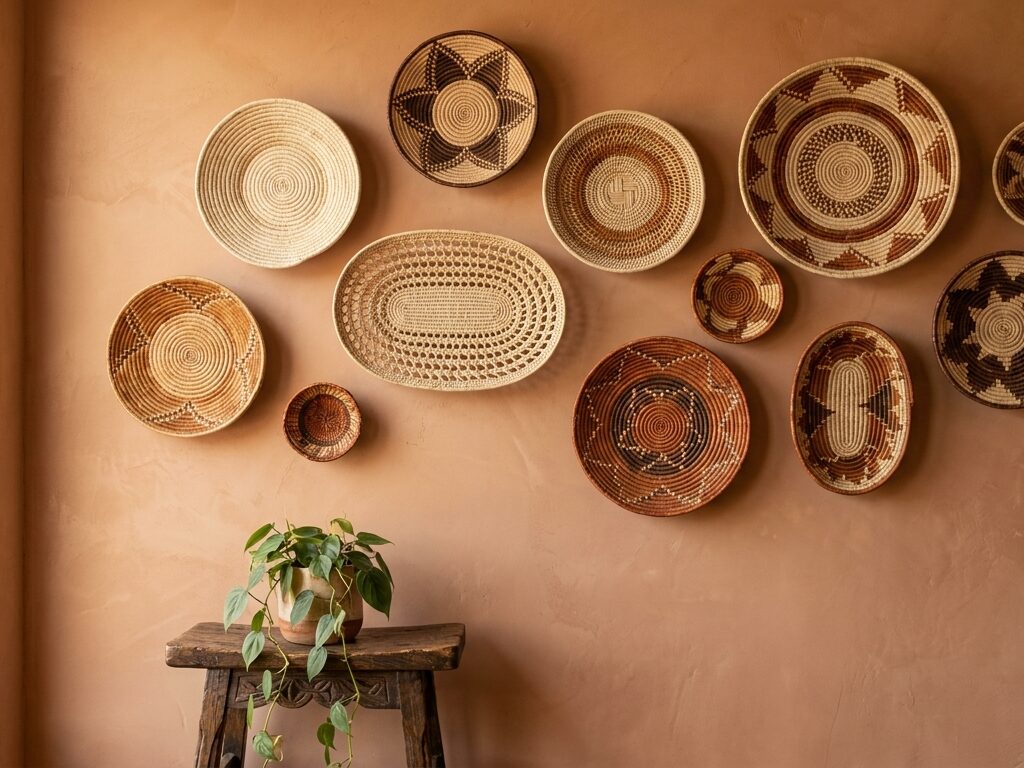
A gallery wall of handwoven baskets in varying sizes, shapes, and weave patterns is a design statement that is simultaneously beautiful, cultural, and completely individual. No two arrangements look the same because no two baskets are identical. That unpredictability is exactly what makes the wall feel alive rather than staged.
Mix round, oval, and rectangular basket forms. Vary the weave density and color tones within your earthy palette. Leave breathing room between each piece so the individual character of each basket registers rather than blending into a flat pattern.
6. Use Terracotta Pottery and Clay Vessels
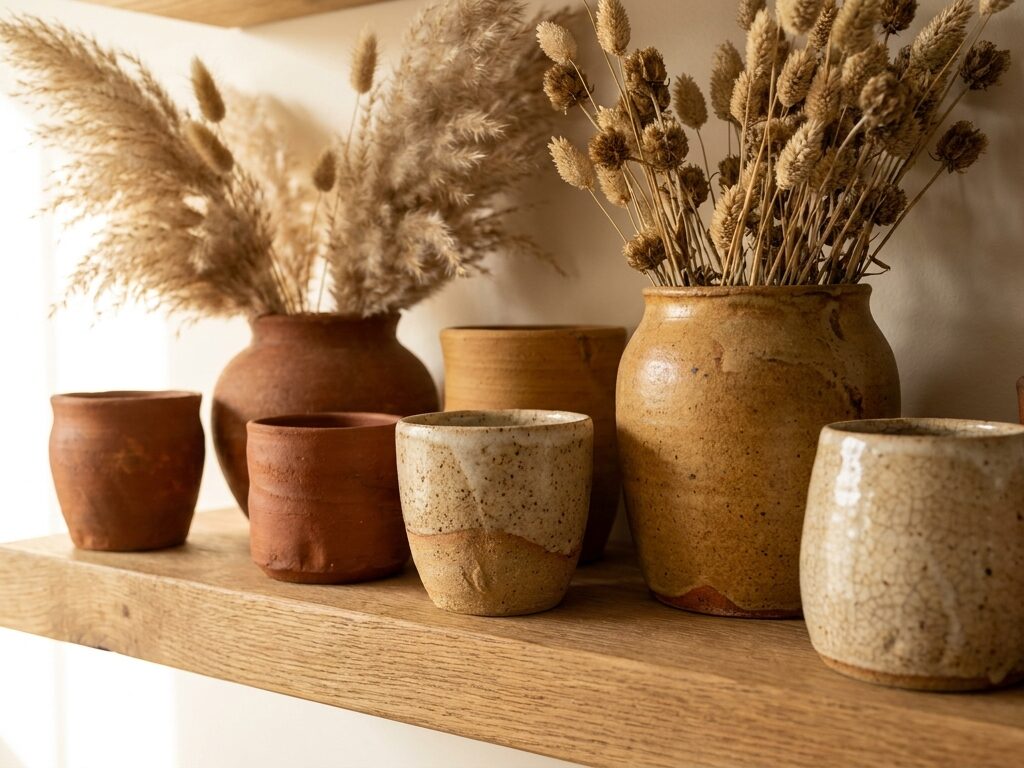
Walk into any genuinely beautiful Afrohemian aesthetic space and you will find terracotta. On the shelves, on the floor, on the coffee table, in the kitchen. It is everywhere, and it earns its place every single time.
Hand-thrown clay pots with visible finger marks. Wide-bellied terracotta vessels holding dried botanicals. Small rough-glazed ceramic dishes on a console table. These objects carry the warmth, imperfection, and handmade quality that is at the absolute heart of this design philosophy.
The firing variations and surface irregularities of genuine handmade terracotta are not flaws to be smoothed away. They are the entire point. A perfectly uniform machine-made pot can never do what a genuinely handmade one does in this aesthetic.
7. Layer Multiple Rugs for Depth and Pattern
One rug is a foundation. Two rugs layered together is an Afrohemian decor statement.
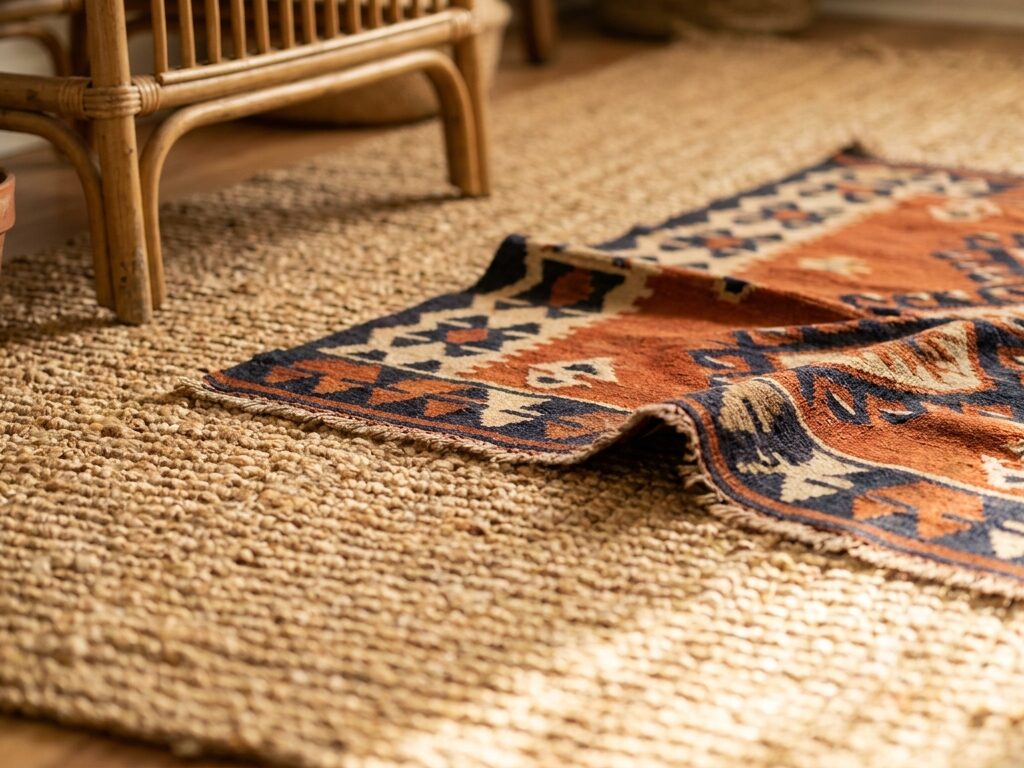
Layering a smaller flat-weave rug with a bold tribal or geometric pattern over a larger natural fiber base rug is one of the most effective ways to add visual depth and pattern complexity to a room without touching a single wall. The contrast between the textures of the two rugs adds dimension that a single rug, however beautiful, cannot achieve alone.
Keep the layered rug smaller than the base rug and position it slightly off-center for a more organic, less composed feel. The slight asymmetry reads as collected rather than staged.
8. Go with Bold African-Inspired Textiles
This is where the African bohemian decor aesthetic really begins to sing. Textiles are not accessories in this style. They are architecture.
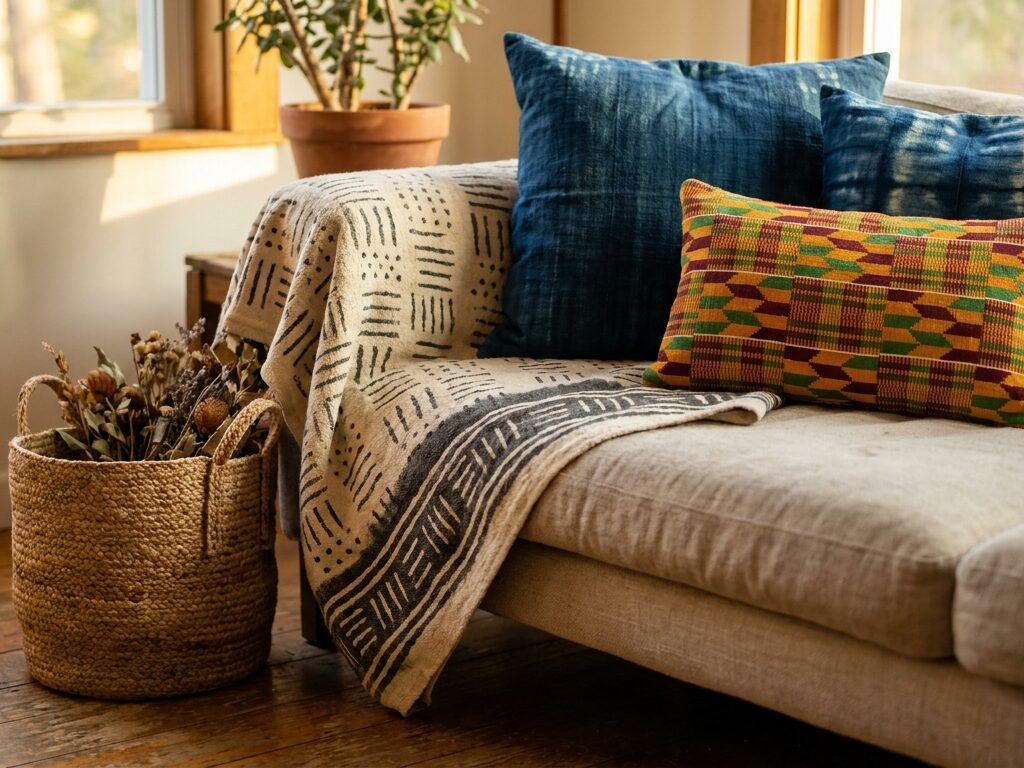
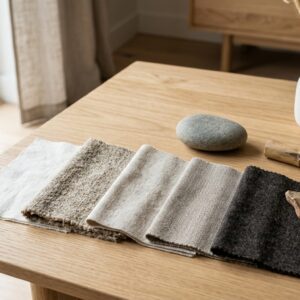
Mudcloth cushions with their hand-painted geometric patterns in cream and charcoal. Kente-inspired throw blankets in warm saffron and forest green. Adire-dyed fabric panels with their distinctive resist-dyed indigo patterns. Each of these textile traditions carries centuries of craft knowledge and cultural meaning, and each one brings genuine visual richness to a room that no printed reproduction can match.
When sourcing textiles for an Afrohemian home, buy from artisan makers and fair-trade suppliers wherever possible. The philosophy of this style is rooted in honoring the craft traditions these pieces come from. A cushion made by a weaver who has spent years perfecting the technique carries something that a factory knockoff never will.
9. Create an Afrohemian Bedroom
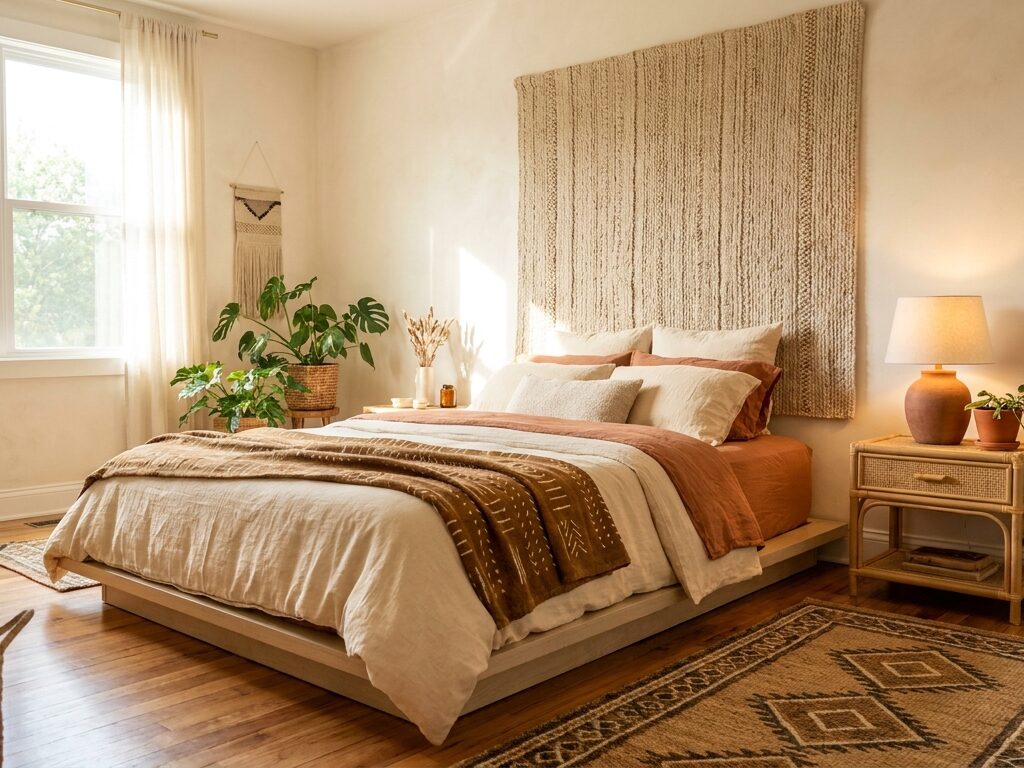
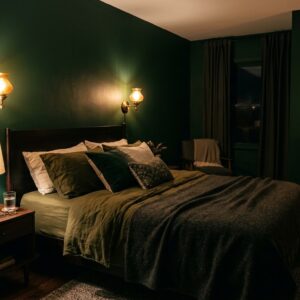
The Afrohemian bedroom is where this entire design philosophy stops being theoretical and starts being genuinely felt. More than any other room in the house, the bedroom is where your choices stop performing for an audience and start speaking only to you. That is why it is also where the Afrohemian approach tends to produce its most quietly powerful results.
Start with the wall behind the bed. A large woven textile panel or a collection of framed Ethiopian wall art creates a headboard alternative that is far more characterful than anything upholstered. Layer the bedding in warm linens and cotton in earthy tones with a mudcloth or kente-inspired throw folded at the foot.
On the floor, a handwoven rug with visible texture. On the bedside table, a clay lamp casting warm amber light, a small handmade ceramic dish, a gathered dried botanical stem. Every surface should feel chosen and quiet at the same time.
10. Use Beaded Curtains as Room Dividers
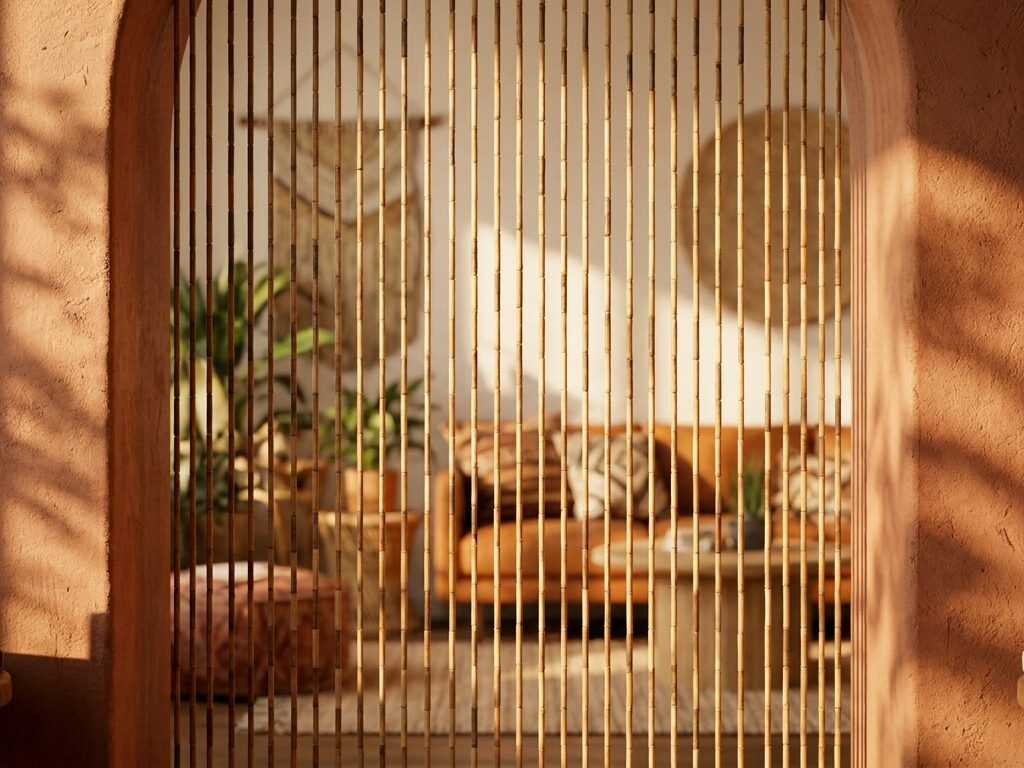
Rattan and bamboo beaded curtains are up 50 to 60 percent in Pinterest searches as a direct expression of the Afrohemian movement, used as doorway treatments, room dividers, and canopy elements that add texture, movement, and cultural warmth to any space.
A bamboo bead curtain hanging in a doorway between the living room and hallway adds a tactile, slightly theatrical quality to the transition between spaces. The gentle sound of beads moving in a draft, the dappled light pattern they cast when sunlight hits them, the visual texture they add to an otherwise plain opening: all of it is deeply aligned with the sensory richness that Afrohemian decor aims for.
11. Add Sculptural Indoor Plants
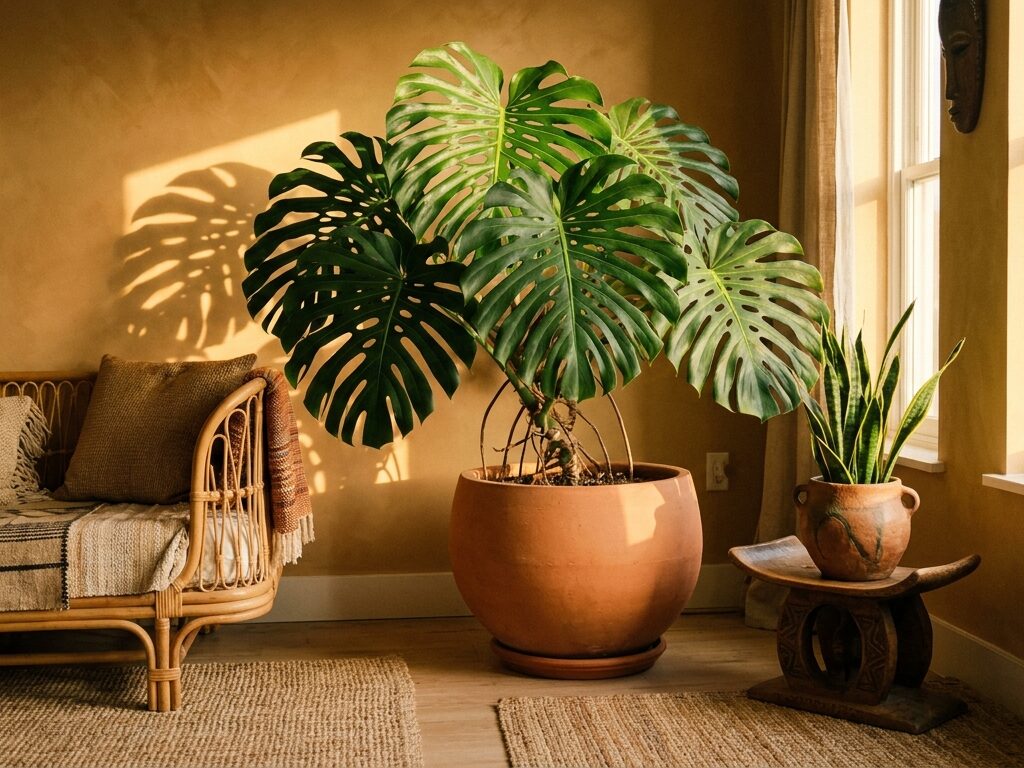
In Afrohemian interior design, plants are not background decoration. They are structural elements with real design weight. Plants with sculptural form provide a visual counterbalance to rich textiles, adding depth without overwhelming the space, and in Afrohemian decor they are woven into the story of the home rather than placed as afterthoughts.
Think about the silhouette of the plant as much as its foliage. A large fiddle-leaf fig in the corner with its bold architectural leaves. A mature snake plant with strong vertical lines beside a low sofa. A monstera with dramatically cut leaves in a large terracotta pot on the floor. These are plants that hold their own in a richly layered room.
12. Choose Warm Ambient Lighting Over Overhead Fixtures
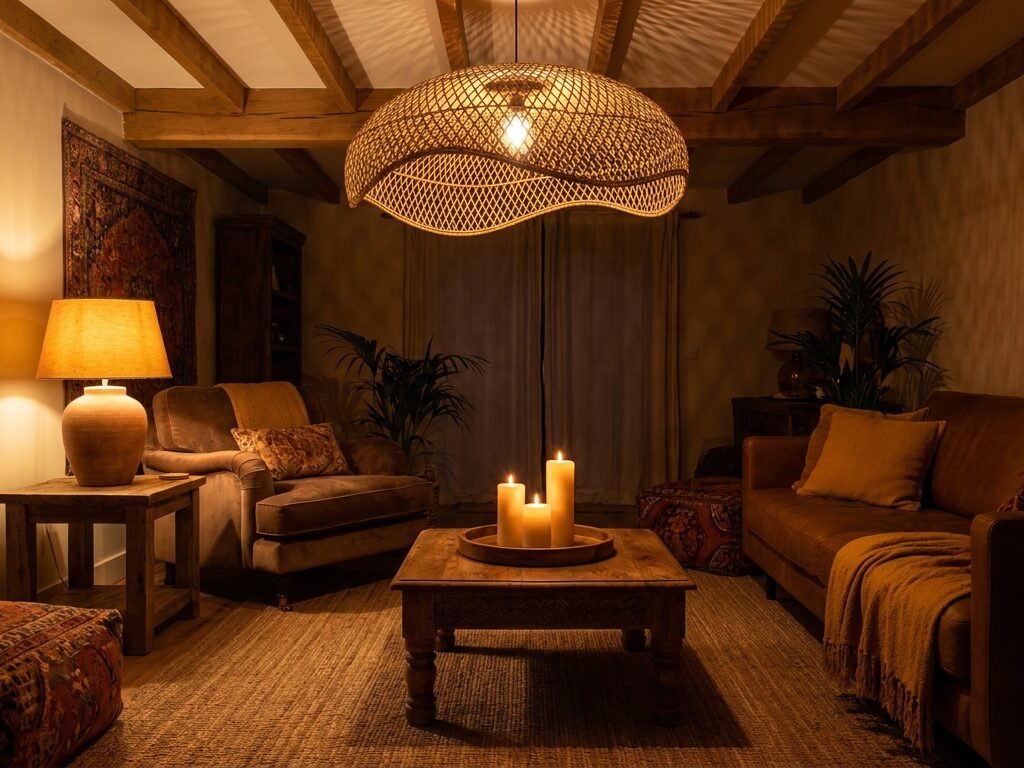
Nothing kills the mood of an Afro chic home decor setup faster than a single harsh overhead light. The entire atmosphere of the Afrohemian aesthetic depends on warmth, depth, and a quality of light that feels organic rather than institutional.
Swapping harsh overhead lights for warm lamps, fairy lights, and candles is fundamental to setting the Afrohemian mood, making the space feel cozy and intimate rather than bright and functional.
Look for lamp shades made from woven natural fiber, rattan, or clay. A woven pendant light over the dining table. A clay base table lamp with a warm amber bulb on the bedside table. Pillar candles in various heights on a carved wooden tray on the coffee table. Layer these light sources at different heights throughout the room and the space will feel genuinely magical by evening.
glowing warmly, a small terracotta pot with a trailing plant. Geometric jute rug on warm timber floors. Soft morning natural light, Architectural Digest editorial quality.”
13. Display Ethiopian Wall Art and Cultural Pieces
The Afrohemian trend celebrates cultural expression through vivid Nigerian textiles, Ethiopian wall art, and handwoven pieces, with the look rich in color, texture, and storytelling at its heart.
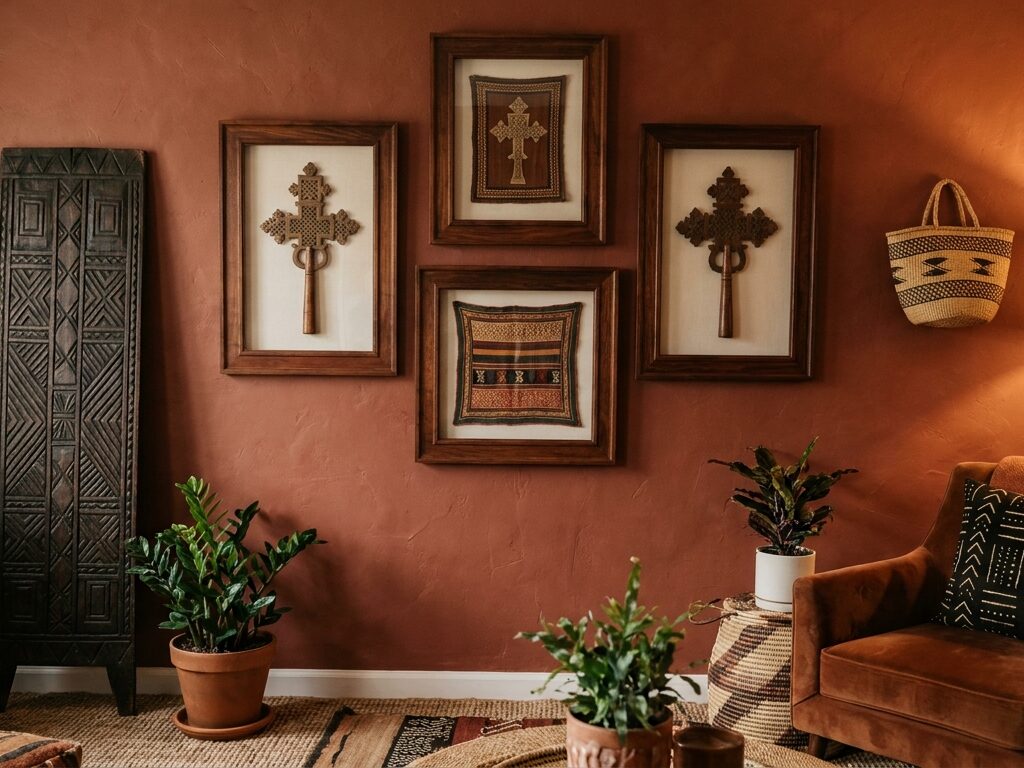
Framed Ethiopian ceremonial art panels, hand-painted narrative paintings, or carved wooden relief pieces bring genuine cultural depth to a wall that no reproduction print ever could. These are objects with history and meaning, and displaying them thoughtfully honors that history rather than reducing it to decoration.
A note worth making clearly: the most respectful and design-sound approach is to buy directly from African artists and artisan cooperatives wherever possible. This supports the craft traditions the style draws from, ensures authenticity, and means every piece in your home comes with a genuine story rather than a supply chain.
14. Use Natural Wood and Carved Accents
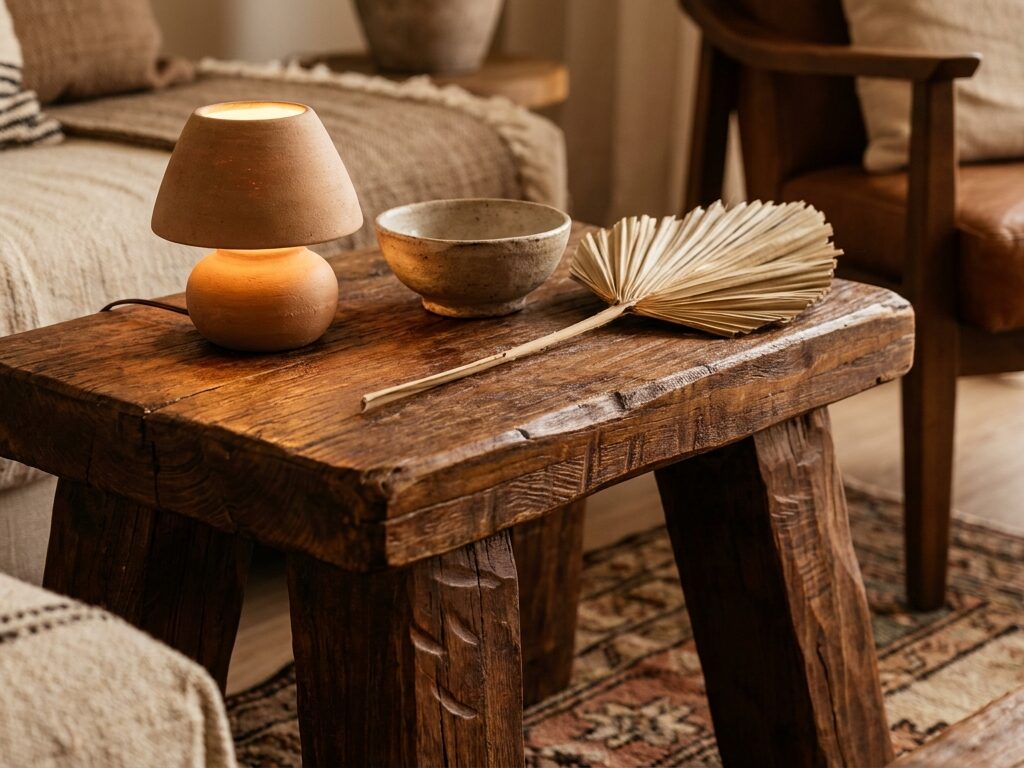
Carved wooden elements bring a craftsmanship and cultural authenticity to African bohemian decor that no other material quite replicates. A hand-carved wooden stool used as a side table. A carved decorative panel leaned against a wall. A wooden sculpture on a shelf. A dining table with hand-carved leg details.
The grain, the carving marks, the natural color variations in the wood, these are the qualities that make wooden objects feel genuinely handmade rather than factory-produced. In an Afrohemian home, these qualities are celebrated rather than minimized. Buy pieces with visible tool marks if you can find them. They are worth more than perfection.
15. Finish With a Curated Vignette on Every Surface
The final and perhaps most important Afrohemian decor idea in this list is not about a specific object or material. It is about how you compose every surface in the home.
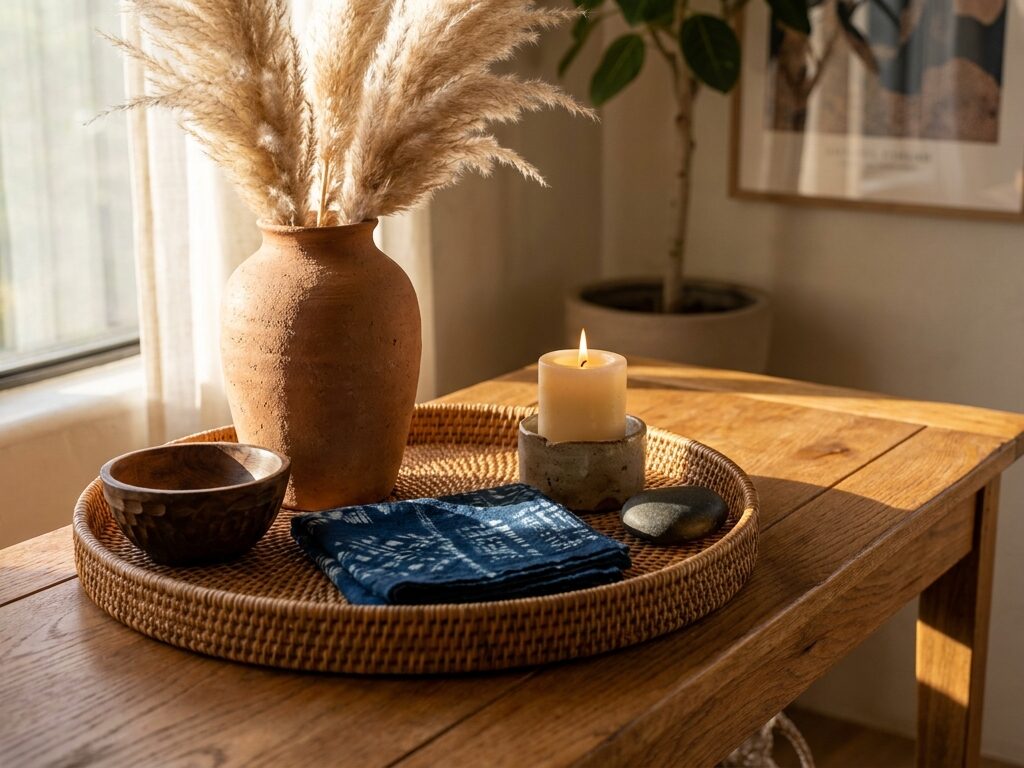
An Afrohemian vignette is not a random collection of things. It is a small story told through three to five objects that share a tonal family, vary in height and texture, and each earn their place. A carved wooden bowl. A small terracotta vessel. A folded length of adire fabric. A dried botanical stem. A single smooth stone from a meaningful place.
The philosophy of this style is that every object should mean something. You are not decorating. You are curating a home that reflects who you are and what you value. That is a different exercise entirely, and it is the one that produces the homes people walk into and immediately feel.
How to Get the Afrohemian Aesthetic Without Overdoing It
Let me be honest with you about something. The difference between an Afrohemian interior design that looks like a dream and one that looks like an overwhelming jumble is entirely in the editing.
The next wave of maximalism in 2026 is more intentional: fewer pieces, stronger choices, better composition. A modern take on Afrohemian uses a calm, earthy foundation and then adds intentional bursts of pigment and pattern rather than applying richness to every surface simultaneously.
In practice this means: start with the calm off-white or limewash base on your walls. Add the foundational natural materials, your rug, your rattan, your wooden pieces. Then layer the textiles and pattern slowly, one piece at a time, standing back after each addition to assess what the room needs next rather than what you want to add next.
Those are two very different questions, and the best Afrohemian aesthetic spaces are built by people who learned to ask the second one.
Room by Room Afrohemian Design Guide
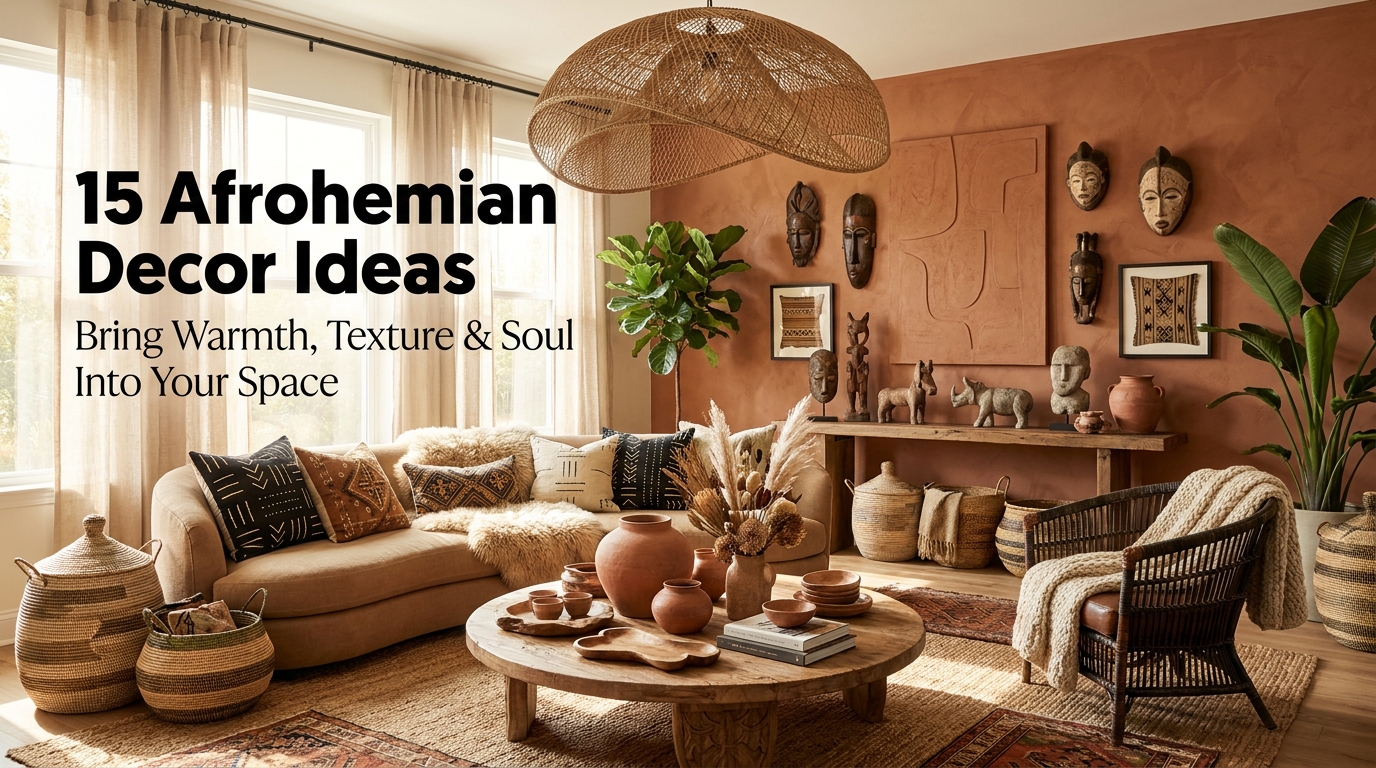
The African boho living room is the natural heart of this style because it is the space most built for the communal, layered, warmly social experience the aesthetic embodies. Low seating, layered textiles, woven baskets on the walls, terracotta pottery, ambient lighting: the living room is where all fifteen ideas in this article can work together.
The Afrohemian bedroom is where the style becomes most personal. Strip it back slightly compared to the living room. Let the textile wall above the bed do the heavy lifting and keep the remaining surfaces quieter and more intimate.
The entryway is an opportunity for a strong first impression with very few elements: one large woven basket on the floor, a carved wooden mirror frame, a single terracotta pot holding a sculptural plant, a warm lamp. Done.
The kitchen and dining space benefit most from handcrafted ceramics on open shelves, natural linen or cotton table linens in earthy tones, and woven placemats that bring texture to the dining table without requiring any significant investment.
Common Afrohemian Decorating Mistakes to Avoid
Buying mass-produced items that mimic the aesthetic without honoring the craft traditions behind it is the mistake that most undermines this style. A machine-made basket that looks handwoven from a distance and a genuine handwoven basket from an artisan cooperative are not the same thing in any meaningful sense. This style is built on authenticity. Shortcuts undermine the entire philosophy.
Over-saturating every surface until the room reads as chaotic rather than layered is the second most common issue. Richness in Afrohemian decor comes from quality and intentionality, not quantity. Three beautifully chosen objects on a surface say more than twelve competing ones.
Using cool-toned or stark neutrals that fight the warmth of the palette is a subtler mistake but a persistent one. If your walls are cool gray or your flooring is a cool bleached white, every warm earthy piece you add will look like it is fighting the room rather than belonging to it.
Why Afrohemian Decor Matters Beyond the Trend Cycle
As a LEED Green Associate who has spent years advocating for sustainable, intentional design, this is the aspect of the Afrohemian aesthetic that genuinely excites me most: it is one of the most naturally sustainable approaches to decorating that has entered mainstream conversation in years.
Natural materials. Handmade pieces with genuine longevity. A philosophy that values fewer, better objects over constant consumption. Buying from artisan makers rather than fast-furniture chains. All of it aligns with responsible design values in a way that most trends simply do not.
I worked with a homeowner last year who had been through three complete redecorating cycles in five years chasing whatever was trending. Each time the result felt right for a season and then hollow. When we stripped everything back and started building the space around a handful of genuinely meaningful handmade objects, natural materials, and a warm earthy palette, the room she had been chasing finally appeared. And it will not need replacing next year.
That is what Afrohemian decor at its best actually delivers. Not a trend. A home.
Final Thoughts on Afrohemian Decor Ideas
If there is one thing to take from every idea in this list it is this: start with something real. Not something that looks Afrohemian. Something that is. A handwoven basket from an artisan market. A piece of terracotta pottery made by someone’s hands. A length of adire fabric from a heritage textile maker.
Build from that one genuine piece outward. Let the room accumulate slowly. Let it tell a story that takes time rather than one that was assembled in an afternoon. The best African boho living rooms and Afrohemian bedrooms I have ever seen were not designed. They were gathered. One beautiful, authentic, soulful thing at a time.