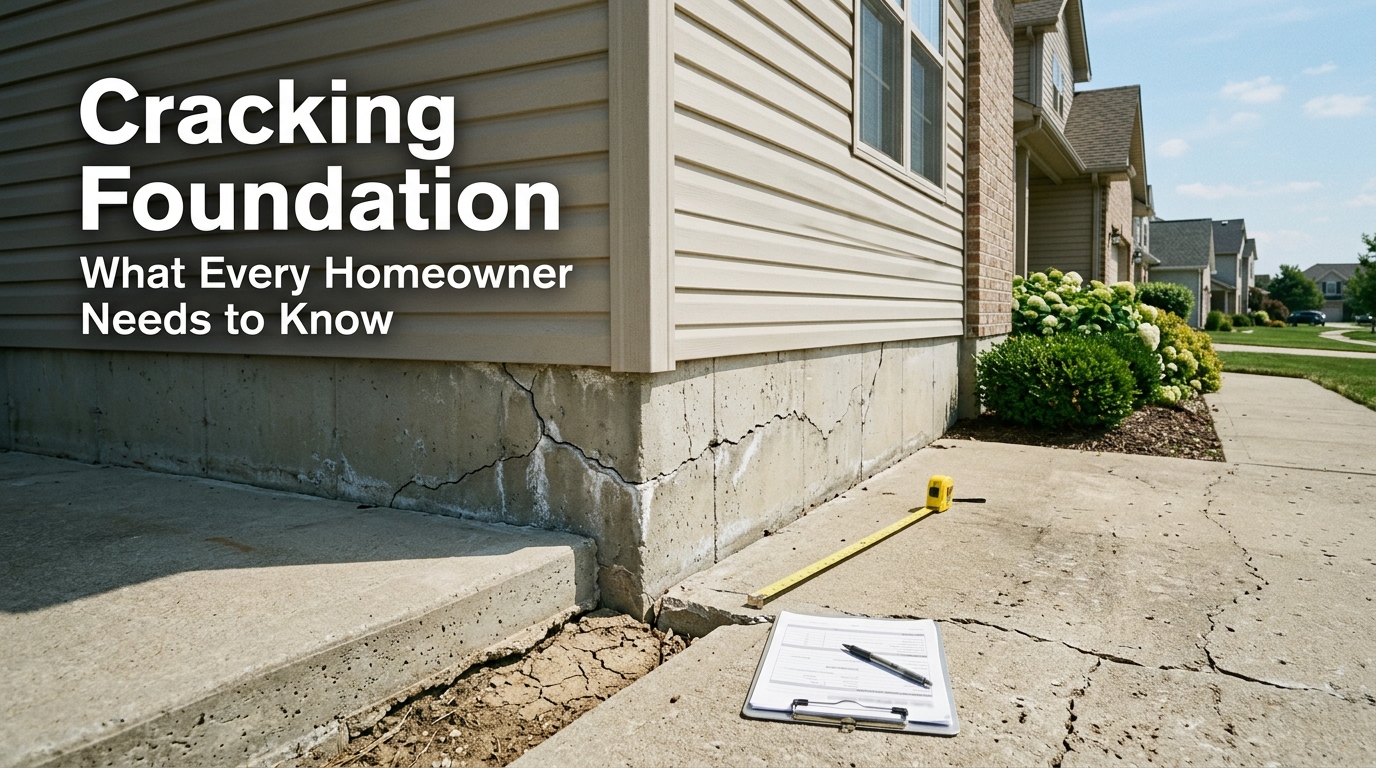
So you were doing that thing where you wander around your house noticing things you never noticed before, and there it was. A crack. In your foundation wall. And now you are standing there at 10pm with your phone flashlight pointed at concrete, Googling things that are making your anxiety worse by the paragraph.
First, take a breath.
Not every cracking foundation is a disaster waiting to happen. Some cracks are completely normal. Some are genuinely serious. And a handful are the kind of thing that makes structural engineers quietly clear their schedules. The key is knowing which category yours falls into, and that is exactly what this guide is here to help you figure out.
After years of consulting on home renovations and structural assessments, I have seen every variation of foundation crack imaginable. The ones that kept homeowners up at night turned out to be nothing. The ones that got dismissed as “just settling” occasionally turned into something much more significant. The difference almost always came down to one thing: whether the homeowner knew what to look for.
Let’s make sure you do.
Are Cracks in Foundation Always a Sign of Serious Trouble?
Short Answer: No, but none of them should be completely ignored either. Many cracks in foundation walls are the result of normal concrete curing or gradual settling and pose no structural threat. Others indicate active movement, water intrusion, or pressure that will worsen over time if left unaddressed. The crack type, its behavior over time, and any accompanying symptoms in the home determine how seriously it needs to be taken.
Not All Foundation Cracks Are Created Equal
Here is something that surprises a lot of homeowners: the presence of a crack in your foundation is not, by itself, a reliable indicator of severity. A tiny crack in the wrong location and orientation can be far more concerning than a longer crack that has sat completely unchanged for twenty years.
What actually matters is a combination of factors: the direction the crack runs, whether it shows any displacement between the two sides, whether it is growing, and whether it is allowing water into the structure. A crack that checks none of those boxes is very different from one that checks all four.
Think of it the way a doctor thinks about a symptom. A cough is not inherently alarming. A cough that has been getting worse for three weeks, comes with a fever, and keeps you up at night is a different conversation. Foundation cracks work the same way. Context is everything.
Types of Foundation Cracks and What They Actually Mean
1. Hairline Cracks
These are the thin, surface-level cracks that look like someone drew on your foundation wall with a very fine pencil. They are extremely common, particularly in newer homes, and usually form as concrete cures and shrinks during the first few years after construction.
In most cases, hairline cracks are purely cosmetic. They do not affect the structural integrity of the foundation and do not require repair beyond sealing if moisture is a concern in your area.
The caveat: even a hairline crack deserves a second look if it starts to widen over time, reappears after being sealed, or begins allowing moisture through. A crack that was cosmetic last year and is noticeably wider this year is no longer just cosmetic.
2. Vertical Cracks
Vertical cracks run more or less straight up and down the foundation wall and are the most common type of crack in foundation of house that homeowners encounter. They frequently result from normal settlement as the home adjusts over time and are, in many cases, not immediately concerning.
That said, vertical is not automatically harmless. The critical questions are: Is the crack stable, or is it growing? Is water getting through? Is one side of the crack slightly higher or lower than the other, indicating displacement? A vertical crack that answers yes to any of those questions warrants a professional evaluation regardless of how innocuous it looks.
3. Horizontal Cracks in Foundation Walls
Stop here. Horizontal cracks in a crack in foundation wall situation deserve your full attention.
Of all the crack orientations, horizontal is the most serious. As structural engineer Jim Graham noted in This Old House Magazine, horizontal cracks indicate that soil is exerting enough pressure on the wall to cause it to push inward. That pressure typically comes from waterlogged or expanding soil outside the foundation, and it does not resolve on its own.
A horizontal crack that is accompanied by any visible inward bowing of the wall is a situation where you pick up the phone and call a structural engineer. Not next month. Now.
4. Diagonal Cracks
Diagonal cracks, which run at an angle rather than straight up or straight across, usually indicate that one section of the foundation is settling at a different rate than another. They often appear wider at one end than the other, which tells you the direction of movement.
On their own, diagonal cracks are not always catastrophic. But when they show up alongside sticking doors, sloping floors, or gaps forming between walls and ceilings, they are part of a pattern that points to ongoing movement in the foundation. That combination earns a professional look.
5. Stair-Step Cracks in Brick or Block
If your home has a masonry or concrete block foundation, look for stair-step cracking patterns that follow the mortar joints in a zigzag pattern. These are the masonry equivalent of diagonal cracks in poured concrete and indicate uneven settling or movement in the foundation structure.
Stair-step cracks in an otherwise stable foundation with no other symptoms can be monitored over time. The same crack alongside displaced blocks, water intrusion, or expanding gaps requires a professional assessment.
What Causes Foundation Cracks
Understanding why foundation cracks happen is genuinely useful, because in many cases the underlying cause is something a homeowner can address directly, which prevents the problem from getting worse.
1. Soil Movement and Expansion
This is the big one. The American Society of Civil Engineers estimates that one in four homes in the United States has some damage caused by expansive soils, and in a typical year expansive soils cause a greater financial loss to property owners than earthquakes, floods, hurricanes, and tornadoes combined.
That is a genuinely alarming statistic, and it deserves to be taken seriously. Expansive soils, which have high contents of absorptive clay, can swell when wet with increases in volume of ten percent or more, which is enough pressure to crack concrete foundation walls and floor slabs. When those same soils dry out, they shrink and pull away from the foundation, removing the support the structure depends on. This cycle of swelling and shrinking, repeated over years and decades, puts enormous cumulative stress on any foundation.
If you live in the American South, Midwest, or Southwest, you are likely in high-risk expansive soil territory. But expansive soils are present across North America and cause billions of dollars in damage annually, with the American Society of Civil Engineers estimating that half of all homes in the US are built on expansive soils.
2. Poor Drainage and Water Saturation
Water is arguably the most consistent enemy of a residential foundation. When soil around the foundation becomes saturated, whether from heavy rain, poor drainage, clogged gutters, or downspouts that discharge too close to the house, the pressure against foundation walls increases significantly. Over time, that pressure produces exactly the horizontal cracking and wall bowing that requires serious repair.
The good news here is that drainage is often one of the most addressable causes of foundation problems. Properly maintained gutters, well-directed downspouts, and correctly graded soil sloping away from the house can prevent a significant proportion of foundation water damage from occurring in the first place.
3. Freeze-Thaw Cycles
For homeowners in colder climates including the Midwest, Northeast, and mountain regions, freeze-thaw cycling is a significant contributor to cracking foundations. Water that enters small cracks or the soil near the foundation expands when it freezes, exerting pressure from within. When it thaws, the pressure releases but the crack is now slightly larger. Repeat this process over dozens of winters and you have a meaningful structural concern that began as a hairline crack.
4. Tree Roots and Vegetation
Large trees planted close to the house are a long-term foundation risk that many homeowners underestimate. Tree roots grow toward moisture and can exert significant physical pressure against foundation walls, or alternatively, pull moisture from the soil directly beneath the foundation causing differential settling. As a general guideline, trees with aggressive root systems should be planted at a distance from the house at least equal to their mature canopy spread.
5. Construction and Concrete Quality
Some foundations crack prematurely because of how they were built: inadequate soil preparation, weak concrete mix, insufficient steel reinforcement, or curing that was rushed. These are less common causes but worth knowing about, particularly when evaluating a crack in a relatively new home that should not be showing signs of stress yet.
Warning Signs That a Crack Is More Than Cosmetic
A crack in the foundation wall does not always tell you the full story. Some of the most important indicators of serious foundation movement appear elsewhere in the house. Watch for:
- Doors and windows that suddenly stick or will not close properly. When a foundation shifts, the door frames and window frames shift with it, and what used to open and close smoothly starts to bind. If this happens in multiple locations around the house within a short period, it is a meaningful warning sign.
- Floors that feel noticeably sloped or uneven. A marble test is a simple and satisfying diagnostic: place a marble on the floor and see whether it rolls on its own. If it does, something has shifted beneath you.
- Gaps forming between walls and ceilings or between trim and walls. A gap that was not there last year, or one that is noticeably wider on one side than the other, points to active movement in the structure.
- Water seeping through foundation wall cracks. Even a small amount of moisture intrusion through a foundation crack accelerates damage and creates conditions for mold growth. It also tells you the crack is open to the exterior environment, which is useful diagnostic information.
- Cracks that are visibly growing. This is the clearest signal of all. Mark the ends of a crack with a pencil and date it. Photograph it. Check it again in thirty days and sixty days. A crack that is stable over time is a different situation from one that is measurably longer or wider each time you check.
How to Evaluate a Crack in Foundation Wall Yourself
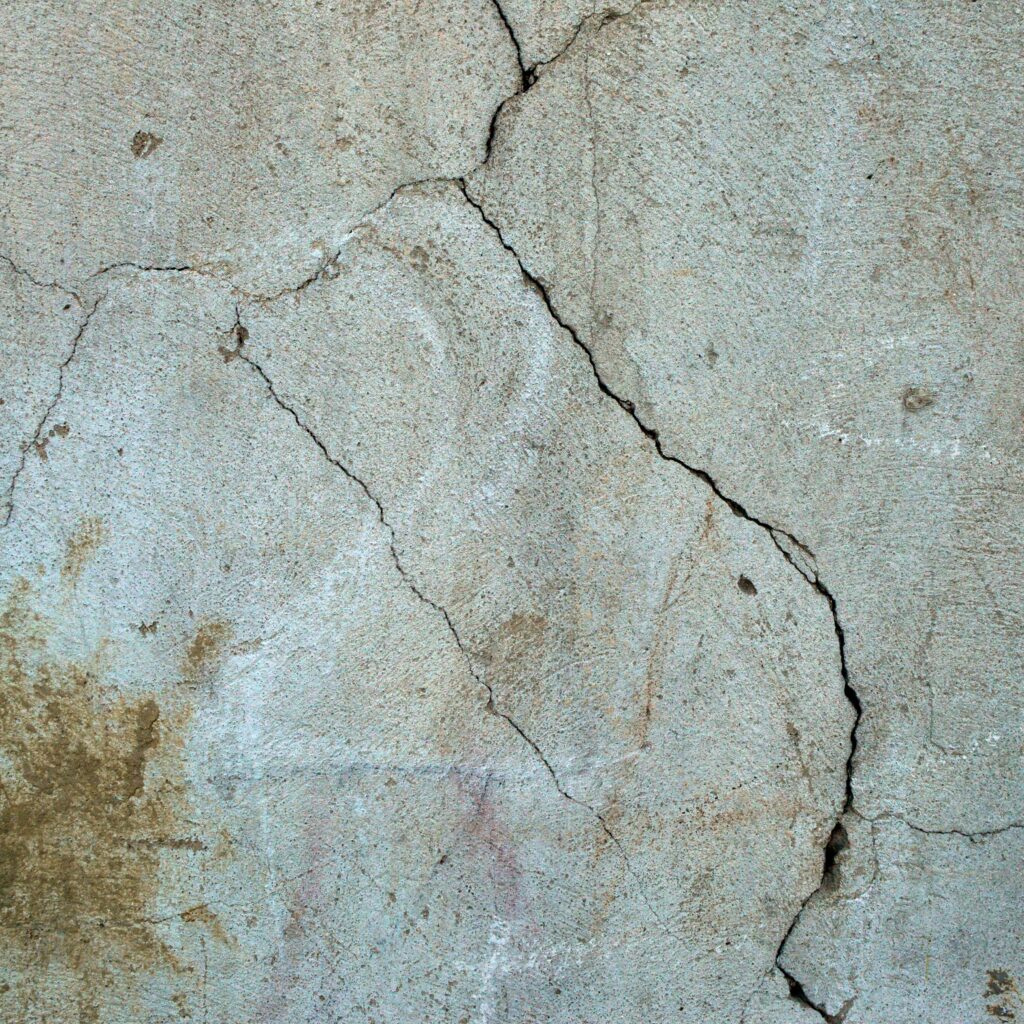
Before you call anyone or panic about repair costs, here is a practical three-step evaluation you can do yourself.
Step 1: Measure the width. A crack narrower than one sixteenth of an inch is in hairline territory. A crack wider than one quarter of an inch deserves professional evaluation regardless of other factors.
Step 2: Check for displacement. Run your finger across the crack from one side to the other. If one side is higher or lower than the other, the two sections of wall have moved in different planes, which is a more serious indicator than a crack where both sides sit at the same level.
Step 3: Monitor over time. Mark each end of the crack with a pencil line and write the date beside it. Take a close-up photograph. Come back in four to six weeks. If the crack has grown beyond your pencil marks, you have active movement that needs professional assessment.
As This Old House general contractor Tom Silva put it clearly: any crack that appears suddenly is not normal, and any crack that continues to grow in width or length is not normal. Those two conditions together are a reliable trigger for calling a structural engineer.
DIY Repair vs. Calling a Professional
When DIY Makes Sense
Small, stable, non-leaking cracks that have not changed in months and are not accompanied by any of the warning signs described above can reasonably be addressed with a DIY sealing repair. Options include:
Epoxy injection, which fills narrow cracks and bonds the concrete back together with a material stronger than the original, works well for structural cracks that are no longer actively moving. Polyurethane foam injection is the better choice for cracks where water intrusion is the primary concern, as it expands to fill the space and remains flexible. Hydraulic cement, which sets and hardens even in the presence of moisture, is effective for filling visible gaps in masonry or concrete block foundations.
All of these are surface solutions. They address what you can see. They do not address what caused the crack in the first place.
When to Call a Structural Engineer Immediately
If any of the following apply, stop reading and make the call: horizontal cracking in the foundation wall, any visible inward bowing of the wall, a crack wider than one quarter inch, a crack that is actively growing, water coming through the foundation, or multiple warning signs appearing together throughout the house.
Foundation specialist Mark McCullough, as noted in This Old House Season 43, made the point plainly: sealing a crack alone will not solve the issue if moisture and pressure from outside are not addressed at the source. A structural engineer can identify the actual cause of the cracking and recommend a repair approach that fixes the problem rather than just covering its symptom.
What Foundation Crack Repair Actually Costs
This is usually the part of the conversation where homeowners start breathing a little faster. The reality is that costs vary enormously depending on what is actually wrong.
Foundation repair costs range from $2,224 to $8,134 nationally, with an average cost of $5,179 per project. The simplest fix, sealing cracks, costs $250 to $800, while more serious repairs involving sinking or walls pushing inward can climb significantly from there.
Crack repairs using epoxy injections typically cost $500 to $2,000 depending on severity, while installing foundation piers to stabilize a sinking foundation ranges from $1,500 to $3,000 per pier with total costs running from $5,000 to $20,000 or more.
The single most reliable way to keep costs manageable is early intervention. A crack that is caught and addressed while it is still small and stable costs a fraction of the same crack addressed after it has allowed water in for several seasons, shifted the wall inward, and affected the floor structure above.
How to Prevent Foundation Cracks From Getting Worse
Some foundation cracking is genuinely unavoidable over the lifetime of a home. But a significant proportion of the damage that turns minor cosmetic cracks into major structural problems is preventable with basic maintenance.
Keep gutters clean and downspouts pointed away from the house. This is the single highest-return maintenance action for foundation health. Water that drains away from the house at the downspout instead of pooling against the foundation wall removes one of the most consistent causes of pressure and water intrusion.
Check and maintain the grading around the foundation. Soil should slope away from the house at a rate of approximately six inches over the first ten feet. If soil has settled flat or begun sloping toward the foundation, adding and grading additional soil is a straightforward fix that significantly reduces water risk.
Inspect the foundation twice a year. Spring and fall are the natural times to walk the perimeter with a flashlight and look for new cracks, changes in existing ones, or signs of moisture. Catching changes early makes the difference between a $500 repair and a $10,000 one.
Manage large trees and their root systems. If you have large established trees close to the house and are beginning to see foundation movement, consult an arborist about root barriers or, in some cases, selective removal before the root system causes further damage.
Foundation Cracks and Homeowners Insurance
Here is the part nobody loves: most standard homeowners insurance policies do not cover foundation crack repair. The damage is typically classified as a maintenance issue or gradual deterioration, neither of which falls under standard coverage terms.
The exception is damage caused by a specific covered event: a falling tree that impacts the foundation, a burst pipe that causes sudden structural damage, or in some policies, earthquake damage if you have earthquake coverage added. Flood damage to foundations is covered by flood insurance, not standard homeowners policies.
The practical implication is that documentation matters enormously. If you ever find yourself arguing with an insurance company about whether a crack was caused by a covered event, having dated photographs and notes on when the crack first appeared gives you a meaningful evidentiary advantage.
Common Mistakes Homeowners Make With Foundation Cracks
- Ignoring a crack because it looks small. Size at the moment of discovery is not a reliable measure of severity. A narrow crack that is actively growing, leaking, or appearing alongside other symptoms is a more urgent situation than a wide crack that has been stable for a decade.
- Patching the surface without addressing the cause. A beautifully sealed crack that still has saturated soil pressing against the wall from outside is a temporary cosmetic fix, not a repair. Addressing drainage and soil conditions alongside the crack sealing is what makes the repair actually hold.
- Waiting too long to get a professional opinion. Foundation repair is one of those categories where early intervention is dramatically cheaper than delayed intervention. A structural engineer’s evaluation typically costs a few hundred dollars. The cost difference between addressing a problem at its early stage versus its advanced stage can be tens of thousands of dollars.
- Assuming a professional evaluation means an expensive repair. Many homeowners avoid calling anyone because they assume the call will result in a five-figure quote. In reality, a structural engineer’s job is to assess what is actually happening. Sometimes that assessment concludes that monitoring is the appropriate response, which costs nothing beyond the inspection fee.
Final Thoughts on Cracking Foundations
A cracking foundation is genuinely one of the more anxiety-inducing things a homeowner can encounter. It sits at the literal base of your home and carries the weight of everything above it. It makes sense that finding a crack in it feels like finding a crack in something fundamental.
But knowledge is the best tool here, and you now have considerably more of it than you did at the top of this article. Not every crack is serious. The ones that are serious can almost always be addressed effectively when caught early. And the tools for telling the difference, monitoring behavior over time, checking for displacement, watching for accompanying symptoms, are available to any homeowner willing to spend twenty minutes with a flashlight and a pencil.
Inspect it. Document it. Watch it. And when the evidence tells you it is time to call someone, call someone early. Your foundation, and your bank account, will be better for it.
FAQ: Cracking Foundation and Foundation Cracks
How do I know if a crack in my foundation is serious?
Look at four things: the orientation of the crack (horizontal is the most serious), whether there is any displacement between the two sides, whether the crack is actively growing over time, and whether water is getting through. A crack that shows any of these characteristics, especially in combination, warrants a professional evaluation. A crack that is small, stable, vertical or hairline, and dry is generally in the monitor-and-document category rather than the emergency repair category.
What causes foundation cracks in older homes?
Older homes are more susceptible to foundation cracking for several reasons: decades of soil movement and seasonal moisture cycling, aging concrete that has become more brittle over time, tree root systems that have grown significantly since the home was built, and in some cases, drainage infrastructure that was not designed to current standards. The causes are the same as in newer homes, but the cumulative effect of time amplifies them.
Can I repair a crack in foundation wall myself?
Small, stable, non-leaking hairline or narrow vertical cracks can be addressed with DIY sealing using epoxy injection kits or polyurethane foam products available at hardware stores. However, DIY repair addresses only the visible surface. If the crack is caused by ongoing soil pressure, water saturation, or structural movement, the surface repair will not hold long-term without addressing the underlying cause. Any crack that shows displacement, is actively growing, or appears alongside other symptoms in the home should be evaluated professionally before any repair attempt.
Does homeowners insurance cover cracking foundation repair?
Standard homeowners insurance policies generally do not cover foundation crack repair. The damage is typically classified as gradual deterioration or a maintenance issue rather than a covered event. Exceptions may apply if the damage was caused by a specific covered peril such as a falling tree or in some cases earthquake or sudden pipe failure. Flood-related foundation damage requires separate flood insurance coverage. Always review your specific policy and consult your insurance agent when a foundation issue arises.
How much does foundation crack repair typically cost?
Most homeowners spend between $2,200 and $8,100 on foundation repairs, with the national average sitting around $5,100. Simple crack sealing at the cosmetic end of the spectrum can cost as little as $250 to $800. More serious structural repairs involving wall reinforcement, drainage correction, or pier installation can climb significantly beyond that range. The most reliable cost-control strategy is addressing issues early, before minor problems become major ones.