
Some rooms make you tense the moment you walk in. Too much going on. Too many colors fighting for attention. Surfaces covered in things that somehow accumulated without anyone noticing. You sit down and your brain keeps working because the room won’t let it stop.
And then there are rooms that do the opposite. You walk in, your shoulders drop, and something in you exhales. Those rooms almost always share one quality: they were designed with restraint and intention rather than enthusiasm and impulse.
That is the entire promise of japandi living room ideas, and it is why Google Trends data shows “japandi interior design” searches grew 340 percent between 2020 and 2025, making it the fastest-rising style category in the home design space. Not because it looks good in photographs, though it does. Because it actually feels good to live in.
If your living room has been feeling either too cold and clinical or too cluttered and chaotic, this is the style that sits exactly in between. Here is how to bring it home.
What Is Japandi Interior Design and Why Does It Work So Well in Living Rooms?
Japandi interior design is a fusion of two design traditions that are separated by thousands of miles but united by almost identical core values. Japanese design brings wabi-sabi, the philosophy of finding beauty in imperfection, natural aging, and simplicity. The Scandinavian half of the equation comes loaded with hygge, that untranslatable Nordic quality of warmth and deliberate coziness that makes a room feel like somewhere worth staying. Put them together and you get something that is minimal without being cold, and warm without being cluttered.
The living room is where this combination produces its most powerful results because it is the room with the most competing demands. It has to be comfortable enough to actually relax in, calm enough to decompress after a difficult day, and considered enough to feel intentional rather than random. Japandi living room decor addresses all three of those requirements simultaneously, which is something very few design styles manage.
In 2026, the style is also evolving in a way that makes it even more livable. Shelley Cochrane, accessories buyer at Furniture Village, notes that in 2025 the style evolved to embrace warmer, softer brown tones alongside the traditional neutral palette of oat, stone, and beige, and that the addition of brown makes living rooms feel warmer and cosier while still maintaining the clean, minimal aesthetic. The cool gray-dominated version of early Japandi is softening into something genuinely warmer, and the result is better for it.
The Japandi Color Palette for Living Rooms
Before moving a single piece of furniture or buying anything new, get this right. The japandi color palette is the foundation that everything else builds on, and choosing the wrong tones here undermines every other decision you make.
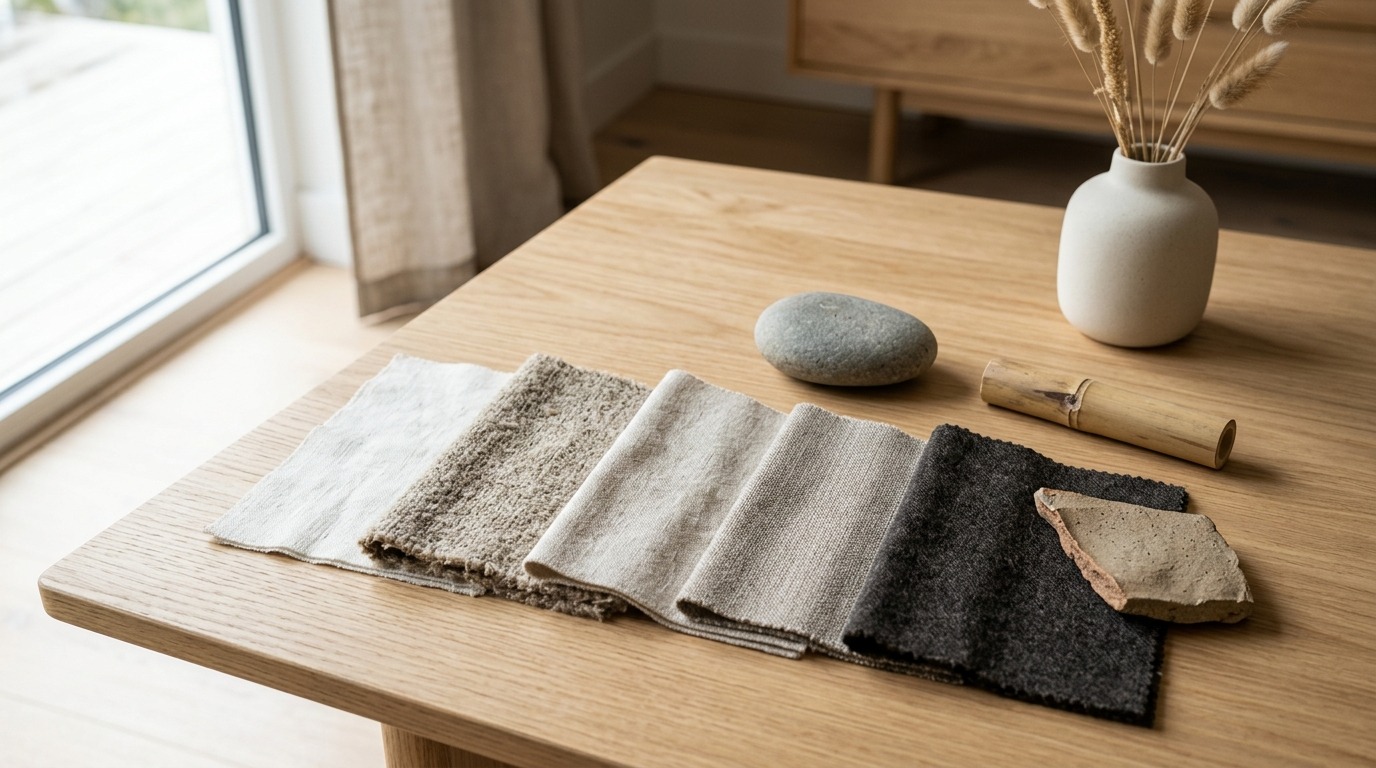
The core colors are warm white, stone beige, greige, oat, soft charcoal, and muted clay. These are not decorator whites or cool architect grays. They are the colors of undyed linen, smooth river stones, and sun-warmed timber. They sit in the warm half of the neutral spectrum and they make a room feel like the temperature is just right.
In 2026 the palette is adding warm brown tones, mocha, caramel, and soft chocolate, largely driven by Pantone’s Color of the Year, Mocha Mousse. These browns layer beautifully on top of the existing Japandi foundation without disrupting its calm.
What to keep well away from: bright white with a cool or blue undertone, saturated colors of any kind, and the kind of medium gray that dominated modern interiors for the last decade. All of those fight the warmth the japandi aesthetic depends on.
15 Japandi Living Room Ideas Worth Trying
1. Start With a Warm Neutral Foundation on Your Walls
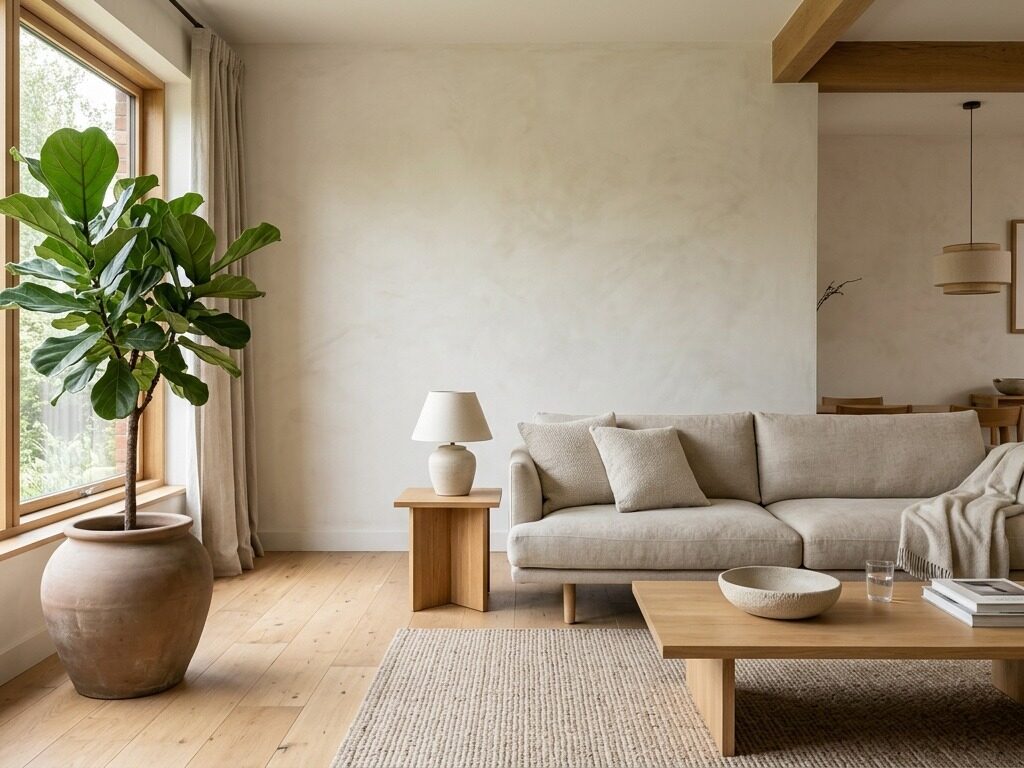
Everything in a japandi living room radiates outward from the walls, which means the wall color is the single most consequential decision in the room. Get this right and everything you add on top becomes easier. Get it wrong and nothing quite works no matter how carefully chosen.
The ideal Japandi wall tone is a warm white with a slight yellow or red undertone rather than a cool or blue one. Limewash paint finishes are particularly well-suited to the japandi aesthetic because the slight variation in tone across the wall surface adds exactly the kind of organic imperfection that wabi-sabi celebrates. A flat or matte finish in any warm white works well. High sheen finishes fight the organic, understated quality of the style.
2. Choose Low-Profile Furniture With Clean Lines
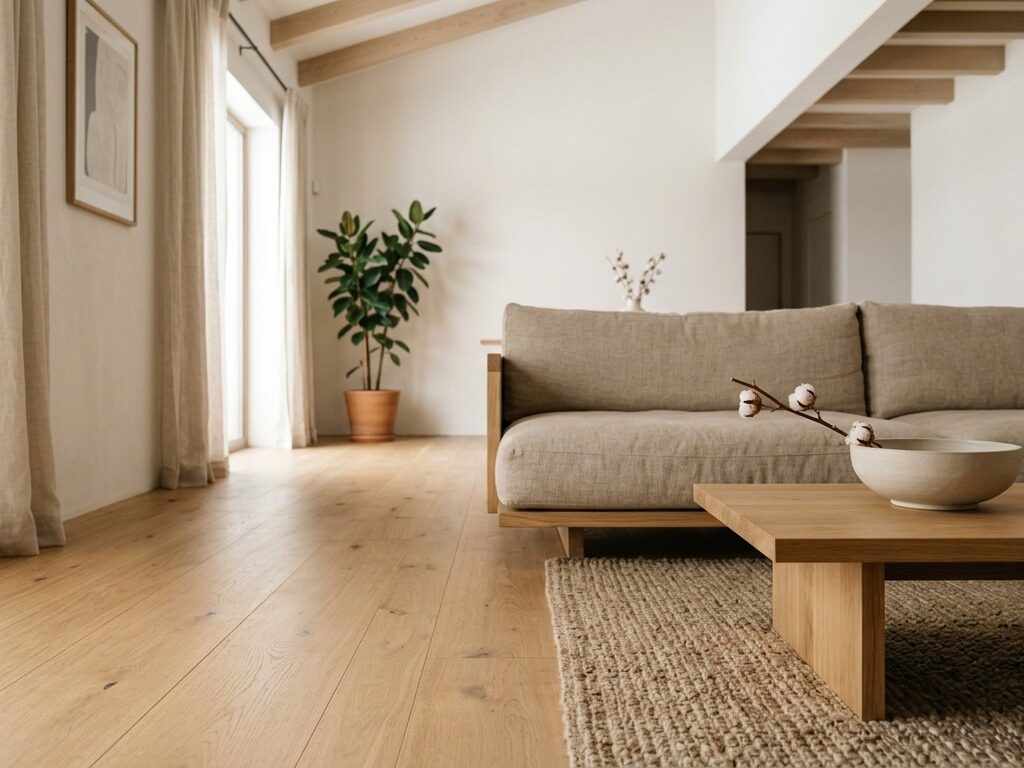
This is the most visually distinctive feature of japandi furniture ideas and the one that transforms a room’s proportions most dramatically. Low-profile furniture, sofas close to the floor, coffee tables at shin height, floor cushions used alongside conventional seating, draws the eye downward and makes ceilings feel taller and rooms feel more spacious.
The Japanese influence is clearest here. Traditional Japanese interiors are oriented around floor-level living, and that groundedness translates into a specific kind of calm. You are not perched on furniture. You are settled into the room.
Look for sofas with a seat height between 14 and 16 inches. Avoid anything that sits high or has bulky arms. The silhouette should be horizontal and quiet rather than tall and assertive.
3. Layer Natural Textures Throughout the Room
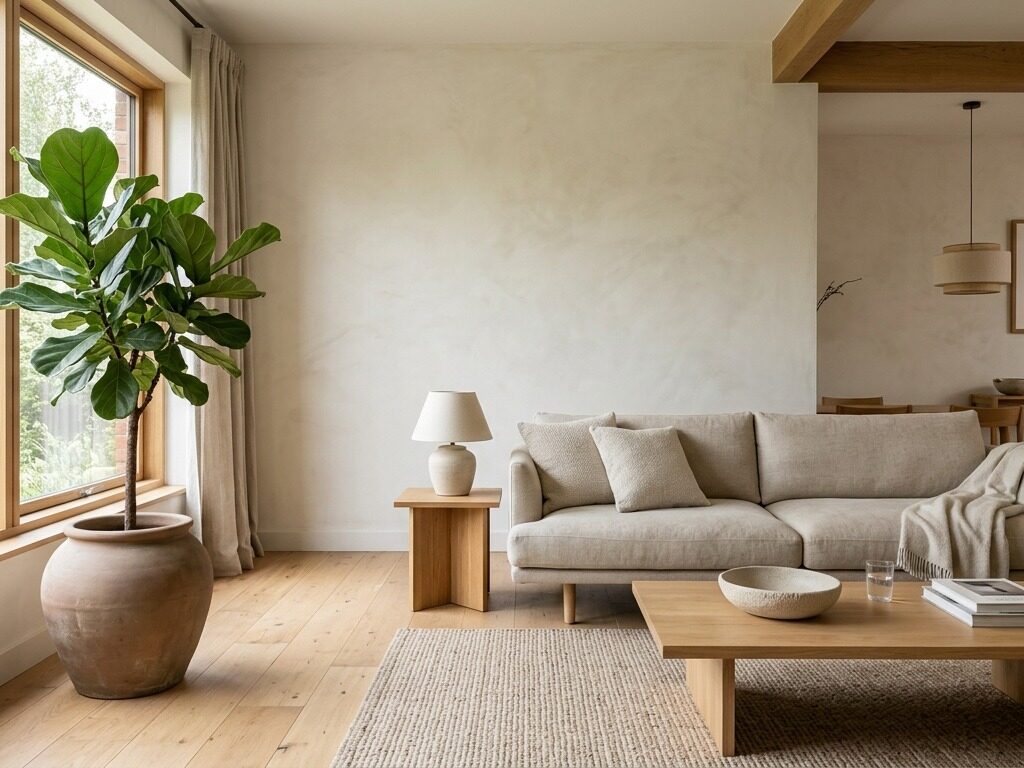
Color alone does not make a japandi living room decor scheme work. Texture is what gives a neutral palette depth, warmth, and the layered richness that prevents it from reading as simply sparse.
The textures to reach for are all natural: the rough weave of a jute rug underfoot, the smooth grain of an oak side table, the softness of a linen sofa cushion, the slight roughness of a hand-thrown ceramic vase, the warmth of a wool throw. Each material has a different surface quality and together they create a room that is genuinely interesting to be in even when it contains very few objects.
The rule worth remembering: vary the textures but keep the tones. Multiple materials in the same warm neutral palette reads as intentionally layered. Multiple materials in competing colors reads as chaotic.
4. Embrace the Wabi-Sabi Approach to Decor
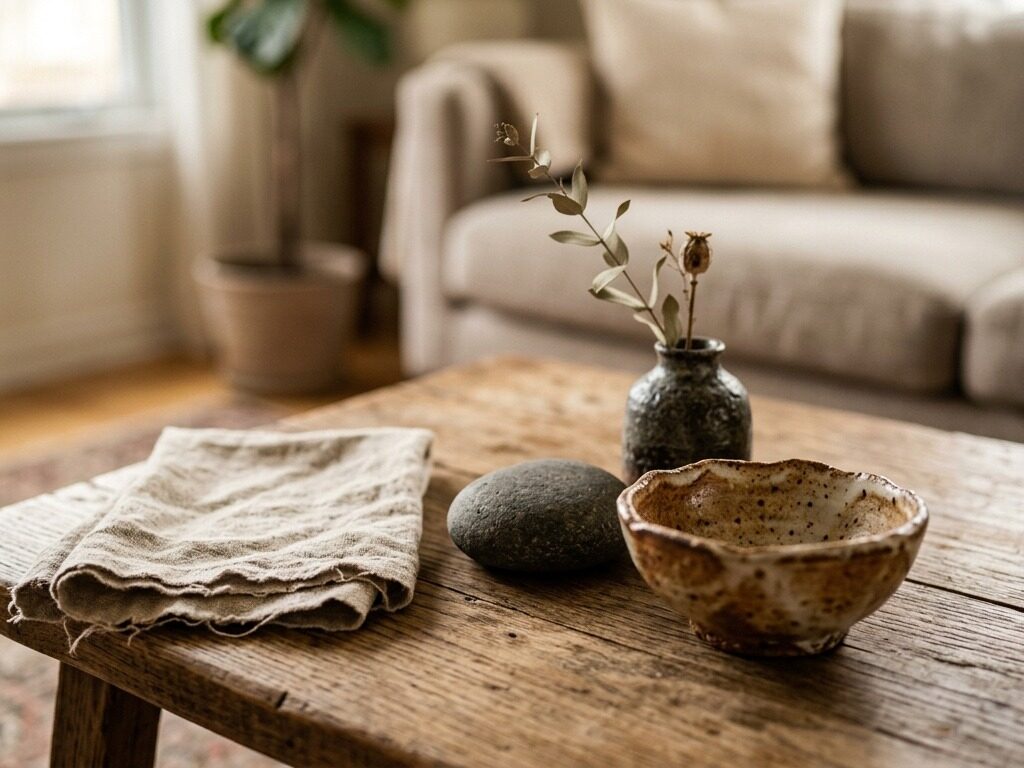
Wabi-sabi is the Japanese philosophy of finding beauty in imperfection, transience, and the natural aging of materials, and it is one of the two philosophical foundations that japandi interior design is built on. In practical decor terms it means choosing objects that show the maker’s hand, that have visible irregularities, that age gracefully rather than deteriorating.
A hand-thrown ceramic bowl where the rim is not perfectly even. A wooden tray with visible grain variations. A linen cushion whose surface shifts slightly in the light because no natural fiber is ever perfectly uniform. A dried botanical stem in a simply glazed pot. These objects carry a quality of authenticity that mass-produced perfect objects simply cannot. That slight unevenness in the rim, the firing variation across the glaze, that is not a defect in a wabi-sabi space. That is literally the point. It is the point.
5. Use a Neutral Sofa as the Room’s Anchor
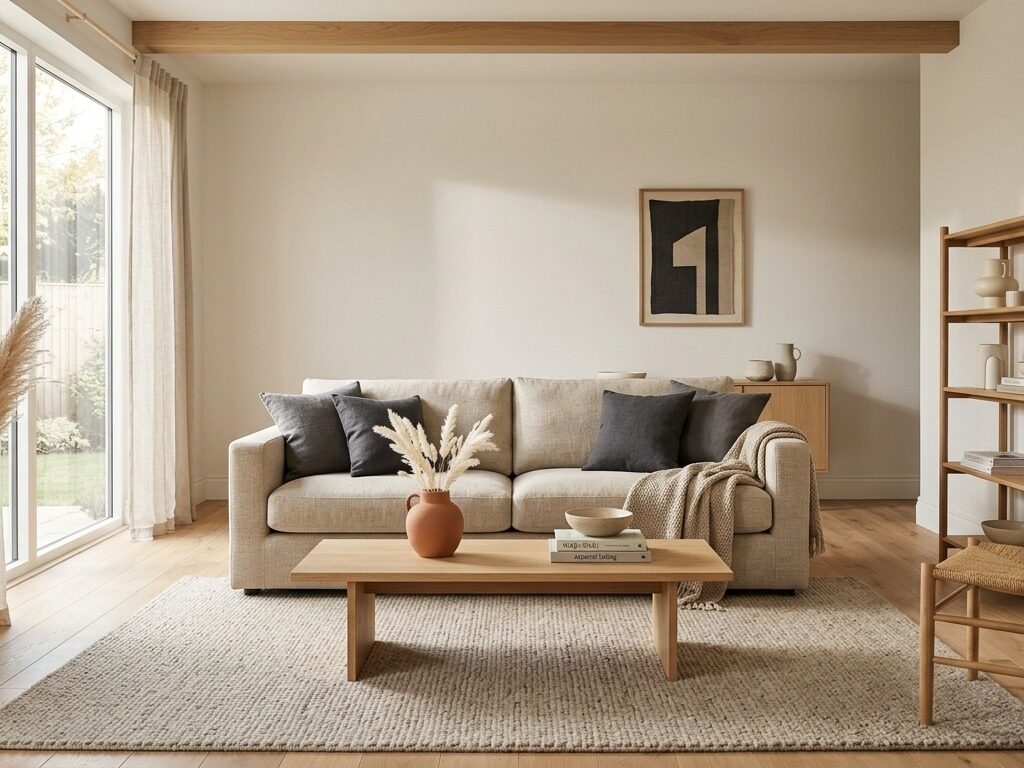
The sofa is the largest piece in most living rooms and the one around which the whole japandi aesthetic organizes itself. For this reason, choosing the right sofa matters more than almost any other single purchase.
The ideal Japandi sofa is upholstered in natural linen, cotton, or wool in a warm neutral tone: oatmeal, warm greige, muted sage, or soft stone. The profile should be low and the arms should be simple, not rolled or tufted. Slipcover styles work particularly well because they have the relaxed, lived-in quality that the hygge element of scandinavian japanese interior design requires.
What to avoid: anything with bold color, any metallic or glossy fabric, and anything with ornate detailing that introduces a competing aesthetic into the room.
6. Bring in Warm Wood Tones Throughout
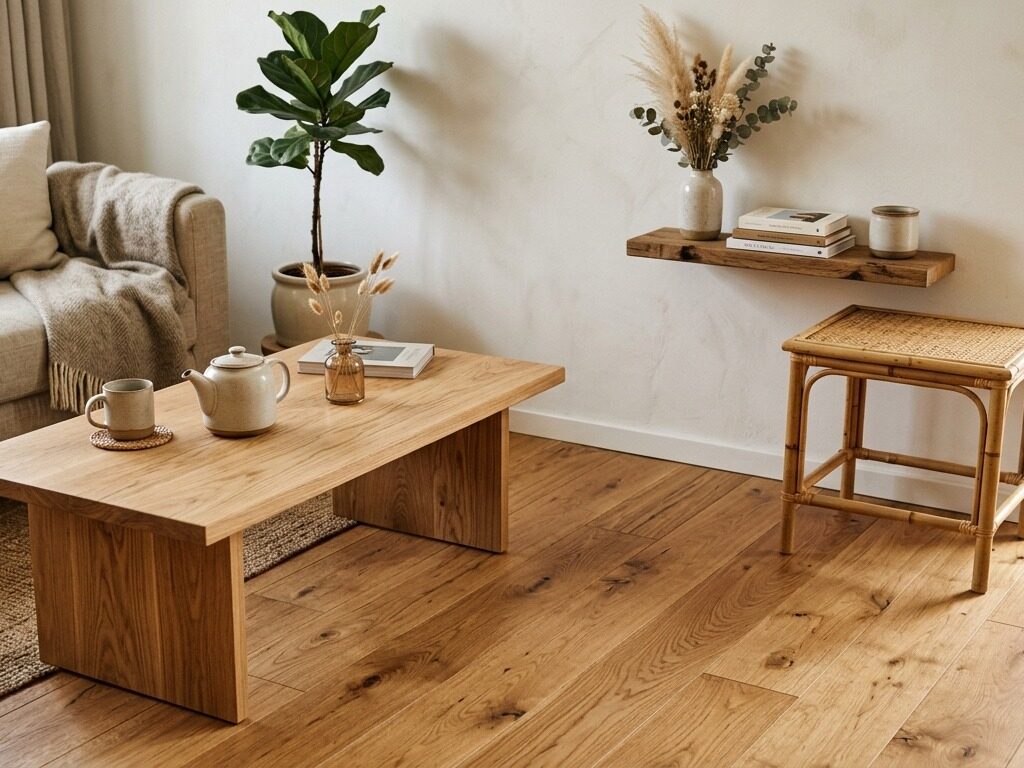
Wood is the material backbone of japandi interior design and it appears across every surface category: flooring, furniture, shelving, small objects, and architectural details. The specific tones that suit the style best are the lighter, warmer ones: natural oak, beech, bamboo, and light walnut. These add warmth without heaviness and connect the interior to the natural world outside in a way that darker or lacquered woods do not.
The consistency of wood tone matters. Mixing two or three warm wood tones in the same room creates depth and a collected quality. Mixing four or five creates visual noise. As a practical guideline, choose a dominant wood tone for the largest pieces, a secondary tone for smaller furniture and objects, and let any third tone appear only in small accessories.
7. Keep the Japandi Color Palette Consistent Across Every Element
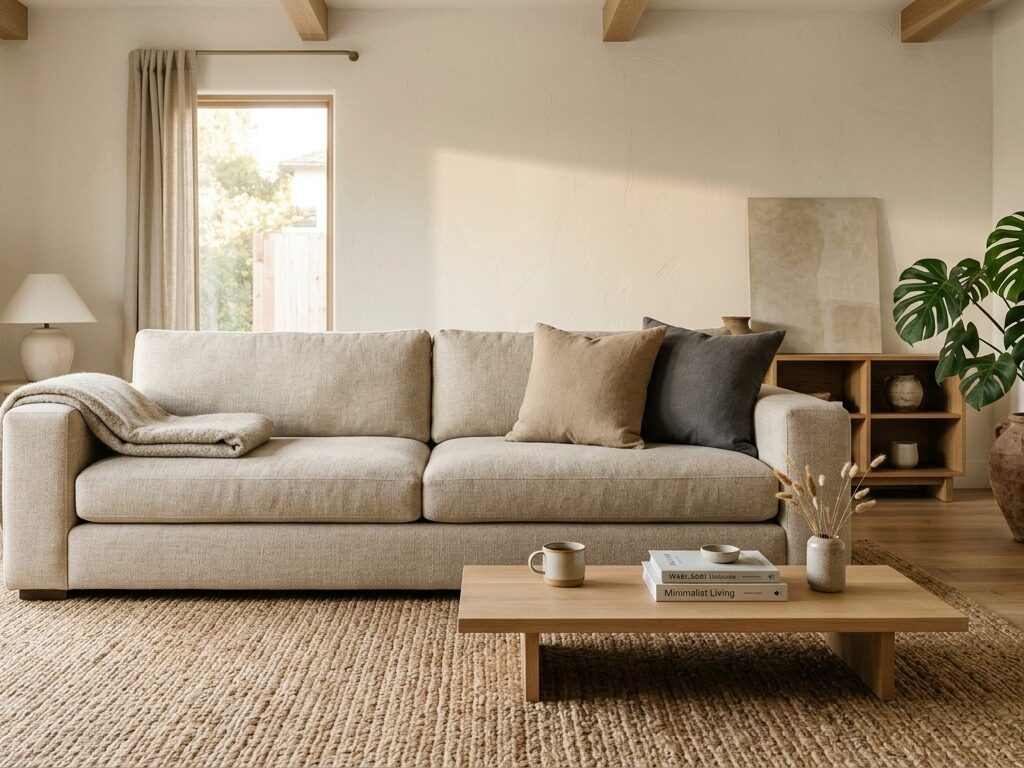
This is the detail that separates japandi living room decor that looks genuinely considered from the version that looks like someone tried Japandi and half-succeeded. Every element in the room, cushions, rug, throws, ceramics, curtains, plants, vessels, needs to belong to the same warm neutral color story.
One out-of-place element is enough to break the spell. A bright colored cushion, a cool gray vase, a rug with a warm tone that veers into orange rather than staying in the stone and beige range: any of these can make the whole room feel slightly unresolved.
The practical approach is to hold every potential purchase physically against your existing pieces before committing. Colors that look similar in a shop often read very differently when placed next to the specific tones already in your room.
8. Add a Single Statement Plant
Plants are non-negotiable in japandi interior design because both Japanese and Scandinavian design traditions are rooted in a deep connection to the natural world. But the approach to plants in a Japandi living room is very specific: one or two plants with genuine architectural presence rather than a collection of small ones scattered across every surface.
A large fiddle-leaf fig with its bold vertical leaves. A mature monstera with dramatically cut foliage. A tall snake plant with strong upright lines. A bonsai tree if you want the most specifically Japanese expression of the principle. Each of these has enough visual presence to earn its place in a minimal room. A collection of small succulents on a windowsill, while lovely, does not carry the same design weight.
9. Choose Lighting That Creates Warmth Not Brightness
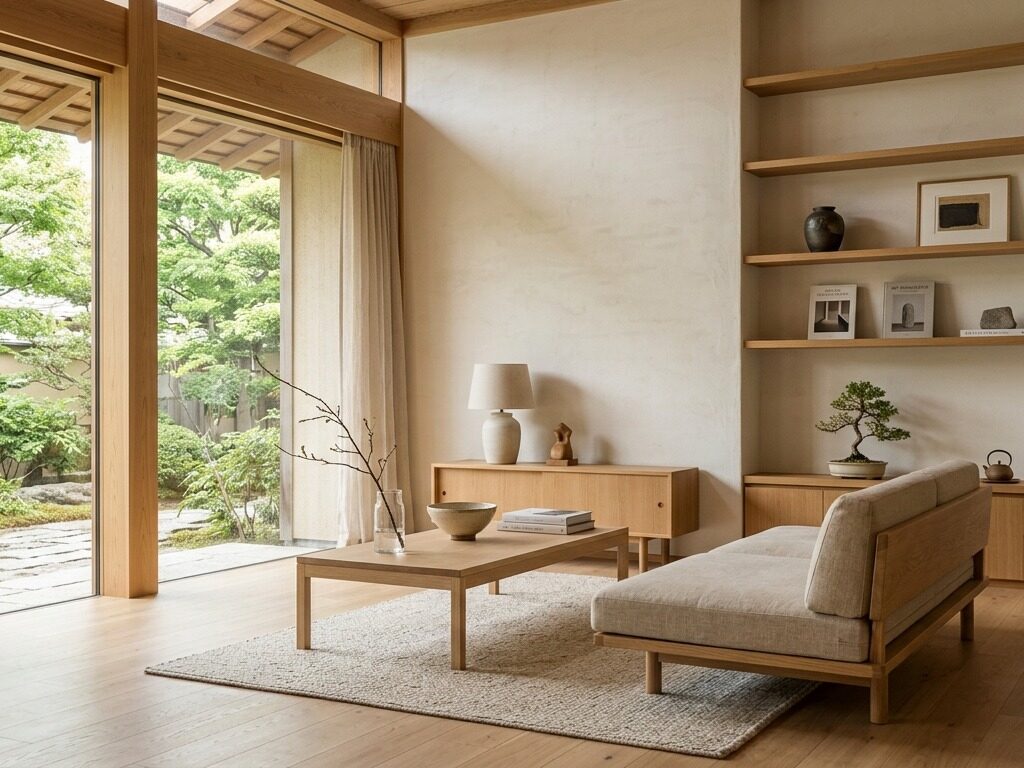
Overhead lighting at full brightness is the fastest way to undo the calm that every other element of a japandi living room is working to create. The lighting philosophy in this style is about warmth and layering, not illumination as a primary goal.
A woven rattan or bamboo pendant light over the seating area casts a warm dappled pattern across the ceiling and walls. A simple paper lantern in the corner adds a soft Japanese-influenced glow. A ceramic base table lamp with a linen shade on a side table creates warmth at a low level. All bulbs should be warm white, 2700K maximum. Anything cooler reads as clinical rather than calm.
The layered effect of two or three warm light sources at different heights transforms the room after dark into something that genuinely feels like the japandi aesthetic made physical: warm, quiet, deeply restful.
10. Create a Japandi Shelf Display
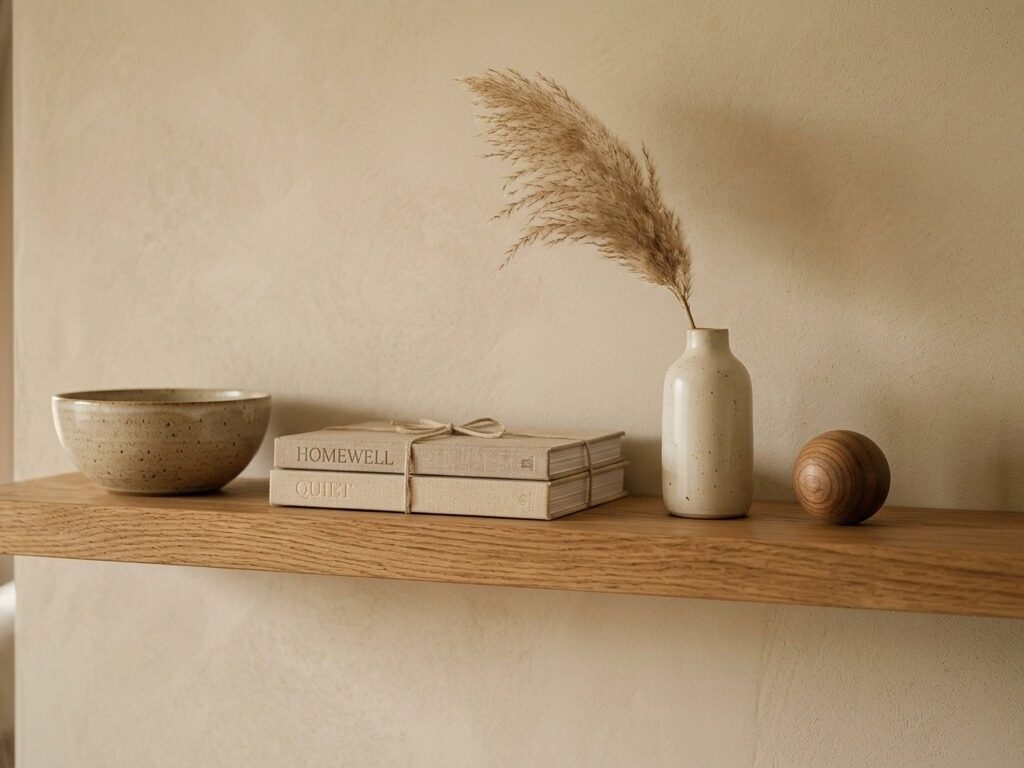
Nothing reveals faster whether someone actually gets Japandi or is just doing a version of it than the way they style a shelf. The Japandi shelf is not a gallery of collected things. It is a deeply edited display of three to five objects that each have a function, a meaning, or a beauty that justifies their presence.
A smooth ceramic bowl. One small stack of linen-covered books. A single dried botanical stem in a simple vase. One small wooden sculpture. Deliberate empty space between them. That is it. No more. The space between objects is as intentional as the objects themselves, a direct expression of the Japanese concept of ma: the meaningful negative space between elements.
11. Use a Natural Fiber Rug to Ground the Space
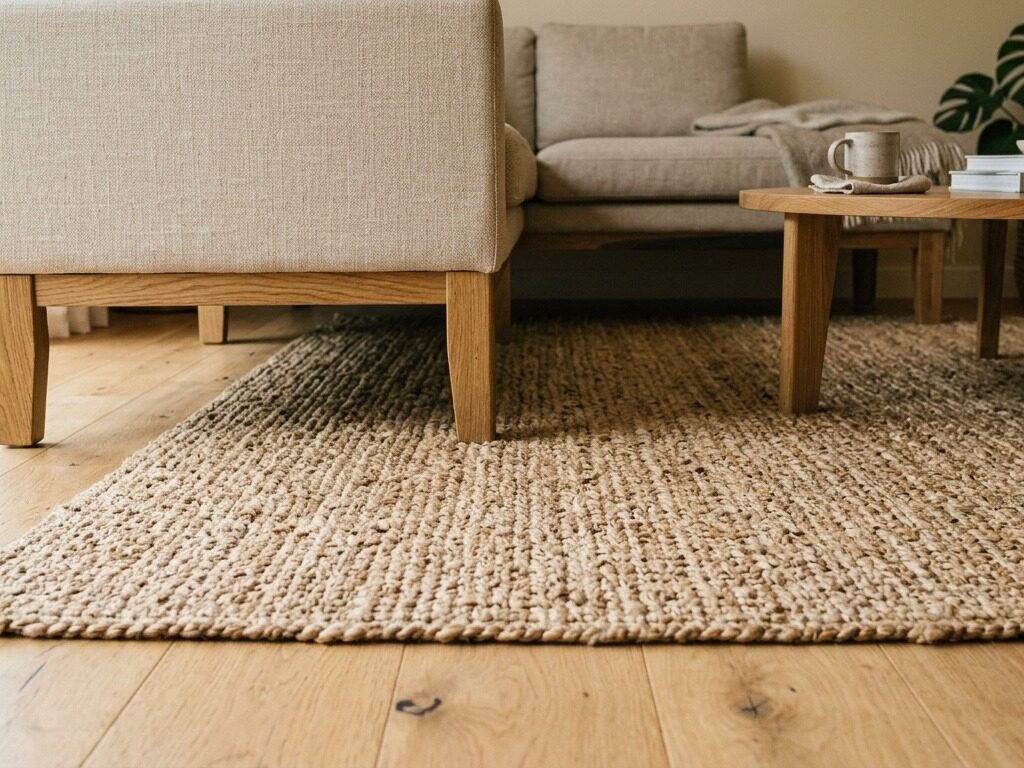
The rug in a japandi living room does two things: it anchors the seating arrangement visually and it adds the most significant single layer of natural texture in the room. Choosing the right one matters more than people generally assume.
Natural fiber rugs in jute, sisal, or wool are the most appropriate choices for the japandi aesthetic. Simple weave patterns, plain textures, or very subtle geometric patterns all work. The tone should sit within the warm neutral palette: natural cream, warm beige, stone, or soft greige. A rug that is too light reads as stark. A rug that introduces pattern complexity reads as busy.
Size matters too. The rug should be large enough for at least the front legs of the sofa and all accent furniture to sit on it. A rug that is too small floats in the center of the room and breaks the anchoring effect entirely.
12. Incorporate Matte Black as a Deliberate Accent
This is the detail that gives a japandi interior design scheme its visual sharpness without introducing any color. Matte black used as a deliberate, contained accent across hardware, lamp bases, picture frame edges, and small accessory details creates definition and prevents the warm neutral palette from becoming flat or formless.
The key word is deliberate. Matte black works in Japandi precisely because it appears intentionally in a small number of specific places rather than throughout the room. Three or four matte black elements used consistently, curtain rod, pendant light cable, photo frame, side table leg, reads as a design decision. The same elements scattered randomly in greater numbers reads as an afterthought.
13. Choose Curtains That Let Light In
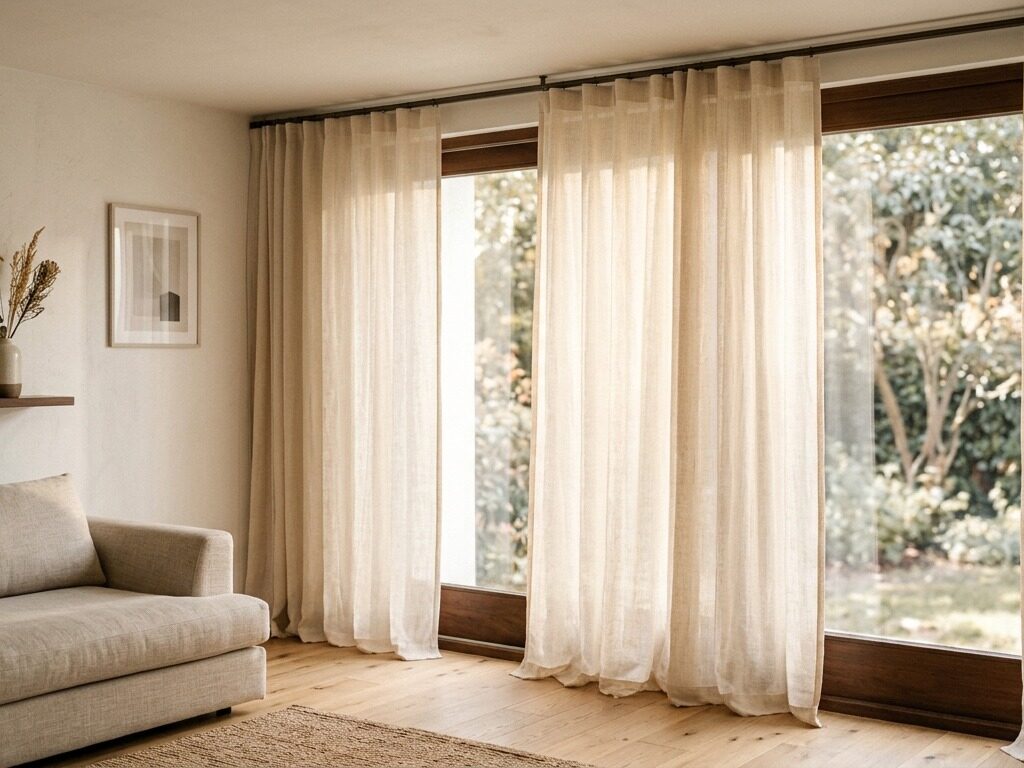
Natural light is one of the foundational elements of scandinavian japanese interior design and treating windows in a way that honors rather than blocks it is essential. Japandi curtains should be sheer or semi-sheer, in natural linen or cotton, hung close to the ceiling and extending slightly wider than the window frame on each side.
This does two things simultaneously: it maximizes the natural light coming into the room and it makes the ceiling feel higher and the windows appear larger. Both of those effects serve the japandi living room ideal of a space that feels open, airy, and connected to the natural world outside.
Heavy drapes, lined curtains, or anything that reduces the sense of lightness and openness in the room is at odds with the philosophy of the style regardless of how neutral its color.
14. Edit Ruthlessly and Display Only What Matters
The Japanese concept of ma, the intentional space between elements, is what separates a truly successful japandi aesthetic from one that simply has less stuff. Ma is not emptiness. It is space that has been chosen as deliberately as the objects within it.
In practice this means going through every surface in the room and asking honestly whether each object needs to be there. Not whether you like it. Whether it needs to be in that room, on that surface, visible. The ones that pass that test stay. The rest find a home in a drawer, a cabinet, or a different room.
I recommended this process to a client in Portland a few years ago who had a living room full of things she genuinely loved but that collectively made the room feel overwhelming.By the time we finished, most of what had been sitting out was packed away, and the pieces that remained finally had room to register as individual things worth looking at. She told me two weeks later it was the first room in the house where she actually felt calm. Nothing had been thrown away. The room just finally had space to breathe.
15. Add Warmth With a Chunky Knit or Linen Throw
This is the hygge half of japandi living room decor made tangible: the thing that stops the style from feeling like a beautiful photograph you are afraid to sit in. A chunky knit throw in warm cream, oatmeal, or soft stone draped casually over the arm of the sofa adds exactly the warmth and approachability that the more structured elements of the style can sometimes withhold.
It signals that this is a room for living in, not for looking at. That someone wraps themselves in that throw on a cold evening. That comfort was considered as carefully as composition. Without it, even the most beautifully executed japandi aesthetic can tip from calm into cool.
The 2026 Evolution of Japandi Living Room Style
Spend five minutes comparing 2020 Japandi mood boards with what designers are actually putting out now and you will notice something has shifted. That early iteration was dominated by cool beige and matte black, handsome but sometimes feeling slightly austere. The rooms getting attention in 2026 have more warmth in them, more curve, more material richness sitting underneath the minimalist surface.
Curved furniture is entering the style in a way it never did before. Kidney-shaped sofas, barrel chairs, organic-form mirrors, and oval coffee tables are all appearing in japandi living room decor, softening the strict horizontal lines of the earlier version without abandoning the minimalist foundation. Brands like Ligne Roset, Gubi, and Ferm Living are leading this shift.
Biophilic design is also merging more deeply into the japandi aesthetic, with homeowners incorporating living moss walls, indoor water features, and architectural plants in ways that blur the line between interior and exterior environment. The result is a version of the style that feels less like a designed room and more like a genuinely natural habitat.
What to Avoid in a Japandi Living Room
Cool gray tones kill the warmth that the japandi color palette depends on faster than anything else. If your walls, rug, or sofa have a blue or cool undertone, the whole room will feel slightly clinical rather than calm.
Too many plants competing for attention undermine the architectural presence that a single well-chosen plant creates. Five small plants do not equal one large one in design terms.
Matching furniture sets that look like they came from the same showroom display defeat the wabi-sabi quality of imperfection and gradual accumulation that gives japandi interior design its soul. Mix eras and sources within the same tonal and material family.
Decorative objects without function or genuine meaning have no place in a wabi-sabi living room. Every object should be able to justify its presence in the room.
Japandi Living Room Ideas for Small Apartments
Japandi living room ideas are particularly well suited to small apartments, which is one of the reasons the style resonates so strongly with urban apartment dwellers. The low furniture creates the illusion of greater ceiling height. The warm neutral palette expands visual boundaries rather than closing them in. The minimal decor approach reduces the visual noise that makes small rooms feel cramped.
If you are working with a genuinely compact living room, the japandi aesthetic gives you permission to do less rather than more, which runs counter to most small-space decorating advice but consistently produces calmer, more livable results. One large plant instead of six small ones. One statement piece of furniture instead of four competing ones. One well-curated shelf instead of every surface covered.
For more specific guidance on making small apartment living rooms work, our guide to small apartment living room decorating ideas covers layout and furniture arrangement strategies that pair beautifully with the Japandi design approach.
Final Thoughts on Japandi Living Room Ideas
Japandi interior design is not a look you achieve in one shopping trip. It is a process of removing what is unnecessary, choosing what remains with care, and then leaving enough space between things for the room to breathe.
The living room is where that process produces its most visible and most felt results. A well-executed japandi living room does something remarkable: it makes the act of simply being in it restorative. Not because it looks calm in a photograph, but because everything in it was chosen to serve the experience of the person living there rather than the impression it makes on visitors.
Start with the walls. Edit the surfaces. Buy one genuinely good piece of natural wood furniture. Add a plant large enough to earn its place. Find a throw that makes you want to sit down.
That is already a japandi living room. The rest follows from there.